After Early Chaos and Lockdown, Fortaleza Records Declining Curves, Ends Covid-19 Peak
RIO DE JANEIRO, BRAZIL – In the past few days, the city of Fortaleza, Brazil’s leading capital city in terms of mortality rate by Covid-19, recorded a drop in the number of hospitalizations, infections, and deaths from the disease and is now starting to drop from the plateau – the state of a continuing peak.
Last Sunday, June 7th, the capital of Ceará celebrated something that had not happened since the start of March: a 24-hour period with no hospitalizations of patients with SARS (Severe Acute Respiratory Syndrome).

Up to Friday, June 12th, Fortaleza had recorded over 30,000 infections and 2,848 deaths. These are high numbers, but the perception that hospitals have experienced a reduction in the pace of the pandemic has been confirmed by studies and scientists, who believe that the downward curve is an indication that the worst is over.
However, they caution that the problem caused by the novel coronavirus is far from having been completely solved.
The Municipal Health Secretariat’s epidemiological reports show a decrease in the number of patients. On May 10th, health care facilities in Fortaleza reached the peak by attending to 2,139 patients in only 24 hours. One month later, on June 9th this number was 569.
According to epidemiologist and researcher Antônio Silva Lima Neto, member of the Northeast Consortium’s scientific committee and of the Fortaleza Health Secretariat, there is no doubt that the worst stage has passed.
“We believe that the plateau of cases occurred over 20 days, between April 19th and May 9th. The peak of deaths lasted a little longer, from May 3rd to 27th,” he says. This difference is explained by the fact that, as a rule, deaths occur after a period of at least 10 days of hospitalization.
Why Fortaleza dropped from its peak
One of the factors behind Fortaleza being one of the first cities to “shift down the mountain” was the fact that the virus was in circulation in the city in early March. The lead over other cities was driven by the international airport’s connection hub, with flights coming from Europe and leaving for the same destination, and by guests at the wedding of a local entrepreneur in Bahia who returned to the state infected.
With the sum of these factors, the capital of Ceará experienced an explosion of infections at a time when the health system was unprepared, which led to a waiting line for ICU (Intensive Care Unit) vacancies and resulted in deaths at home.
To contain the circulation of the novel coronavirus, Fortaleza enforced 50-day social isolation, most of it in lockdown – started on May 8th, when the city faced great difficulties in providing support due to patient demand.
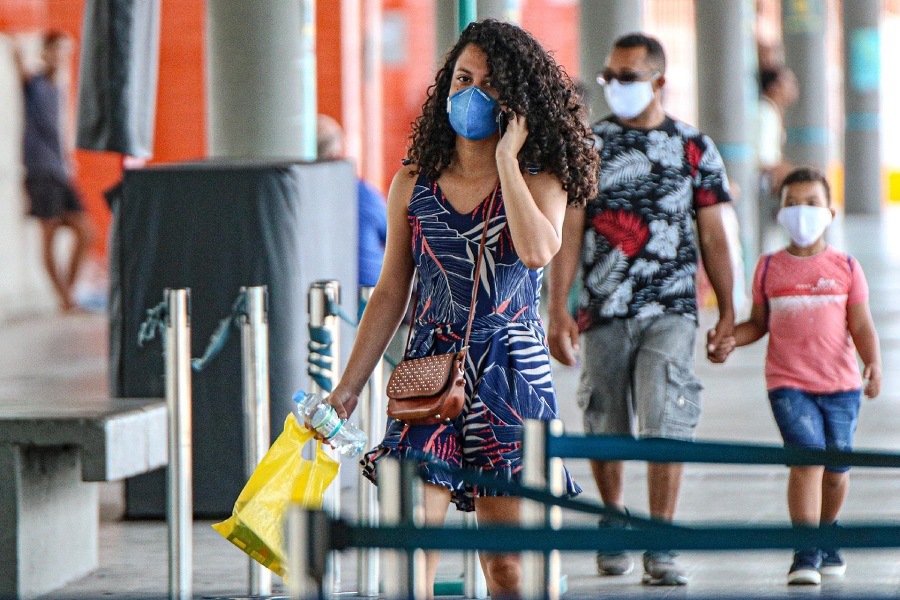
“I do not know what would have happened to us if we had not taken this measure [lockdown]. Estimates point out that we prevented around nine thousand deaths,” said Antônio Silva Lima Neto, epidemiologist of the Fortaleza Health Secretariat.
According to Lima Neto, after strict isolation, several factors were analyzed and there was an improvement.
“We had the average of confirmed cases clearly declining; a stabilizing death rate, but tending to decline; and, mainly, some welfare indicators, which no longer have a delay, such as the number of patients seeking emergency care and basic care facilities, which dropped up to 80 percent,” reports the epidemiologist. “Another factor that called positive attention was the drop in the occupancy of ward and ICU beds”.
But the main control point of the disease came on May 31st when the “R” reached 0.78 – this index means that each person transmits the disease on average to 0.78 people (that is, 100 people were infecting 78 at that time). The data is included in a projection by the Physics Department of the UFC (Federal University of Ceará), which pointed a rate of 1.77 (100 people were infecting 177), on May 4th.
Controlled reopening
On June 1st, the state government and the city decided to start a transition period, with the reopening of some sectors, such as shopping malls and part of the street trade.
“After seven days we reviewed the indicators, and all had improved. The ICU occupancy rate dropped from 80 to 75 percent, but we mainly saw the occupancy of ventilators drop. Today [Thursday] the network managed by the city government is 40 percent occupied and 60 percent free,” Lima Neto says.
Next week, the population’s seroprevalence survey, which will determine how many people in the city have been infected, is expected to be released. “We expect a result between 13 and 15 percent, higher than in Wuhan [where the disease emerged in China], and it would be closer to London in terms of people who have already produced antibodies,” he said.
According to the Epocovid19 national survey, coordinated by the Federal University of Pelotas, Fortaleza currently records an infection rate of 15.6 percent of the population – the third highest in the country, behind only Boa Vista and Macapá. The data were collected between June 4th and 7th.
However, the risk of contamination persists, and crowds must be avoided. “Of course, we have to inspect. That’s why isolation is still maintained for many areas,” Lima Neto concludes.
Data confirm drop, but the virus is still circulating
According to Otavio Ranzani, an epidemiologist at USP (University of São Paulo) and the Global Health Institute of Barcelona, the numbers in Fortaleza indeed confirm a declining trend in infection.
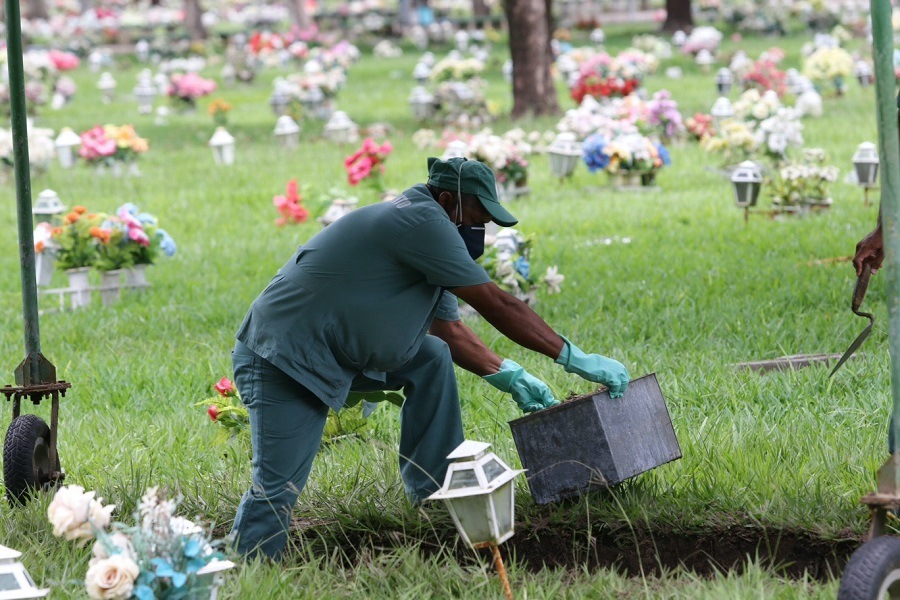
“Analyzing suspected and confirmed cases, hospitalizations in the health system for mild and severe cases, together with the R calculation, we have several indicators that the transmission was controlled in the average and tends to fade, particularly in the macro-region of Fortaleza,” he explains.
Despite the positive results, Ranzani says a longer period of 14 days must be considered after the start of resumption and opening of establishments, and not only seven days.
“I emphasize that cases and deaths will still occur for a certain period. Another crucial point is that the R figure is an average; albeit below 1, there are still cases of transmission. And this could lead to an early second wave if suspected cases are not isolated and no active search is made. Avoiding crowds, wearing masks and washing hands is crucial,” concludes the epidemiologist.
Source: UOL
More: Brazil news in English, every day from The Rio Times.
This article was produced by The Rio Times’ automated newsroom system. How we use AI · Report an error · Editorial responsibility: Matthias Camenzind, Editor-in-Chief
Living in or visiting Fortaleza? See this month's events.