IBOV 171,031.73 ▲ 1.85% IPSA 11,338.38 ▲ 0.89% IPC MEX 65,729.18 ▲ 2.14% MERVAL 2,913,184 ▲ 1.30% COLCAP 2,459.23 ▲ 0.61% BVL PERÚ 58,698.13 ▲ 2.60% USD/BRL5.14▼ 0.14% USD/MXN16.95▲ 0.30% USD/CLP914.28— 0.00% USD/COP3,038▼ 1.18% USD/PEN3.35▼ 0.06% USD/ARS1,499▲ 0.12% USD/UYU40.20▲ 1.58% USD/PYG5,996▲ 1.55% USD/BOB11.43▲ 0.41% USD/DOP58.82▲ 0.20% USD/CRC450.05▲ 3.34% USD/GTQ7.62▲ 2.21% USD/HNL26.81▲ 0.31% USD/NIO36.62▲ 0.61% USD/VES778.00▼ 0.13% USD/PAB1.00— 0.00% USD/BZD2.00— 0.00% USD/JMD 157.28 — 0.00% USD/TTD6.71▲ 0.79% EUR/BRL6.00▼ 0.64% BRENT 88.88 ▼ 0.03% WTI 83.11 ▼ 0.11% IRON ORE 161.91 — — COPPER 6.61 ▲ 0.03% GOLD 4,461 ▲ 1.78% SILVER 65.59 ▲ 1.26% SOY 1,184 ▲ 3.20% CORN 480.50 ▲ 10.02% WHEAT 655.00 ▲ 3.93% COFFEE 317.25 ▼ 5.51% SUGAR 16.43 ▼ 1.79% ORANGE JUICE 138.55 ▼ 0.47% COTTON 85.03 ▲ 2.33% COCOA 5,719 ▲ 3.18% BEEF 223.60 ▼ 3.93% CATTLE 339.10 ▼ 3.16% LITHIUM 75.20 ▲ 1.47% PETR4 41.64 ▼ 0.05% VALE3 72.97 ▲ 0.83% ITUB4 38.60 ▼ 1.03% BBDC4 16.85 ▲ 0.36% ABEV3 14.89 ▼ 0.80% BBAS3 19.37 ▲ 0.47% B3SA3 14.26 ▼ 0.21% WEGE3 47.59 ▲ 0.49% PRIO3 59.14 ▼ 0.19% SUZB3 41.33 ▲ 2.35% RENT3 34.68 ▼ 0.09% AZZA3 15.89 ▼ 2.63% CSAN3 3.22 ▼ 1.83% RAIZ4 0.25 — 0.00% PCAR3 2.75 ▼ 0.36% GMAT3 3.65 ▼ 1.08% PSSA3 48.13 ▼ 0.54% CVCB3 1.33 ▼ 2.92% POSI3 3.36 ▲ 2.44% SLCE3 13.34 ▲ 0.30% NATU3 8.14 ▼ 0.73% IBOV 171,031.73 ▲ 1.85% IPSA 11,338.38 ▲ 0.89% IPC MEX 65,729.18 ▲ 2.14% MERVAL 2,913,184 ▲ 1.30% COLCAP 2,459.23 ▲ 0.61% BVL PERÚ 58,698.13 ▲ 2.60% USD/BRL 5.16 ▲ 0.01% USD/MXN 17.06 ▼ 0.24% USD/CLP 913.98 ▲ 0.04% USD/COP 3,140 ▲ 0.03% USD/PEN 3.36 ▼ 0.66% USD/ARS 1,493 ▲ 0.10% USD/UYU 40.27 ▲ 1.24% USD/PYG 5,939 ▲ 1.68% USD/BOB 11.64 ▼ 0.76% USD/DOP 58.34 ▲ 1.25% USD/CRC 445.92 ▲ 0.89% USD/GTQ 7.62 ▲ 2.21% USD/HNL 26.79 ▲ 1.57% USD/NIO 36.62 ▲ 0.69% USD/VES 762.44 ▼ 0.13% USD/PAB 1.00 — 0.00% USD/BZD 2.00 — 0.00% USD/JMD 157.28 — 0.00% USD/TTD 6.70 ▲ 0.61% EUR/BRL 5.95 ▲ 1.01% BRENT 88.88 ▼ 0.03% WTI 83.11 ▼ 0.11% IRON ORE 161.91 — — COPPER 6.61 ▲ 0.03% GOLD 4,461 ▲ 1.78% SILVER 65.59 ▲ 1.26% SOY 1,184 ▲ 3.20% CORN 480.50 ▲ 10.02% WHEAT 655.00 ▲ 3.93% COFFEE 317.25 ▼ 5.51% SUGAR 16.43 ▼ 1.79% ORANGE JUICE 138.55 ▼ 0.47% COTTON 85.03 ▲ 2.33% COCOA 5,719 ▲ 3.18% BEEF 223.60 ▼ 3.93% CATTLE 339.10 ▼ 3.16% LITHIUM 75.20 ▲ 1.47% PETR4 41.64 ▼ 0.05% VALE3 72.97 ▲ 0.83% ITUB4 38.60 ▼ 1.03% BBDC4 16.85 ▲ 0.36% ABEV3 14.89 ▼ 0.80% BBAS3 19.37 ▲ 0.47% B3SA3 14.26 ▼ 0.21% WEGE3 47.59 ▲ 0.49% PRIO3 59.14 ▼ 0.19% SUZB3 41.33 ▲ 2.35% RENT3 34.68 ▼ 0.09% AZZA3 15.89 ▼ 2.63% CSAN3 3.22 ▼ 1.83% RAIZ4 0.25 — 0.00% PCAR3 2.75 ▼ 0.36% GMAT3 3.65 ▼ 1.08% PSSA3 48.13 ▼ 0.54% CVCB3 1.33 ▼ 2.92% POSI3 3.36 ▲ 2.44% SLCE3 13.34 ▲ 0.30% NATU3 8.14 ▼ 0.73%
since 2009
Sunday, August 23, 2026

Latest News Brazil

Brazilian Researchers Develop Improved Software to Diagnose Melanoma

By · January 25, 2020 · 3 min read

Daily Brief

The morning intel from across Latin America. Free.

By subscribing you agree to our privacy policy. We never share your email.

RIO DE JANEIRO, BRAZIL – Researchers from the State University of Campinas (Unicamp) improve a software capable of speeding up diagnoses of melanoma type skin cancer. So far, the computer program has achieved 86 percent accuracy in identifying the disease.

Although melanoma represents only 3 percent of the Brazilian population of malignant neoplasms that manifest in the skin, the variety requires attention because it can spread to other cells of the body installing a process called metastasis, the most aggressive of all.

Researchers from the State University of Campinas (Unicamp) improve a software capable of speeding up diagnoses of melanoma type skin cancer. So far, the computer program has achieved 86 percent accuracy in identifying the disease.
Unicamp researchers have improved software capable of speeding up diagnoses of melanoma type skin cancer. So far, the computer program has achieved 86 percent accuracy in identifying the disease. (Photo internet reproduction)
One-stop reference
Company Intelligence
Every listed company in Latin America — financials, ownership and structure for 1,450+ companies across 26 exchanges, in one place.
Browse the directory →
RT
Ask Rio Times
This story and the bigger picture.
Open the full Ask Rio Times →

To reach the diagnosis, the software of the Unicamp team compares the lesion with another 23,906 stored in a public image databank. Now, researchers are concerned with expanding the photo archive, so that the level of hit increases even more.

The program works on top of algorithms, which are used by a deep learning mechanism, artificial intelligence technique through which a machine is “taught” to interpret data from the use of neural networks.

The project started to be elaborated in 2014, in a partnership between professors from Unicamp Sandra Avila, from the Computing Institute, and Eduardo do Valle, from the Electrical Engineering College. The research was one of the 25 contemplated by Google Latin America Research Awards, a research fellowship program for Latin America.

According to Sandra Avila, the purpose of the academics is to facilitate the detection of the tumor while it is still in the initial stage, so that it can be treated soon. She stresses that there is no pretension to indicate the software as a substitute for doctors, but rather as a support tool.

Diagnosis and treatment

The medical protocol for diagnosing melanoma meets a number of criteria. The National Cancer Institute (Inca) clarifies that the method follows an internationally adopted rule, that of “ABCDE”. The letters correspond to each of the aspects that can light the alert for the case of a lesion.
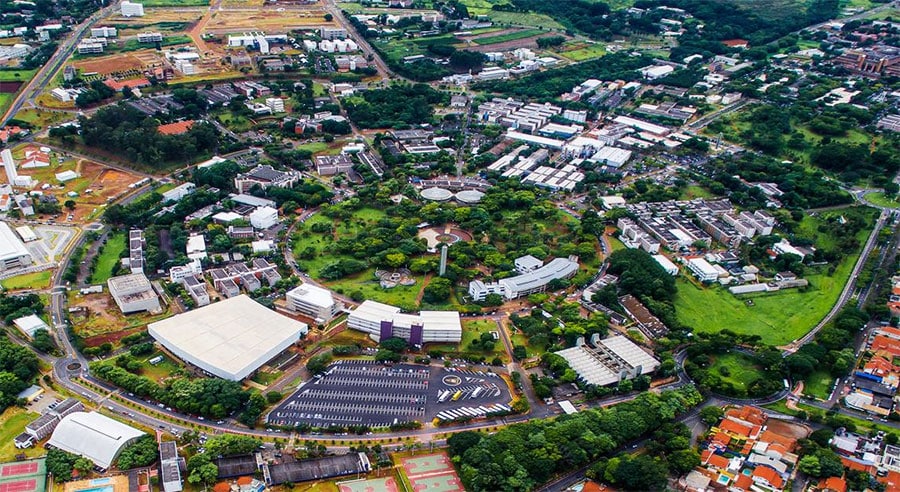
Researchers from the State University of Campinas (Unicamp) improve a software capable of speeding up diagnoses of melanoma type skin cancer. So far, the computer program has achieved 86 percent accuracy in identifying the disease.
State University of Campinas (Unicamp) main campus. (Photo internet reproduction)

The A refers to the asymmetry that characterizes malignant tumors, since they present a different half of the other. B recalls that they have irregular edges. C, in turn, refers to the presence of distinct colors in the same lesion, when cancerous cells can be confirmed. D serves as a reminder to doctors regarding the size of the melanoma lesion, which is larger than six millimeters. Finally, E deals with the evolution of the lesions, since, in the course of time, they go through changes in size, shape or color.

The highest incidence of the disease is observed among white people, and it can appear in any part of the body, on the skin or mucous membranes, in the form of spots or signs. Black people, however, can also be affected, and should keep care, mainly, for the lighter areas of the body, such as palms and soles of the feet.

Today, surgery is the most indicated treatment for melanoma. Depending on the stage of the tumor, doctors may prescribe radiotherapy sessions and chemotherapy to the patient.

This article was produced by The Rio Times’ automated newsroom system. How we use AI · Report an error

Read More from The Rio Times

The Rio Times · Power Map
See who really holds power in Latin America
Click to open the Power Map

Rotate for Best Experience

This report is optimized for landscape viewing. Rotate your phone for the full experience.