Coronavirus News Overshadows Africa’s Worst Locust Invasion in History
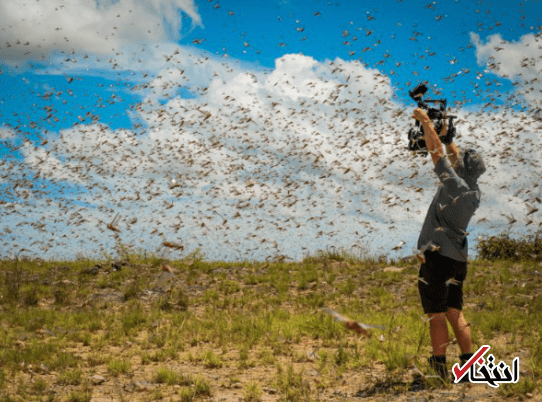
RIO DE JANEIRO, BRAZIL – Locust clouds in Ethiopia, Kenya, Somalia, Iran, and Egypt could increase further and spread to other areas.
The warning was issued on Monday by the Food and Agriculture Organization of the United Nations, FAO, which says these clouds are “unprecedented in size and destructive potential”.
Threat
The agency’s director general, Qu Dongyu, said this is “a situation of international dimensions that threatens the food security of the entire region”. He stated that the FAO is setting in motion measures to “assist governments in conducting a collective campaign to address this crisis”.
The head of the UN agency added that this is why the authorities in the region have already begun control efforts, but considering the extent and urgency of the threat, additional financial support from the international donor community is required so that they may access the tools and resources needed to carry out the work”.
Reproduction
According to the FAO, recent climatic conditions in East Africa have led to a favorable environment for the rapid reproduction of locusts. Without adequate control, the number of insects devouring crops could increase 500-fold by June.
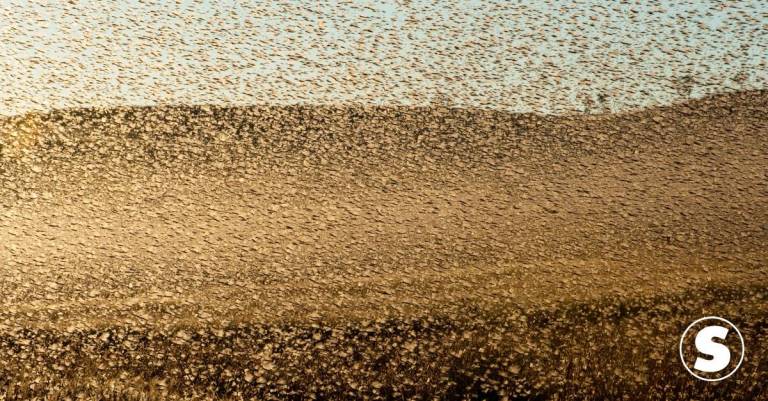
These clouds, which can contain hundreds of millions of desert locusts, can move up to 150 km a day, devastating rural livelihoods. A desert grasshopper devours its own weight in food each day: approximately two grams.

Clouds
The FAO alerts that the clouds continue to travel to Kenya from Ethiopia and Somalia. And they are spreading rapidly to the center of the country; according to the agency, Ethiopia and Somalia had not seen clouds of desert locusts of this magnitude for 25 years.
Kenya, on the other hand, had not faced a threat of locusts of this magnitude in 70 years. South Sudan and Uganda have not been affected at present, but they are at risk.
Spread
The rate at which the pest is spreading and the extent of the infestations are so extreme that they have pushed the capabilities of local and national authorities to the limit.
Given the size of the clouds, the FAO says air traffic control is the only effective way to reduce the number of locusts. Dongyu stresses that “air operations need to be increased substantially and rapidly in Ethiopia and Kenya.”
In addition, he says that pest control activities “should include efforts to restore people’s livelihoods”.
At this point, and based on initial estimates, the FAO is seeking US$70 million to urgently assist pest control and livelihood protection operations in the three most affected countries.
Red Sea
India, Iran and Pakistan have had desert locust clouds since June 2019, which are breeding.
Some of these clouds have migrated to southern Iran. Recent heavy rains have allowed them to lay eggs and reproduce in spring this year.
Egypt, Eritrea, Saudi Arabia, Sudan and Yemen are also observing a large reproduction of locusts, which may expand into clouds in coming months.
More: Egypt news in English, every day from The Rio Times.
This article was produced by The Rio Times’ automated newsroom system. How we use AI · Report an error · Editorial responsibility: Matthias Camenzind, Editor-in-Chief
Horn of Africa and the Red Sea
- Horn of Africa 2026: Why It Matters and Who Backs Whom
- Ethiopia’s Neighbors Explained, Ports, Eritrea, Somalia
- Eritrea Explained 2026, a Red Sea Country Guide
- Somalia Explained: Al-Shabaab, Somaliland, the Ports and the Fight Over a 2026 Vote