Argentina heading toward second wave with less testing per million inhabitants than Cuba
RIO DE JANEIRO, BRAZIL – According to the statistics website Worldometers, Argentina performs 184,280 tests per million inhabitants and is ranked 111th in the world. Although the number of daily tests increased considerably compared to last year, a specialist consulted by Infobae assured that “testing is still essential and no one disputes that.”
“To win, we must attack the virus with aggressive and well-directed strategies: test every suspected case, isolate every confirmed case, and find and quarantine every person with whom he or she has been in close contact,” recommended the director general of the World Health Organization, Tedros Adhanom Ghebreyesus, in reference to the RT-PCR test, which permits knowing if a person has COVID-19 at the moment it is performed.

Health authorities around the world agree that the tests are the most important tool in the fight to curb and reduce the spread and impact of the virus. Tests make it possible to identify infected persons, isolate them and trace and quarantine their contacts.
Without testing – or with insufficient testing – it would be like driving the pandemic blind.
In this context, much has been criticized, even by specialists advising the Argentine government on the health emergency, that the country should test more. In terms of population, Argentina should be above Chile or Uruguay, and that is not what the official figures reflect.
According to the daily report released yesterday by the National Ministry of Health, 43,438 tests were performed in the country during the last 24 hours (the accumulated total during the pandemic is 8,383,836).
And although in April 2020 the number of daily tests barely exceeded 1,000, in May the figure was around 4,000, in July 10,000 and in September it climbed to 20,000, specialists agree that it is still not enough.
“Testing continues to be at the forefront of communications on the management of the pandemic for the obvious reason that identifying infected persons and isolating them is what most limits the spread of the virus, especially when there are variants circulating”.
Neurologist Conrado Estol acknowledged in an interview with Infobae that “it is very difficult to trace all the contacts, but even if only the infected person is detected and the closest contacts are isolated, this would significantly reduce the pandemic.”
The specialist with medical training in the USA, who was stimulated by the pandemic to gather data, analyze papers from around the world, break down curves and indicators, has become almost an obligatory voice of consultation in times of coronavirus. For him, “testing continues to be essential and no one disputes that; just looking at the position in the world shows that Argentinean testing is insufficient.”
“With a population of 45 million people and a viral circulation like the one we have, the number of tests per day should be several times higher than what is being done,” he insisted.
And after pointing out that there is an inversely proportional relationship between testing and death (the more testing, the lower the mortality), Estol stressed that “in the countries that evolved worse in the pandemic there is clearly a correlation with the fact that they have tested little”.
Analyzed per million inhabitants, Argentina performs 184,280 tests, according to data from the Worldometers statistical site, which places it in 111th place in the world.

Compared to its peers in the region, it is only in a better situation than Brazil, which in the midst of a second wave that has already led it to sanitary collapse, performs 133,863 tests per million inhabitants and is ranked 122nd, Paraguay 129th with 119,033 tests per million, Venezuela 134th with 107,291 and Bolivia 148th with 72,088.
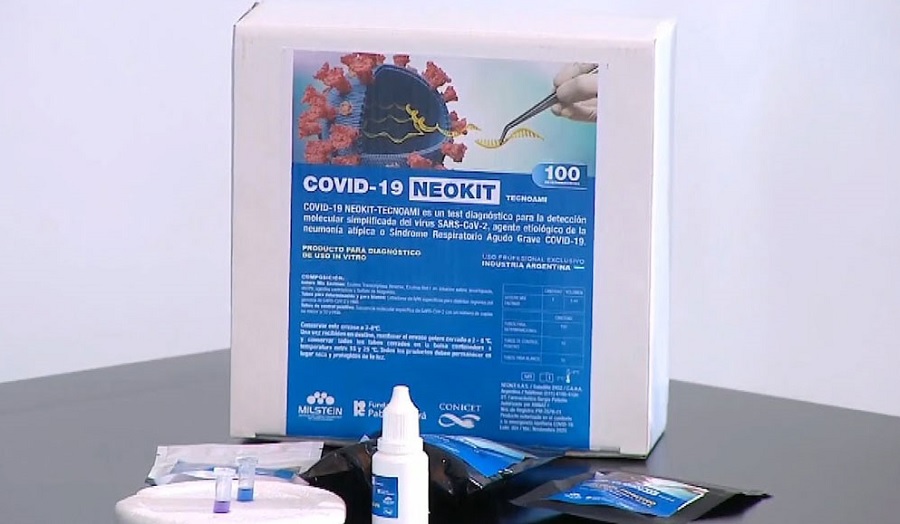
Argentina designed its own test (the Neokit), but it never scaled up production as did Uruguay, which with its own test was able to test a sufficient number of the population. Not only did it not have a first wave but also avoided competing with other countries for a key input.
Neighboring Chile and Uruguay test 553,424 and 357,152 per million inhabitants and rank 53rd and 81st in the world, respectively. Meanwhile, Cuba, with its communist regime, performs 247,944 tests per million inhabitants, about 64,000 more than Argentina, which places it 96th in the world ranking.
In the world, Denmark, with 3,953,075 tests per million inhabitants, is one of the most tested countries in Europe. Since the beginning of the pandemic, the Scandinavian country has recorded 226,277 cases of COVID-19 and 2,402 deaths. Its positivity rate remains below 0.50%, which will lead it to complete the full reopening of its activities by the end of May and formally decree the control of the pandemic.
Iceland began testing a month and a half before the first infection and the result is 29 deaths so far in the pandemic.
The positivity index is the number of positive results in relation to the total number of swabs. What this percentage indicates is whether infected persons in the population are being adequately traced. The WHO recommends looking at this variable to assess whether the definition of a suspected case and the amount of contact tracing is sufficient and suggests keeping it below 10%. Today in Argentina, the figure is 14.73%.
For Estol, a complication at the moment is that “it is necessary to test in sufficient quantity and also to sequence the genome of the viruses detected to know which variant is infecting people and how fast they are spreading.” “Iceland sequences all the tests of the day, in Argentina 3 thousand should be sequenced every week and that is far from what is being done,” remarked the specialist.
Regarding the context of vaccine shortage and the proximity of the second wave in the country, Estol concluded: “Without sufficient vaccination, which happens in many countries, the pandemic is controlled with testing, the use of masks and the hygiene and social distance measures we already know.”
Source: Infobae
More: Argentina news in English, every day from The Rio Times.
This article was produced by The Rio Times’ automated newsroom system. How we use AI · Report an error · Editorial responsibility: Matthias Camenzind, Editor-in-Chief