Bolsonaro refused Pfizer vaccine at half the price paid by the U.S. and European Union
RIO DE JANEIRO, BRAZIL – The Jair Bolsonaro government declined the Pfizer vaccine last year at half the price paid by the United States, the United Kingdom and the European Union. Considered expensive in August 2020 by then Health Minister Eduardo Pazuello, up to 70 million doses from Pfizer could have been delivered from December, 2020, for US$10 each.
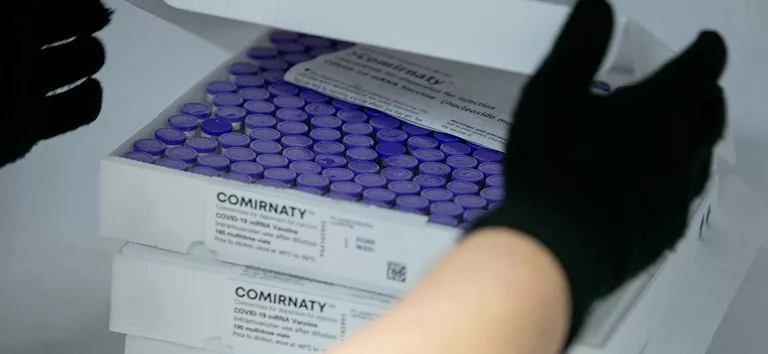
Early vaccination would have prevented deaths and the billion-dollar losses caused by the economic shutdown.
With a total GDP (Gross Domestic Product) of R$7.4 (US$1.4) trillion in 2020, the R$30 billion now projected by the Ministry of Health for the vaccination of Brazilians corresponds to one and a half days of a hypothetical national lockdown – excluding Sundays and holidays.
The value is equivalent to 10% of the emergency aid paid in 2020 and is less than the R$44 billion foreseen this year to offset the economic shutdown.
The U.S. and the UK have now immunized about 40% of their population with two doses of the several vaccines purchased and have their economies operating virtually unhindered. Both paid about US$20 for Pfizer’s doses, double the amount Brazil refused for several months in 2020. In the European Union, doses from the North American lab cost US$18.60.
In Brazil, with the delay in contracts, the first Pfizer doses came only in April. Eight months elapsed between the first offer and delivery.
The vice president of the Covid CPI (investigative committee) Senator Randolfe Rodrigues (Rede-AP) counted 53 emails sent by Pfizer to the government starting in August demanding an answer regarding the supply of 70 million doses.
To the CPI, Pazuello qualified Pfizer’s proposal as “aggressive,” pointed out obstacles in the contract’s clauses, and said he considered the US$10 per dose too high – a price agreed to months later during Eduardo Pazuello’s administration.
Before the Pfizer doses, immunization was done with vaccines from Butantan and AstraZeneca, but in low quantities. The Brazilian two-dose vaccination is limited to 11% of the population.
In the economy this mainly holds back the service sector, responsible for 70% of GDP and jobs. The poorest and least schooled workers, who depend on work outside the home for income, are mainly employed in services.
Without the vaccine, their occupations fell by up to 20% in the pandemic, increasing inequality and extreme poverty to levels seen 15 years ago. The collapse in services has led IBGE’s (Brazilian Institute of Geography and Statistics) historical unemployment rate to a record 14.7%, with 14.8 million unemployed.
The Ministry of Health says it has allocated R$30 billion to procure over 660 million Covid-19 vaccine doses – considering units it has not yet effectively ordered in the calculation. Thus, the country is reserving about US$9 a dose, on average.
Overall, in the international comparison based on the available data, Brazil is paying prices compatible with most countries. The great advantage in favor of Brazil lies precisely in Pfizer’s vaccine – the first to have been offered to (and ignored by) the Bolsonaro government.
For Paulo Lotufo, epidemiologist and professor at the USP (University of São Paulo) School of Medicine, Brazil lost “a golden chance to strike a deal with Pfizer at a convenient price.”
“Pfizer realized it would be ahead [in the vaccine race], but it would definitely need Brazil because it would be a place for immediate administration, a larger showcase than Israel ended up being, with the advantage that the SUS (Brazil’s national health service) is a good payer and the only one in the country,” says Lotufo.
“Whatever the price of the vaccine offered to Brazil, it would be worth it. Be it for the impact on lives, the colossal losses of a closed economy, or the cost of R$1,500 a day for a patient admitted to a Covid ICU,” says Eder Gatti, an infectologist specialized in immunization.
According to Gatti, over the past few years the Ministry of Health has ceased to conduct studies to assess the cost-benefit in vaccine purchases, as it did in 2006 to acquire vaccines against rotavirus – which causes ADD (acute diarrheal disease) and acute gastroenteritis. Gatti says that the UK, for example, is virtually obsessed with this type of calculation.
According to Martin Weale, an economist at King’s College London, the potential savings from the UK’s accelerated program of vaccine purchase and immunization can be estimated at around £300 billion a year, discounting the cost of the whole immunization process.
The total takes into account not only the potential £220 billion loss in GDP caused by the opening and closing of the economy, but the additional lives and spending saved by the health and education systems.
To expedite vaccination, the UK has paid US$37 for the Moderna single-dose vaccine, although it has limited this purchase to 17 million units.
For Benedic Ippolito, a researcher specializing in drug pricing at the American Enterprise Institute in Washington, “the cost of vaccines is very low compared to the potential counterfactual [the economic damage caused by lockdowns].” “It’s like shrugging and saying, ‘OK, that price may be high. But this is a unique pandemic and we can deal with the value issue later.'”
Israel reported paying US$23.50, on average, for the Pfizer and Moderna vaccines many months ago, and has now vaccinated about 60% of its population with two doses.
More: Brazil news in English, every day from The Rio Times.
This article was produced by The Rio Times’ automated newsroom system. How we use AI · Report an error · Editorial responsibility: Matthias Camenzind, Editor-in-Chief
Brazil runoff, Sunday, October 25: Brazil runoff start time and results schedule. Latest: Brazil runoff polls, Flávio 51%, Lula 49%.