IBOV 177,999.00 ▲ 0.47% IPSA 11,016.85 ▼ 0.13% IPC MEX 66,935.53 ▼ 0.58% MERVAL 3,291,323 ▼ 0.41% COLCAP 2,392.10 ▲ 2.12% BVL PERÚ 57,890.85 — — USD/BRL5.07▼ 0.02% USD/MXN17.32▼ 0.14% USD/CLP 930.47 — 0.00% USD/COP3,148▼ 0.08% USD/PEN3.40▲ 0.15% USD/ARS1,485▼ 0.03% USD/UYU 40.20 — 0.00% USD/PYG 5,931 — 0.00% USD/BOB 12.10 — 0.00% USD/DOP57.68▼ 0.53% USD/CRC 448.40 — 0.00% USD/GTQ 7.62 — 0.00% USD/HNL 26.76 — 0.00% USD/NIO 36.62 — 0.00% USD/VES746.91▼ 0.13% USD/PAB1.00— 0.00% USD/BZD2.00— 0.00% USD/JMD157.49▲ 0.19% USD/TTD6.72— 0.00% EUR/BRL5.86▲ 0.20% BRENT 90.12 ▲ 1.22% WTI 80.66 ▼ 4.74% IRON ORE 161.91 — — COPPER 6.53 ▲ 1.47% GOLD 4,110 ▲ 1.51% SILVER 58.39 ▲ 1.39% SOY 1,180 ▲ 0.70% CORN 460.00 ▲ 4.37% WHEAT 636.25 ▼ 0.47% COFFEE 313.55 ▼ 2.94% SUGAR 14.65 ▲ 1.52% ORANGE JUICE 153.35 ▲ 5.03% COTTON 81.20 ▲ 2.25% COCOA 5,537 ▲ 8.31% BEEF 227.25 ▼ 1.72% CATTLE 343.78 ▼ 0.78% LITHIUM 69.22 ▼ 0.85% PETR4 43.42 ▲ 1.35% VALE3 76.28 ▲ 0.25% ITUB4 42.89 ▲ 0.35% BBDC4 18.43 ▲ 0.22% ABEV3 15.99 ▲ 0.19% BBAS3 21.35 ▲ 0.76% B3SA3 15.73 ▲ 0.64% WEGE3 47.20 ▲ 0.81% PRIO3 60.85 ▲ 1.48% SUZB3 43.32 ▲ 1.38% RENT3 37.61 ▼ 1.62% AZZA3 16.42 ▲ 3.53% CSAN3 4.07 ▲ 2.01% RAIZ4 0.26 — 0.00% PCAR3 2.59 ▼ 5.47% GMAT3 4.03 ▲ 1.26% PSSA3 54.70 ▲ 0.64% CVCB3 1.31 ▲ 0.77% POSI3 3.55 ▲ 0.85% SLCE3 13.38 ▲ 0.91% NATU3 8.38 ▲ 0.60% BRKM5 5.97 ▲ 0.67% RANI3 8.11 ▲ 1.00% CSNA3 4.84 ▼ 2.22% CMIN3 5.71 ▼ 0.17% USIM5 7.36 ▼ 2.52% GGBR4 24.98 — 0.00% ENEV3 26.31 ▲ 0.61% CPFE3 46.14 ▲ 0.11% CMIG4 11.34 ▲ 0.98% EQTL3 38.66 — 0.00% LREN3 13.60 ▲ 0.59% VIVT3 32.63 — 0.00% RAIL3 14.44 ▲ 1.12% KLABIN 18.25 ▲ 1.11% RAIA DROGASIL 18.48 ▲ 1.26% RDOR3 34.64 ▲ 0.64% HAPV3 11.28 ▲ 2.45% FLRY3 17.14 ▲ 1.00% SMTO3 14.52 ▲ 0.83% UGPA3 33.05 ▲ 0.39% VBBR3 36.05 ▲ 1.18% BBSE3 41.26 ▲ 0.98% BPAC11 56.80 ▲ 0.32% CURY3 30.09 ▼ 1.02% AERI3 2.15 ▲ 0.94% VIVARA 22.18 ▲ 0.09% COMPASS 24.84 — 0.00% VAMOS 3.34 ▼ 2.34% SANB11 28.62 ▲ 13.35% ASAI3 8.50 ▲ 1.07% SBSP3 27.70 ▲ 1.06% WALMEX 50.36 ▲ 0.34% GMEXICO 208.29 ▼ 2.20% FEMSA 221.95 ▲ 1.19% CEMEX 20.54 ▼ 0.73% GFNORTE 199.64 ▼ 0.32% BIMBO 62.08 ▲ 2.26% TELEVISA 9.79 ▼ 0.91% AMX 22.00 — 0.00% GAP 376.64 ▼ 1.08% ASUR 275.62 ▼ 0.34% OMA 231.05 ▼ 0.96% KOF 187.94 ▼ 0.14% GRUMA 258.23 ▼ 4.00% KIMBER 40.19 ▼ 0.17% SQM-B 62,700 ▼ 0.93% COPEC 6,350 ▲ 0.79% BSANTANDER 80.99 ▲ 0.36% FALABELLA 6,216 ▼ 0.06% ENELAM 87.99 ▲ 0.39% CENCOSUD 1,955 ▲ 0.51% CMPC 1,055 ▲ 2.43% BANCO CHILE 193.71 ▼ 1.57% LATAM AIR 24.74 ▼ 0.64% YPF 82,900 ▲ 1.94% GGAL 7,890 ▼ 1.56% PAMPA 5,555 ▲ 0.36% TXAR 655.50 ▲ 1.16% ALUAR 977.50 ▼ 0.20% TGS 10,050 ▲ 2.45% CEPU 2,396 ▼ 0.33% MIRGOR 16,350 ▼ 1.95% COME 44.03 ▼ 1.94% LOMA NEGRA 3,620 ▼ 1.76% BYMA 296.00 ▼ 0.34% TELECOM ARG 4,408 ▲ 2.14% ECOPETROL 16.77 ▼ 1.58% BANCOLOMBIA 92.52 ▼ 1.46% GRUPO AVAL 5.28 ▲ 2.75% CREDICORP 400.58 ▼ 0.42% SOUTHERN COPPER 182.71 ▼ 1.24% BUENAVENTURA 30.28 ▼ 4.96% MERCADOLIBRE 1,878 ▼ 0.41% NUBANK 14.33 ▼ 1.10% XP 17.06 ▼ 0.81% PAGSEGURO 9.64 ▼ 2.03% STONE 11.38 ▼ 0.48% GLOBANT 36.60 ▲ 0.58% TECNOGLASS 43.44 ▼ 0.34% GAP AIRPORT 217.35 ▼ 1.02% ASUR 275.62 ▼ 0.34% OMA AIRPORT 106.90 ▼ 1.10% AMX ADR 25.37 ▲ 0.18% FEMSA ADR 127.99 ▲ 0.97% CEMEX ADR 11.82 ▼ 0.92% PETROBRAS ADR 19.40 ▲ 1.46% VALE ADR 15.06 ▲ 0.47% ITAU ADR 8.46 ▲ 0.24% SANTANDER BR 5.67 ▲ 12.28% AMBEV ADR 3.11 ▼ 0.32% CSN 0.99 ▼ 2.42% GERDAU 4.96 — 0.00% LATAM ADR 52.75 ▼ 2.21% BTC 63,152 ▲ 0.62% ETH 1,870 ▲ 1.42% SOL 72.96 ▲ 1.52% XRP 1.08 ▲ 1.47% BNB 584.10 ▲ 1.59% ADA 0.19 ▲ 6.48% DOGE 0.07 ▲ 1.34% AVAX 6.51 ▲ 5.27% LINK 8.36 ▲ 3.72% DOT 0.79 ▲ 1.34% LTC 44.63 ▲ 1.01% BCH 211.66 ▲ 1.80% TRX 0.33 ▼ 0.45% XLM 0.17 ▲ 1.19% HBAR 0.07 ▲ 0.87% NEAR 1.70 ▲ 1.70% ATOM 1.26 ▲ 3.19% AAVE 91.54 ▲ 1.13% SELIC 14.25% EMBRAER 86.89 ▲ 0.87% EMBRAER ADR 68.33 ▲ 0.32% JBS 14.02 ▼ 1.89% JBS BDR 70.70 ▼ 2.01% MBRF3 17.54 ▼ 2.34% MBRFY 3.39 ▼ 2.31% INTER 5.60 ▼ 0.71% EGX 54,286 ▲ 1.23% USD/ZAR16.48▼ 0.43% USD/NGN 1,364 — 0.00% NIKKEI 62,742 ▼ 2.52% CSI300 4,588 ▲ 0.85% HSI 25,884 — 0.00% NIFTY 24,384 ▲ 0.27% KOSPI 6,294 ▼ 4.56% JCI 6,236 ▲ 0.80% USD/JPY156.34▼ 0.79% USD/CNY6.75— 0.00% DAX 25,629 ▲ 0.07% CAC 8,510 ▲ 0.28% FTSE 10,868 ▼ 0.27% MIB 52,173 ▲ 0.13% IBEX 19,783 ▲ 0.13% STOXX 649.19 ▼ 0.12% EUR/USD1.15▲ 0.05% GBP/USD1.35▼ 0.07% SPX 7,490 ▲ 0.70% DJI 52,485 ▲ 0.53% NDX 28,274 ▲ 0.60% RUT 2,931 ▼ 0.50% TSX 35,226 ▼ 0.79% VIX 15.99 ▼ 6.44% USD/CAD1.40▲ 0.06% US10Y 4.7450 ▲ 1.76% IBOV 177,999.00 ▲ 0.47% IPSA 11,016.85 ▼ 0.13% IPC MEX 66,935.53 ▼ 0.58% MERVAL 3,291,323 ▼ 0.41% COLCAP 2,392.10 ▲ 2.12% BVL PERÚ 57,890.85 — — USD/BRL 5.07 ▼ 0.02% USD/MXN 17.32 ▼ 0.14% USD/CLP 930.47 — 0.00% USD/COP 3,148 ▼ 0.08% USD/PEN 3.40 ▲ 0.15% USD/ARS 1,485 ▼ 0.03% USD/UYU 40.20 — 0.00% USD/PYG 5,931 — 0.00% USD/BOB 12.10 — 0.00% USD/DOP 57.68 ▼ 0.53% USD/CRC 448.40 — 0.00% USD/GTQ 7.62 — 0.00% USD/HNL 26.76 — 0.00% USD/NIO 36.62 — 0.00% USD/VES 746.91 ▼ 0.13% USD/PAB 1.00 — 0.00% USD/BZD 2.00 — 0.00% USD/JMD 157.49 ▲ 0.56% USD/TTD 6.72 ▲ 0.86% EUR/BRL 5.86 ▲ 0.20% BRENT 90.12 ▲ 1.22% WTI 80.66 ▼ 4.74% IRON ORE 161.91 — — COPPER 6.53 ▲ 1.47% GOLD 4,110 ▲ 1.51% SILVER 58.39 ▲ 1.39% SOY 1,180 ▲ 0.70% CORN 460.00 ▲ 4.37% WHEAT 636.25 ▼ 0.47% COFFEE 313.55 ▼ 2.94% SUGAR 14.65 ▲ 1.52% ORANGE JUICE 153.35 ▲ 5.03% COTTON 81.20 ▲ 2.25% COCOA 5,537 ▲ 8.31% BEEF 227.25 ▼ 1.72% CATTLE 343.78 ▼ 0.78% LITHIUM 69.22 ▼ 0.85% PETR4 43.42 ▲ 1.35% VALE3 76.28 ▲ 0.25% ITUB4 42.89 ▲ 0.35% BBDC4 18.43 ▲ 0.22% ABEV3 15.99 ▲ 0.19% BBAS3 21.35 ▲ 0.76% B3SA3 15.73 ▲ 0.64% WEGE3 47.20 ▲ 0.81% PRIO3 60.85 ▲ 1.48% SUZB3 43.32 ▲ 1.38% RENT3 37.61 ▼ 1.62% AZZA3 16.42 ▲ 3.53% CSAN3 4.07 ▲ 2.01% RAIZ4 0.26 — 0.00% PCAR3 2.59 ▼ 5.47% GMAT3 4.03 ▲ 1.26% PSSA3 54.70 ▲ 0.64% CVCB3 1.31 ▲ 0.77% POSI3 3.55 ▲ 0.85% SLCE3 13.38 ▲ 0.91% NATU3 8.38 ▲ 0.60% BRKM5 5.97 ▲ 0.67% RANI3 8.11 ▲ 1.00% CSNA3 4.84 ▼ 2.22% CMIN3 5.71 ▼ 0.17% USIM5 7.36 ▼ 2.52% GGBR4 24.98 — 0.00% ENEV3 26.31 ▲ 0.61% CPFE3 46.14 ▲ 0.11% CMIG4 11.34 ▲ 0.98% EQTL3 38.66 — 0.00% LREN3 13.60 ▲ 0.59% VIVT3 32.63 — 0.00% RAIL3 14.44 ▲ 1.12% KLABIN 18.25 ▲ 1.11% RAIA DROGASIL 18.48 ▲ 1.26% RDOR3 34.64 ▲ 0.64% HAPV3 11.28 ▲ 2.45% FLRY3 17.14 ▲ 1.00% SMTO3 14.52 ▲ 0.83% UGPA3 33.05 ▲ 0.39% VBBR3 36.05 ▲ 1.18% BBSE3 41.26 ▲ 0.98% BPAC11 56.80 ▲ 0.32% CURY3 30.09 ▼ 1.02% AERI3 2.15 ▲ 0.94% VIVARA 22.18 ▲ 0.09% COMPASS 24.84 — 0.00% VAMOS 3.34 ▼ 2.34% SANB11 28.62 ▲ 13.35% ASAI3 8.50 ▲ 1.07% SBSP3 27.70 ▲ 1.06% WALMEX 50.36 ▲ 0.34% GMEXICO 208.29 ▼ 2.20% FEMSA 221.95 ▲ 1.19% CEMEX 20.54 ▼ 0.73% GFNORTE 199.64 ▼ 0.32% BIMBO 62.08 ▲ 2.26% TELEVISA 9.79 ▼ 0.91% AMX 22.00 — 0.00% GAP 376.64 ▼ 1.08% ASUR 275.62 ▼ 0.34% OMA 231.05 ▼ 0.96% KOF 187.94 ▼ 0.14% GRUMA 258.23 ▼ 4.00% KIMBER 40.19 ▼ 0.17% SQM-B 62,700 ▼ 0.93% COPEC 6,350 ▲ 0.79% BSANTANDER 80.99 ▲ 0.36% FALABELLA 6,216 ▼ 0.06% ENELAM 87.99 ▲ 0.39% CENCOSUD 1,955 ▲ 0.51% CMPC 1,055 ▲ 2.43% BANCO CHILE 193.71 ▼ 1.57% LATAM AIR 24.74 ▼ 0.64% YPF 82,900 ▲ 1.94% GGAL 7,890 ▼ 1.56% PAMPA 5,555 ▲ 0.36% TXAR 655.50 ▲ 1.16% ALUAR 977.50 ▼ 0.20% TGS 10,050 ▲ 2.45% CEPU 2,396 ▼ 0.33% MIRGOR 16,350 ▼ 1.95% COME 44.03 ▼ 1.94% LOMA NEGRA 3,620 ▼ 1.76% BYMA 296.00 ▼ 0.34% TELECOM ARG 4,408 ▲ 2.14% ECOPETROL 16.77 ▼ 1.58% BANCOLOMBIA 92.52 ▼ 1.46% GRUPO AVAL 5.28 ▲ 2.75% CREDICORP 400.58 ▼ 0.42% SOUTHERN COPPER 182.71 ▼ 1.24% BUENAVENTURA 30.28 ▼ 4.96% MERCADOLIBRE 1,878 ▼ 0.41% NUBANK 14.33 ▼ 1.10% XP 17.06 ▼ 0.81% PAGSEGURO 9.64 ▼ 2.03% STONE 11.38 ▼ 0.48% GLOBANT 36.60 ▲ 0.58% TECNOGLASS 43.44 ▼ 0.34% GAP AIRPORT 217.35 ▼ 1.02% ASUR 275.62 ▼ 0.34% OMA AIRPORT 106.90 ▼ 1.10% AMX ADR 25.37 ▲ 0.18% FEMSA ADR 127.99 ▲ 0.97% CEMEX ADR 11.82 ▼ 0.92% PETROBRAS ADR 19.40 ▲ 1.46% VALE ADR 15.06 ▲ 0.47% ITAU ADR 8.46 ▲ 0.24% SANTANDER BR 5.67 ▲ 12.28% AMBEV ADR 3.11 ▼ 0.32% CSN 0.99 ▼ 2.42% GERDAU 4.96 — 0.00% LATAM ADR 52.75 ▼ 2.21% BTC 63,152 ▲ 0.62% ETH 1,870 ▲ 1.42% SOL 72.96 ▲ 1.52% XRP 1.08 ▲ 1.47% BNB 584.10 ▲ 1.59% ADA 0.19 ▲ 6.48% DOGE 0.07 ▲ 1.34% AVAX 6.51 ▲ 5.27% LINK 8.36 ▲ 3.72% DOT 0.79 ▲ 1.34% LTC 44.63 ▲ 1.01% BCH 211.66 ▲ 1.80% TRX 0.33 ▼ 0.45% XLM 0.17 ▲ 1.19% HBAR 0.07 ▲ 0.87% NEAR 1.70 ▲ 1.70% ATOM 1.26 ▲ 3.19% AAVE 91.54 ▲ 1.13% SELIC 14.25% EMBRAER 86.89 ▲ 0.87% EMBRAER ADR 68.33 ▲ 0.32% JBS 14.02 ▼ 1.89% JBS BDR 70.70 ▼ 2.01% MBRF3 17.54 ▼ 2.34% MBRFY 3.39 ▼ 2.31% INTER 5.60 ▼ 0.71% EGX 54,286 ▲ 1.23% USD/ZAR 16.48 ▼ 0.41% USD/NGN 1,364 — 0.00% NIKKEI 62,742 ▼ 2.52% CSI300 4,588 ▲ 0.85% HSI 25,884 — 0.00% NIFTY 24,384 ▲ 0.27% KOSPI 6,294 ▼ 4.56% JCI 6,236 ▲ 0.80% USD/JPY 156.29 ▼ 0.71% USD/CNY 6.7513 ▲ 0.10% DAX 25,629 ▲ 0.07% CAC 8,510 ▲ 0.28% FTSE 10,868 ▼ 0.27% MIB 52,173 ▲ 0.13% IBEX 19,783 ▲ 0.13% STOXX 649.19 ▼ 0.12% EUR/USD 1.1534 ▲ 0.06% GBP/USD 1.3473 ▼ 0.10% SPX 7,490 ▲ 0.70% DJI 52,485 ▲ 0.53% NDX 28,274 ▲ 0.60% RUT 2,931 ▼ 0.50% TSX 35,226 ▼ 0.79% VIX 15.99 ▼ 6.44% USD/CAD 1.4029 ▲ 0.09% US10Y 4.7450 ▲ 1.76%
since 2009
Monday, August 3, 2026

Covid-19 Brazil

Analysis: Coronavirus Crisis Blows Away Economic Policy Dogmas

By · August 31, 2020 · 8 min read

Daily Brief

The morning intel from across Latin America. Free.

By subscribing you agree to our privacy policy. We never share your email.

RIO DE JANEIRO, BRAZIL – Mario Draghi, the great craftsman of the European rebound after the past decade’s eternal crisis (first the global one, then that of sovereign debt), resurfaced last week after months behind the scenes.

It was in his native Italy, with a powerful double message – young people come first, and the avalanche of public debt that will take Europe and the world out of this coronavirus crisis must, without exception, be destined for productive spending – adding a quote from John Maynard Keynes that comes in handy these days: “When the facts change, I change my mind. And what do you do?”

The question was answered in record time by governments and central banks worldwide, which tailored the menu of potential options to the radical circumstances that took place: a global pandemic, strict confinements, the highest GDP slump in nearly a century. If the 2008 Great Recession shook the tree of economic studies, this crisis is on its way to changing paradigms carved in stone for decades.

Former President of the European Central Bank, Mario Draghi.
Former President of the European Central Bank, Mario Draghi. (Photo: internet reproduction)
One-stop reference
Company Intelligence
Every listed company in Latin America — financials, ownership and structure for 1,450+ companies across 26 exchanges, in one place.
Browse the directory →
RT
Ask Rio Times
Latin American markets, currencies and companies.
Open the full Ask Rio Times →

The first match point has already been saved: the recession will be huge, but the economic depression that many feared in the early days of the pandemic can be ruled out. At least for now.

The crisis is still far from reaching its epilogue: despite a fast improvement of the health situation – suffice it to observe the deceleration of card spending – most Western countries will only recover their GDP level, at best, in 2022 or 2023.

The scars will be deep, but by now the picture has left some lessons learned from earlier events, particularly in Europe. “On the brink of the abyss you make decisions you never thought you would,” says Xosé Carlos Arias, professor at the University of Vigo (Spain).

“This will leave a long-term legacy of economic policy: the paradigm is changing, and it’s seriously changing. Everything that has worked and is working is the opposite of what we, professors of Economic Policy, have spent decades telling students,” he adds.

“A profound change is taking place in the economy, one that we only see once a generation (…). The pandemic marks the beginning of a new era,” said The Economist newspaper in a July editorial. The twist is drastic: the crisis has stretched the limits of what is possible (or what was believed possible until now).

On the fiscal aspect, a European plan greatly resembles a debt mutualization; and on the monetary front, central banks enable their most activist version to sustain the financing costs of states when they need it most.

“The so-called limits were not so. The world has learned that there are other tools that work,” points out Ángel Talavera, of the Oxford Economics consultancy. “A Great Depression is being averted: the economic policy response was surprisingly good, far above expectations, and it was clearly understood that the dangerous thing would be a [funding] lack, rather than an excess.”

Alicia García Herrero, of the Bruegel think tank, adds that “it was the fastest fiscal and monetary response in history. Several dogmas were broken, and the idea that fiscal expansion may be less costly than we thought, thanks to monetary financing, helped to test the limits.”

After the 2008 and 2009 Great Recession, Europe reacted late in monetary policy and badly in fiscal policy: always fearing inflation – his mistake would soon be obvious – Jean-Claude Trichet raised the price of money in April and July 2011, when the sovereign debt crisis that left the euro on the ropes was already fermenting in southern EU states.

It took Draghi to fix the flaw, months later, in great style: with his now-famous “I will do everything that needs to be done to save the euro.” The European Central Bank waited until 2015 to launch a massive debt purchase in the markets (the famous QE – quantitative easing); at that time, the Federal Reserve was already doing its third program of this kind.

On the fiscal front, German and Dutch domination prevented something that resembled a truly countercyclical policy: those years added “expansive austerity” and other similar paradoxes to the economic dictionary.

Nowadays, that is all water under the bridge. Christine Lagarde, current president of the European Central Bank, took a few hours to recant her blunder at the start of confinement – “We’re not here to reduce risk rates” – and has since followed in the footsteps of her predecessor with conviction.

His steadfastness -more debt purchases, high liquidity – has paid off: despite the double-digit GDP collapse, Spain and Italy now manage to finance themselves the same as they did before the virus.

“This time, both the fiscal and monetary authorities soon realized that this is, in fact, a global shock, that moral risk is not something to worry about and that everything must be done,” says Ugo Panizza of the Graduate Institute.

On the other side of the Atlantic, Fed (US central bank) president Jerome Powell last week used his address in Jackson Hole to make his inflation target more flexible – which, he said, is already a distant concern – and put employment one step above the institution’s double mandate: a turnaround unimaginable only a decade ago, but which in practice has been applied for years.
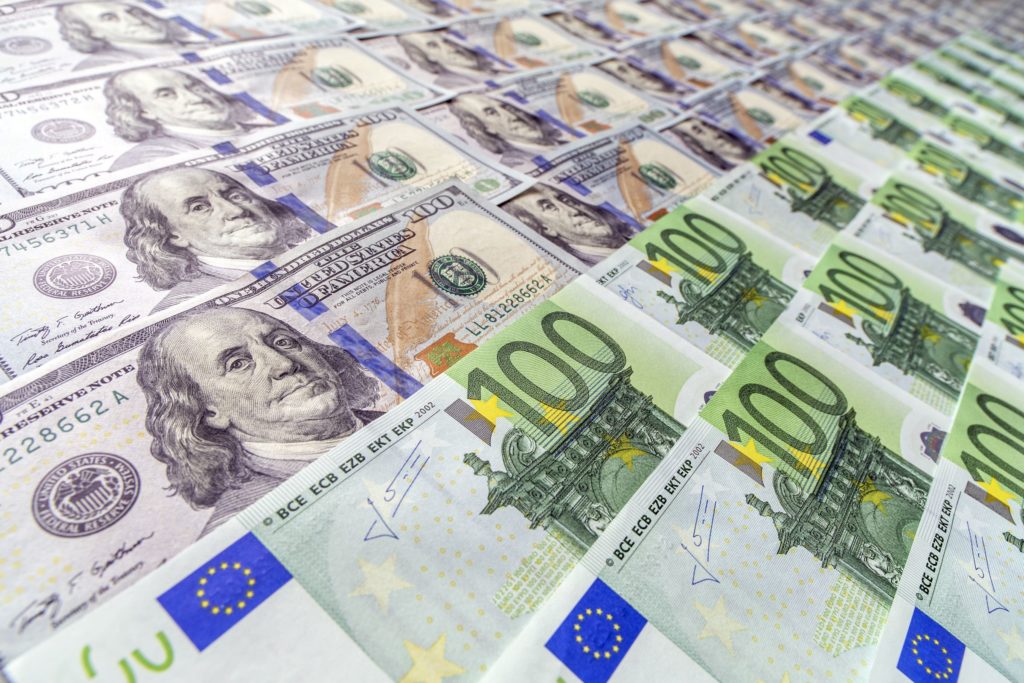
Debts exceeding GDP are already the new normal in the West.
Debts exceeding GDP are already the new normal in the West. (Photo: internet reproduction)

Even some central banks of emerging countries, historically fearful -and rightly so- of hyperinflation, have gone out to purchase debt on a large scale this time around. It is another indication that times have changed and some maxims no longer apply: few guardians of orthodoxy at any price have raised their voices.

But perhaps the great turning point in the script was in terms of fiscal policy. With a Republican in the White House, the almost free money has turned the US into an advocate of Keynesianism: with a trillion-dollar stimulus, equal to very few countries, it was able to sustain available income for families during the quarantine.

Debts exceeding GDP are already the new normal in the West. And Kristalina Georgieva, managing director of the International Monetary Fund (IMF), has not refrained from making it clear that new winds are blowing and that austerity measures are a thing of the past. At least for now: the goal must be to emerge from this crisis with minimal scarring.

“You will not hear the IMF say this often: spend. But that’s what we’re telling governments: spend as much as you can, but keep your receipts, make sure you account for how the money is used,” she said in June.

In Europe, the pandemic earthquake also rattled fiscal foundations that were believed to be firmly in place. The stability and growth pact soon became worthless. With the rescue fund, the Old Continent crossed the Rubicon of bonus issuance.

Angela Merkel, today one of the sponsors and strongest advocates of change in the script, once said “there will be no mutualization of debt as long as I live” – it seems like a century ago. If in the last decade it was Germany that led the group of debt hawks, nowadays it is Holland – an important country, but of much less specific gravity – that tried to torpedo any advance. With limited success, because it was soft: it managed to cut the volume of subsidies, but failed to torpedo them, as intended.

“This explosion in fiscal policy is justified, but not always the way the money is spent,” says French economist Charles Wyplosz. “When a government announces that it will increase its spending by billions of euros, all interest groups use their tremendous influence to get their share of the cake. There must be a focus on the quality of spending.”

In parallel, and based on bailouts – observing what happened with the largest European airlines is enough – the point of balance between the public and private spheres has changed:

“We have learned that when the market system is dealt a strong blow, like that of the coronavirus, it can implode, and only an external force, like the State, can stabilize it. This will affect our perspective on the balance of power between markets and governments,” says Paul de Grauwe of the London School of Economics.

Some dogmas have been blown away, also with regard to the labor market: faced with the US’ adherence to pure and simple creative destruction, most European countries, led by Denmark, have launched ambitious – and costly – job retention programs to avoid a break in the nexus between workers and employees that will make things even worse in the medium term.

Whether called ERTE, furloughs, ‘Kurzarbeit’, or ‘chômage partiel’, the use of these instruments has prevented a sharp rise in unemployment. “This could not be done until it could be done,” Talavera points out. “It is remarkable how quickly countries have adapted to this kind of policy. There is no neutral policy, they all have their negative side, but the alternative for the market to choose the winners was worse.”

Germany, and Spain to a lesser extent, have already shown their willingness to extend these schemes, but the most complex issue will arise within a few months when this artificial ventilator will need to be disconnected and prevent the necessary transfer of workers between sectors.

Western economists came out of the 1970s with a clear maxim: inflation was the greatest risk they faced, and virtually the whole machinery of economic policy focused on mitigating it. “But the message that emerged from the global financial crisis, and even more so today, is that in very adverse contexts we need greater coordination between fiscal policy and monetary policy,” Panizza stresses.

“This does not mean that everything is worthwhile, that there are no budget restrictions and that public spending can always be financed by printing money, as advocates of the modern monetary theory say. But in the short term, monetary policy can create fiscal elbowroom by keeping financing costs low and offering support.”

Unless central banks hesitate, the risk of a financial crisis will not spread. And as former chief economist of the IMF Olivier Blanchard recently noted, “as long as interest rates remain manageable, there will be no need for cuts or foolish tax raises, and we will be able to cope with our debt from now until the end of the crisis without having to do anything crazy afterwards.”

With zero interest rates – the Fed has recently made it clear that they will be long-lasting – and safe liquidity, the tide will continue to ebb more or less calmly. The great unknown is what will happen afterwards – what are the consequences of stretching the rope of economic policy beyond the limits that we once believed immovable?

“Beware of uncritical acceptance of radically heterodox approaches, because the economy cannot move indefinitely over a bag of debt,” Arias concludes. “Now should not be the priority, but rather the medium-term.”

Source: El País

This article was produced by The Rio Times’ automated newsroom system. How we use AI · Report an error

Read More from The Rio Times

The Rio Times · Power Map
See who really holds power in Latin America
Click to open the Power Map
All News Brazil art news Brazil Best English News Brazil Best News Brazil Brazil Brazil economy Brazil football Brazil Museum Fire Brazil national football team Brazil News Brazil Pension Reform Brazil Real Brazil Visa Brazilian Newspaper Business News Brazil Covid-19 Latin America culture news Brazil English Culture News Brazil English Info Brazil English Info Rio de Janeiro English News Argentina English News Belo Horizonte English News Bolivia English News Brasilia English News Brazil English News Chile English News Colombia English News Cuba English News Curitiba English News Ecuador English News El Salvador English News Falklands English News Florianopolis English News Guetamala English News Latin America English News Mexico English News Panama English News Paraguay English News Peru English News Rio de Janeiro English News Sao Paulo English News Uruguay English News Venezuela English Newspaper Brazil English Newspaper Rio de Janeiro Falkland Islands General News Brazil Info Brazil Info Rio de Janeiro Invest in Brazil Mining News Brazil Natioal Museum of Brazil News Argentina News Bolivia News Brasilia news Brazil News Chile News Colombia News Cuba News Ecuador News El Salvador News Falklands News Florianopolis News Guatemala News Latin America News Mexico News Panama News Paraguay News Peru News Rio de Janeiro News Uruguay News Venezuela Oil News Brazil President of Brazil Rio de Janeiro São Paulo News Science News Brazil travel Brazil Travel News Brazil Universities Brazil

Rotate for Best Experience

This report is optimized for landscape viewing. Rotate your phone for the full experience.