Despite New Vaccine Batches, Brazil Covers Only 40% of Priority Groups
RIO DE JANEIRO, BRAZIL – On Friday, January 22nd, Brazil secured an additional 6.8 million doses of vaccines against the coronavirus, after a decision by ANVISA (National Health Regulatory Agency) and the arrival of a shipment from India.

After a week-long wait, the cargo that landed at Guarulhos (SP) contained two million doses of the Oxford-AstraZeneca vaccine, approved last Sunday, January 17th, by ANVISA along with another six million doses of the CoronaVac imported from China – and which are now being administered by states and municipalities in their vaccination campaigns.
Also on this Friday, ANVISA authorized the emergency use of another 4.8 million doses of the CoronaVac, labeled and packaged by the Butantan Institute in São Paulo. As a result, Brazil now has 12.8 million doses of vaccines to fight the pandemic.
However, although the news is to be celebrated, this amount only manages to immunize the equivalent of 40.3% of the population determined by the federal government as having priority for the initial immunization phase.
The National Vaccination Operationalization Plan against Covid-19, published in December by the Bolsonaro government, establishes that the first phase of the vaccination campaign against Covid-19 in the country must target healthcare workers, people aged 75 or older, people over 60 living in nursing homes or geriatric clinics, indigenous population and riverine peoples and communities.
According to the Ministry of Health, this totals 14.8 million people, who will require 31.7 million doses, given that all current vaccines require the administration of two doses (necessarily of the same vaccine) to each person.
The second emergency use application of the CoronaVac to ANVISA had been recently announced by Dimas Covas, director of the Butantan Institute – these 4.8 million doses, unlike the first lot of the CoronaVac, did not come ready-made from China, but were packaged in Brazil by the Institute.
The Butantan says that last Friday’s authorization will allow the domestic production of 40 million doses of the CoronaVac, through the same process (and, therefore, without the need of a third approval request at ANVISA).
However, a disadvantage is that this total production depends on raw materials that Brazil is struggling to import from China. The same obstacle is being experienced for the national production of the AstraZeneca vaccine by Fiocruz.
Last week, Minister of Health Eduardo Pazuello said that “China has not expedited the required export documents for the IFA (Active Pharmaceutical Ingredient) to be shipped to Brazil”.
The Brazilian Embassy in China said it is “in contact with the Chinese authorities and with the company responsible for supplying the raw materials to find the best way to resolve the issue.”
Fiocruz said the failure to schedule delivery of these raw materials may delay delivery of the first batch of the AstraZeneca vaccine produced in Brazil that was expected to start between February 8th and 12th.
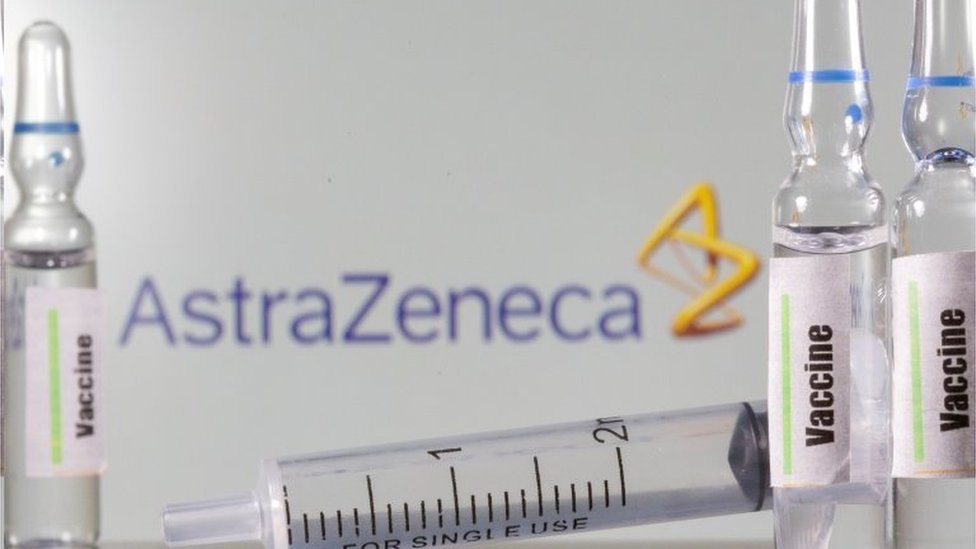
AstraZeneca’s doses are a crucial part of the federal government’s vaccination plan, which says it expects to have 100.4 million doses by July this year.
What share of the population needs to be immunized?
The availability of more doses and the waiting time for raw materials is part of the complex debate of how many people need to be vaccinated in order for the virus to stop spreading – and for people to return to normal pre-pandemic life.
It is not an easy calculation, since it depends as much on the efficacy of each vaccine as on the speed of virus circulation (a factor that is still being studied, given that the virus is relatively new to science).
On January 19th, epidemiologist Carla Domingues, who headed Brazil’s National Immunization Program between 2011 and 2019, said international studies have shown that around 70% of a population would need to be immunized for the virus to actually slow down.
A total of 70% of the Brazilian population is 147 million people, which would demand the supply of almost 300 million doses to provide widespread protection.
“It is a controversial subject and with very diverse opinions, mainly because it depends on the protection capacity of each vaccine,” explains Estevão Urbano, president of the Minas Gerais Infectology Society.
In other words, the results of Phase 3 clinical trials of the vaccines offered must be taken into account.
CoronaVac – for the time being the vaccine with the highest distribution in Brazil – has provided 50.38% global protection in the trials conducted in Brazil. AstraZeneca’s vaccine offered 70.4%.
“A vaccine with a lower capacity to prevent contagion – the CoronaVac, for instance, with a protection of about 50% – will require more people to be immunized than the Pfizer vaccine, which is 95% effective in protecting against infection,” continues Urbano.
“If we focus on the CoronaVac, then I believe that between 50% and 70% of the population will need to be vaccinated, to achieve the start of a herd immunity effect (when the collective protection provided by the vaccine hinders the widespread circulation of the virus)”.
This 70% of the population vaccinated with an immunizer that guarantees protection to about half of those vaccinated would ultimately result in one-third of the total population fully protected, continues the doctor. “But this is difficult to predict,” he adds.
It is important to recall that the CoronaVac showed higher efficacy (78%) in preventing people infected with the coronavirus from needing medical attention and even higher in preventing these same people from developing severe Covid-19 symptoms.
In practice, an unvaccinated person exposed to the virus has a double chance of developing Covid-19 when compared to someone who is vaccinated with the immunizer.
The National Vaccination Operationalization Plan Against Covid-19 says the country is in negotiations to secure 350 million doses of different vaccines.
However, a significant part of this amount refers to memoranda of understanding with manufacturers such as Pfizer and Janssen for which there are still no requests for approval at ANVISA and no specific prospect of receiving batches.
Source: Correio Brazilience
More: Brazil news in English, every day from The Rio Times.
This article was produced by The Rio Times’ automated newsroom system. How we use AI · Report an error · Editorial responsibility: Matthias Camenzind, Editor-in-Chief