Life Should Return to Normal by End 2021, Says BioNTech/Pfizer Vaccine Scientist
RIO DE JANEIRO, BRAZIL – According to BioNTech co-founder Ugur Sahin, a professor in Germany who leads the development of the U.S. pharmaceutical company Pfizer’s vaccine against the novel coronavirus, life should return to normal by the end of 2021.
In an interview to the British BBC, Sahin said that “he hopes that new results analysis will show both a reduction in the transmission of the virus among people and a block to the development of symptoms by those infected.”
“I am very confident that transmission between people will be reduced by such an effective vaccine. Maybe not by 90 percent, but maybe by 50 percent. However, we should not forget that even this could result in a dramatic reduction in the spread of the pandemic,” he told the BBC.

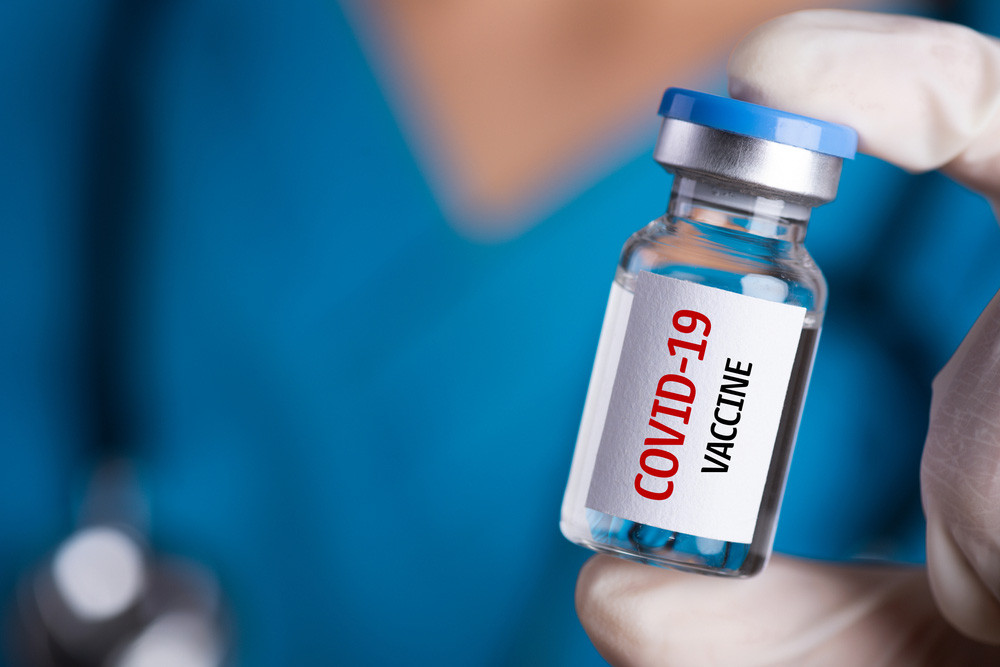
On Monday, November 9th, Pfizer released new results from the latest trial phase of its vaccine. According to the company, the experimental vaccine proved to be over 90 percent effective in subjects who had no Covid-19 infections after a week of receiving the second required dose of the immunization.
The pharmaceutical company’s analysis found that 94 of the 43,538 volunteers involved in the trials were infected by the disease. It takes 164 confirmed cases to classify the vaccine as fully functional.
Pfizer expects to request an emergency approval from the Food and Drug Administration (FDA) in the third week of this month.
It was recently announced that the immunization may be available by the end of 2020, according to the company’s executives. For company president Albert Bourla, Pfizer will be able to supply approximately 40 million doses in the United States if phase 3 clinical trials proceed “as expected” and if regulatory agencies approve its emergency use. The company expects to produce up to 100 million doses by the end of the year. Another 1.3 billion doses may be manufactured next year.
Further data on the vaccine’s efficacy should be shared soon. This is the first preliminary phase three analysis released by Pfizer.
How is Pfizer and BioNTech’s vaccine made?
Pfizer’s vaccine, based on messenger RNA, is administered in two doses to achieve higher efficacy – and the doses need to be administered over a three-week interval between them. The company also states that the vaccine is capable of producing more Covid-19 neutralizing antibodies one week after the second dose is administered, which can take time.
Other companies are also working with a two-dose protection, such as Moderna, which administers the vaccine with a four-week interval, and AstraZeneca with Oxford University, which is currently testing two options, one with only one vaccine dose and the other with two doses administered two months after the first.
A two-dose vaccine requires twice as many vials, syringes, refrigerators, and clinical visits in times of limited resources worldwide. It must also be taken into account that not everyone who has been vaccinated with the first dose can be vaccinated with the second one, either because of lack of information or because they believe that only one is enough.
But administering a vaccine in two doses to increase efficacy is not an exclusive practice for SARS-CoV-2, since traditional vaccines, such as those for measles, mumps, and rubella, use the same procedure.
Pfizer’s vaccine (one of the ten in the last trial phase according to a World Health Organization report) may have up to 1.3 billion doses produced next year – and 100 million by the end of this year, considering that two per person will be required.
The fact that the vaccine is produced with the unprecedented messenger RNA technology may also impact the distribution of the vaccine in some way.
RNA vaccines need to be stored at very low temperatures of about -70°C, while DNA vaccines can be stored at room temperature. If Pfizer’s vaccine is approved, shipping it to other countries may prove an obstacle.
But there is an advantage in using this method. With the messenger RNA, there is no need to cultivate a pathogen in the laboratory, since it is the organism that does all the work – which can enable the vaccine to be manufactured more quickly. To produce it, no additional ingredient, such as the chicken eggs now used for the production of flu immunization, is required. And they can be produced in large quantities more quickly.
How is Brazil today?
Of the 48 vaccines in their trial phases, only 11 are in phase 3, the last stage before a potential approval. These are the Chinese Sinovac Biotech, the Chinese Sinopharm, the British Oxford in partnership with AstraZeneca, the American Moderna, Pfizer and BioNTech, the Russian Gamaleya Institute, the Chinese CanSino, the American Janssen Pharmaceutical Companies, and the American Novavax.
Who will be prioritized for vaccination?
No vaccine against Covid-19 has been approved yet, but countries are rushing to better understand priority among the population once protection reaches the market. A group of experts in the United States released in September a list of recommendations that can shed light on how the vaccination campaign should proceed.
According to the report by American experts (still in draft form), high-risk healthcare professionals, medics, then people of all ages with preexisting health conditions and conditions that place them at high risk, and the elderly living in crowded places should be vaccinated in the first phase.
In the second phase, vaccination should be administered to essential workers with high risk of exposure to the disease, teachers and other professionals in the education area, people with preexisting medium risk conditions, older adults not included in the first phase, homeless people who spend their nights in shelters, individuals in detention and professionals who work in the areas.
The third phase should focus on young people, children, and essential workers who were not included in the first two phases. It is only in the fourth and final phase that the population as a whole will be vaccinated.
How effective does a vaccine need to be?
According to a research study published in the American Journal of Preventive Medicine, a vaccine must be 80 percent effective to put an end to the pandemic. To prevent others from occurring, prevention needs to be 70 percent effective.
A vaccine with a lower efficacy rate, from 60 to 80 percent, may even reduce the need for other measures to avoid the transmission of the virus, such as social distancing. But it is not that simple.
This is because a vaccine’s efficacy is directly proportional to the amount of people who take it, that is, if 75 percent of the population is vaccinated, the protection needs to be 70 percent able to prevent an infection to avoid future pandemics and 80 percent effective to end the outbreak of a disease.
The prospects change if only 60 percent of people are vaccinated, and the efficacy needs to be 100 percent to be able to end a pandemic that is already occurring – like that of Covid-19.
This suggests that life may not return to “normal” once a vaccine finally passes all phases of clinical trials and is approved, and it may take until 75 percent of the world’s population is vaccinated.
Source: Exame
More: Brazil news in English, every day from The Rio Times.
This article was produced by The Rio Times’ automated newsroom system. How we use AI · Report an error · Editorial responsibility: Matthias Camenzind, Editor-in-Chief
Brazil runoff, Sunday, October 25: Brazil runoff: date, poll closing times and when results start. Latest: Brazil runoff polls, Flávio 51%, Lula 49%.