Masks and Quarantine Will Not Halt Future Pandemics; Sustainable Consumption Will
RIO DE JANEIRO, BRAZIL – Forget governments, scientists, and doctors for a moment. The next pandemic is on its way and it is you who can prevent it. Now. Right now. Because the wave approaches a little closer with each meter that humans take from nature.
“If you remove some elements from an ecosystem it may be the case that nothing happens, but when you remove many… the balance is lost and it is more difficult to control species with a higher viral load and pathogens”, says Andreu Escrivá, a graduate in Environmental Sciences and Ph.D. in Biodiversity.
His analysis avoids blaming China, a bat, or the pangolin: that is to easy.

The tricky thing is to assume that, outside their original habitats, animals like rats and bats adapt to degraded areas closer to humans, and that the danger of transmission of new diseases increases when they settle in these regions. It is a documented process. It was, for instance, the source of the Nipah virus, more deadly than the Ebola, with no cure and which surfaces every year. The pathogen bounced from bats to pigs and then to humans in 1998. “We invaded their habitats and this produces side effects,” Christian Walzer, executive director of the Wildlife Conservation Society, told The New York Times.
It’s not an exotic case. There are many more, and the number of diseases that can potentially feed a pandemic has not stopped growing in recent years. If by mid last century there were one or two outbreaks every year, over the past three decades the number of infectious disease outbreaks detected has multiplied threefold, according to a study by Brown University (United States).
Some of the viruses that caused them are particularly problematic because of their complexity – such as H1N1, which carries genes from human viruses, one of poultry and two of pigs – and recent diseases such as influenza A and swine flu were a clear warning that the risk of transmission on a global scale was real. Clearly, all of this was not taken seriously.
Anyone would say that we are deaf to the warning. And blind to the fact that the massive exploitation of nature has turned against us. We may now understand the scientific community’s message that there are three ingredients that make a perfect cocktail for the current pandemic, and that may be even more relevant in the next one: the destruction of ecosystems, the decline in biodiversity, and the trade in wildlife. In addition, there is the high (and not very ecological) human mobility, which can reach any point on the planet in a matter of hours.
Responsible consumption as a political statement
In theory, small gestures are enough to halt a large pandemic. In practice, performing them is very difficult to begin with because it implies changing the scale with which we measure actions, tastes, and consumption decisions. “We have to take care of the environment, but not only what surrounds us, but also what is thousands of kilometers away. We are in a global context that requires global action,” says biologist Jesús Olivero. He is optimistic: “Changing the world seems utopian, but it is not.”
People need to be familiar with their tools to achieve this. Among the most powerful is consumption, because our way of consuming is a political statement about which world we want. Traditional sweet foods such as French toast can include palm oil, one of the foods that most impact deforestation worldwide; this is a good example of the global influence of small everyday deeds.
“Choosing alternatives helps us prevent this from happening,” says Andreu Escrivá, who has just published the book ‘How We Got to Climate Change and Where to Go from Here’. It also addresses the consumption of local produce, be it vegetables, tomatoes, or any other product. This would also mean ceasing to consume bushmeat, exotic foods that imply an increased risk of people being exposed to dangerous viruses.
Another action to be considered points directly to the purchase and sale of exotic, legal, and illegal species. “If there are countries that export protected species, it’s because there are countries that buy them,” says Professor Jesús Olivero, who stresses that even the regulated trade is also problematic.
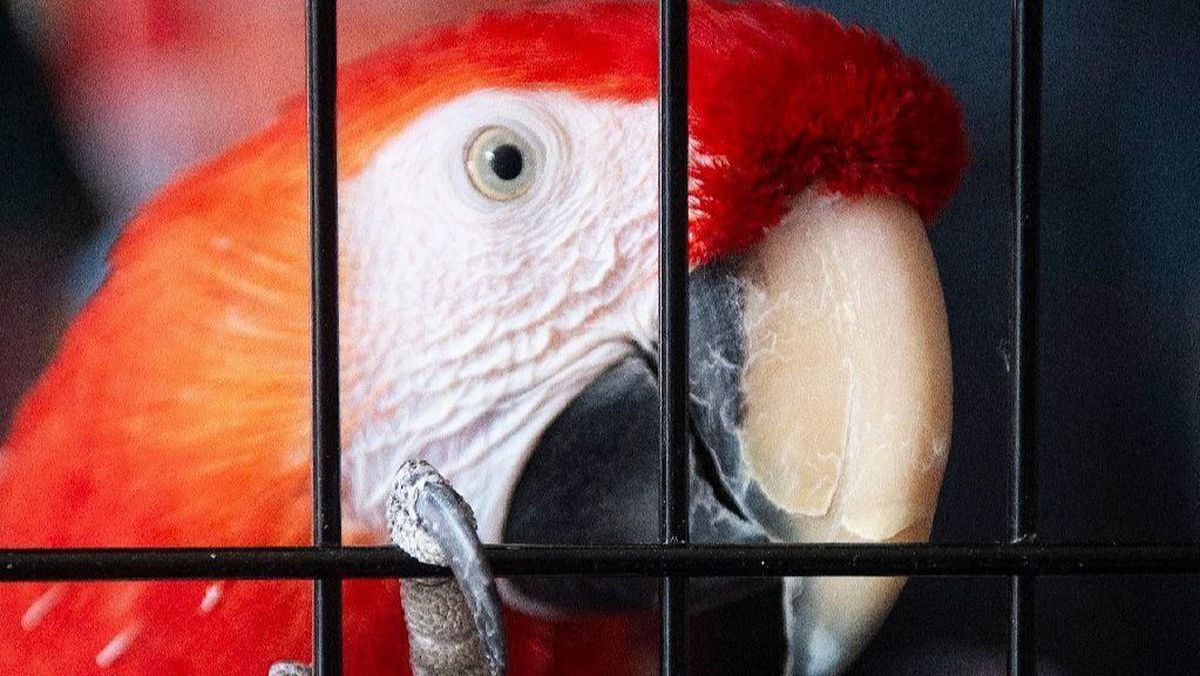
“We’re all responsible for not having exotic pets,” he says. Not only because we thereby remove chances for new viruses to expand, but also because they can produce pests in their new surroundings and disrupt the natural balance, with serious consequences. The monk parakeet and the rose-ringed parakeet, which invaded several Spanish cities precisely because of the legal trade in these species, illustrate how nature easily evades control.
“It is also a matter of consuming less”
“The time has come for us to understand what we need to renounce in favor of austerity, but not misunderstood, rather as an ethical virtue,” adds Lucía Vázquez, an expert and trainer in the Sustainable Development Goals (SDGs). And she warns that it is not a race “to see who is more sustainable” and one should not “demonize who is not”.
Vázquez encourages everyone to ask themselves to what extent they are willing to give up using their car for any travel, to travel by plane to spend a weekend in London, and to stop consuming non-sustainable products. “It is not a matter of everything we buy being environmentally friendly and all our clothes being made in a sustainable way. That’s important, but it’s also about consuming less,” she says.
Another way to improve the environment – and, simultaneously, hinder the advent of a future pandemic – is to make more sustainable daily purchases, which typically requires going to several stores instead of just one supermarket. This takes time and that is exactly what we never have. “But confinement should have helped us realize that it’s possible to avoid the constant rush, the willingness to run for everything, to get places fast.”
Among the small actions with which you can contribute to halt the next pandemic are not only lifestyle habits; also important is becoming aware of key issues such as the responsibility that comes with the right to vote.
Voting has the power to recognize that it is easier and more attractive to use a bicycle, to make train travel – one of the most environmentally friendly means of transport – more accessible, and that other actions that make our life more sustainable do not always imply a sacrifice, whether economic, social or time-related.
This is where initiatives such as the Sustainable Development Goals serve as a roadmap and guideline for governments, municipalities, associations, and organizations in their immediate surroundings. The global fight against the next pandemic begins with local action. This one should not be halted.
Source: El País
More: Brazil news in English, every day from The Rio Times.
This article was produced by The Rio Times’ automated newsroom system. How we use AI · Report an error
Read More from The Rio Times