Scientists are testing Covid-19 drug; Brazil will begin trials of two serums
RIO DE JANEIRO, BRAZIL – With vaccination still far from immunizing most of the world’s population against Covid-19, pharmaceutical laboratories are now testing drugs against the disease in human beings.
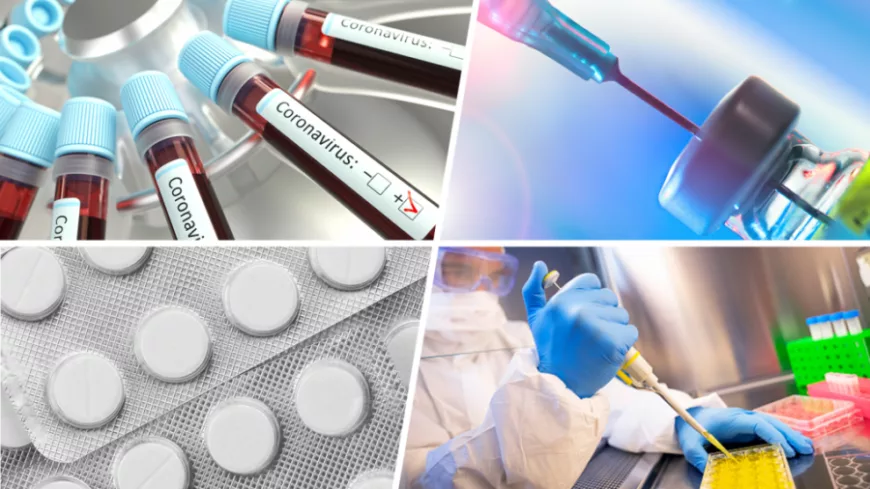
Big pharma giants Pfizer, MSD, and Roche are the most advanced, developing oral antivirals. Boehringer is investing in treatment with monoclonal antibodies. In Brazil, two serums, one from the Butantan Institute and another from the Vital Brazil Institute, should start to be tested in patients in the coming months. It is hoped that some of the projects will be successful by early 2022.
The main goal of the new drugs is to reduce hospitalizations and deaths caused by the disease. Unlike antibiotics, which in general can be used against several types of bacterial infections, drugs against a certain type of virus are unlikely to work against others.
Viruses are much more diverse and have fewer proteins in common that can be used as generic targets.
For a drug to work, it needs to hit a “target” – typically a protein. This is particularly difficult with viruses, which replicate inside human cells. Thus, they lead cellular mechanisms to work in their favor. To be effective, a drug needs to penetrate the infected cells and attack the virus. But it must do so without destroying its host.
Targeting the virus before it enters the cell is another possible strategy. But it isn’t simple: the virus’ shell is extremely strong and protects its genetic material. Destroying this shell and exposing its material can be toxic to the human organism.
Another problem is that while drugs take a long time to be developed, viruses mutate very quickly. They can therefore develop resistance to the drugs. Still, there are several effective antivirals – such as those against HIV, influenza, and hepatitis C.
One of the most advanced projects is a joint venture between MSD and biotech company Ridgeback Biotherapeutics. The compound is called molnupiravir. It was initially developed against SARS and MERS. In a phase 2 trial, the drug was well tolerated in humans – taken in pill form, twice a day for five days.
The aim is for the drug to act early in the infection when the first symptoms emerge. The goal is to prevent the virus from replicating, to prevent the worsening of the infection and the need for hospitalization. The third phase of trials is underway. It will involve over 1,000 people in 18 countries, including Brazil.
MSD expects to have initial results between September and October. “Trial data provide convincing evidence to support molnupiravir’s antiviral activity,” said Marcia Abadi, medical director of MSD in Brazil.
Another project is from Roche in partnership with Atea Pharmaceuticals. The oral drug is being tested in 1,400 people in Europe and Japan. The results should also be available by the end of this year. Like MSD’s, this drug must be taken at the onset of infection for five days.
The oral drug under development by Pfizer has been called PF-07321322. It is a protease inhibitor, like those used against HIV. It was developed specifically against Sars-CoV2. It is also being tested in humans.
The first results are expected by the end of this month. The aim of this drug is also to prevent the disease from worsening. It must be administered early on in the infection.
Another advantage of these antivirals is that they can also be used to prevent the disease, for instance, by people who have not had contact with anyone infected.
Currently, Gilead’s remdesivir is the only drug approved for use in the treatment of Covid-19. It is administered intravenously and only to hospitalized patients. These are patients in a more serious condition, and with not very encouraging results. Experts believe that the early administration of the new drugs may be critical to halt the spread of Covid.
Antibodies and serum
Boehringer Ingelheim is trying another approach. It involves the production of monoclonal antibodies (made in a laboratory from live cells).
“When we think about treating a viral infection there are two strategies: act directly on the virus, on the proteins that help viral replication, or prevent the virus from penetrating the cell,” explained Thais Gomes de Melo, Boehringer’s medical director.
Scientists identified specific antibodies in the plasma of Covid-19 patients that act on the S protein of the virus, which allows it to penetrate the cell. These antibodies were synthetically replicated in the laboratory to develop the treatment.
In the case of Boehringer’s product, administration will be through inhalation. The process would ensure higher concentrations in the patient’s lung. Phase 3 trials in humans will start in September in 40 countries, including Brazil.
In Brazil, São Paulo’s Butantan Institute and Rio’s Vital Brazil Institute have developed serums that can be administered as soon as the patient presents the first symptoms. They are based on the isolation of antibodies developed by patients against Sars-CoV-2 and its replication in animal models – horses, for example.
The two institutes are preparing to begin human trials. “What virology has taught us over the past 40 years is that with these high mortality viruses, cocktails are often more effective than just one drug; this is what happens with the HIV and hepatitis C viruses,” explains Fiocruz virologist Thiago Moreno, whose laboratory is studying the repositioning of some antivirals used in these cocktails for the treatment of Covid-19.
“I think it’s very difficult for a single drug to be able to cure Covid-19. But I think a realistic ambition is to reduce hospitalizations and mortality. I think that’s the big challenge in the short term.”
More: Brazil news in English, every day from The Rio Times.
This article was produced by The Rio Times’ automated newsroom system. How we use AI · Report an error · Editorial responsibility: Matthias Camenzind, Editor-in-Chief
Brazil runoff, Sunday, October 25: When is the Brazil runoff election. Latest: Brazil runoff polls, Flávio 51%, Lula 49%.