Twelve European Countries Have Adopted Restrictions as Second Covid-19 Wave Grows
RIO DE JANEIRO, BRAZIL – With the second wave of Covid-19 in Europe, some 12 European countries have implemented a number of restrictive measures in an attempt to curb the spread of the epidemic across the continent.
Among them, some countries have chosen milder forms of a lockdown, while others bet on more decentralized curfews. Below is a list of lockdown measures announced in different European countries:
Germany
Monday, November 2nd, Germany officially adopted a one-month partial lockdown in an attempt to mitigate the impact of the second wave of Covid-19 in the country.

Unlike the first lockdown, which ran from March to April and paralyzed the German economy as a whole, the measures are more focused on entertainment venues this time.
Leisure areas and restaurants are closed, entertainment events banned and parties should be restricted. Outdoor gatherings are only allowed for a maximum of two members from two different households and a maximum of ten people.
German Chancellor Angela Merkel has urged the population to refrain from personal travel and visits to other people, including family members. The measures are effective until the end of November.
France
Wednesday, October 28th, French President Emmanuel Macron decreed a partial lockdown across the country.
According to the president, the new lockdown should run at least until December 1st. Schools will remain open and operational, while non-essential businesses will remain closed. Borders with European Union countries will remain open.
Public establishments, such as restaurants and bars, are closed. Macron said work could continue, but at a distance whenever possible.
United Kingdom
Saturday, October 31st, British Prime Minister Boris Johnson announced the new lockdown measures for the United Kingdom. Unlike in the first Covid-19 wave, restrictions are somewhat milder this time.
To contain the accelerated spread of the second wave of infections by the novel coronavirus in the country, the new confinement rules will remain in effect from midnight Thursday, November 5th, until December 2nd.
The home office is highly encouraged in all jobs that can keep their operations at a distance. The advice is to leave home exclusively for work. Essential-products stores, schools, and universities will remain open.
Bars and restaurants will be able to operate exclusively for deliveries. There will be regional lockdown variations, based on the extent to which the novel coronavirus is spreading in each location.
Also last Saturday, the UK became the ninth country to pass the one million Covid-19 case mark. The country records the highest death toll in Europe, around 46,000 fatalities.
Belgium
The Belgian government announced a new lockdown in the country on Friday, October 30th. The measure was announced by the government spokesperson, who said that hospitals in the country are on the verge of collapse.
The new measures include a curfew between 10 PM and 6 AM and the closing of all stores at 8 PM. Gyms, swimming pools, and other cultural and leisure facilities are closed. Family reunions may only have up to four people. Cultural or leisure events are forbidden. The restrictions extend until November 19th.
Last week, the country broke the record of infections in a single day: over 18,000, almost ten times the peak of the first wave of the pandemic. Belgium, with only 11 million inhabitants, holds the second-highest infection rate in Europe, behind the Czech Republic, where new Covid-19 cases double every 13 days.
Italy
The Italian government announced that the country’s new restrictive measures should run until November 24th. Italy, one of the most affected countries in the first wave of the disease in Europe, will adopt a milder lockdown than before.
Streets and squares will be closed at 9 PM. Bars and restaurants can only operate from 5 AM to 6 PM, including Sundays. Tables may seat up to four people. Gyms, swimming pools, wellness centers, and spas have been suspended.
The government also recommends that people avoid using public or private transportation, except for work, school, for health reasons and for urgent matters.
Czech Republic
Services, schools, and stores selling non-essential items will be closed until November 20th. People will not be able to leave home unless they are going to work, practicing exercises, buying food or medicines, and seeking medical assistance.
Austria
In Austria, the government has decreed a curfew to prevent people from remaining on the streets between 8 PM and 6 AM. The closure of cafes, bars, and restaurants was also imposed.
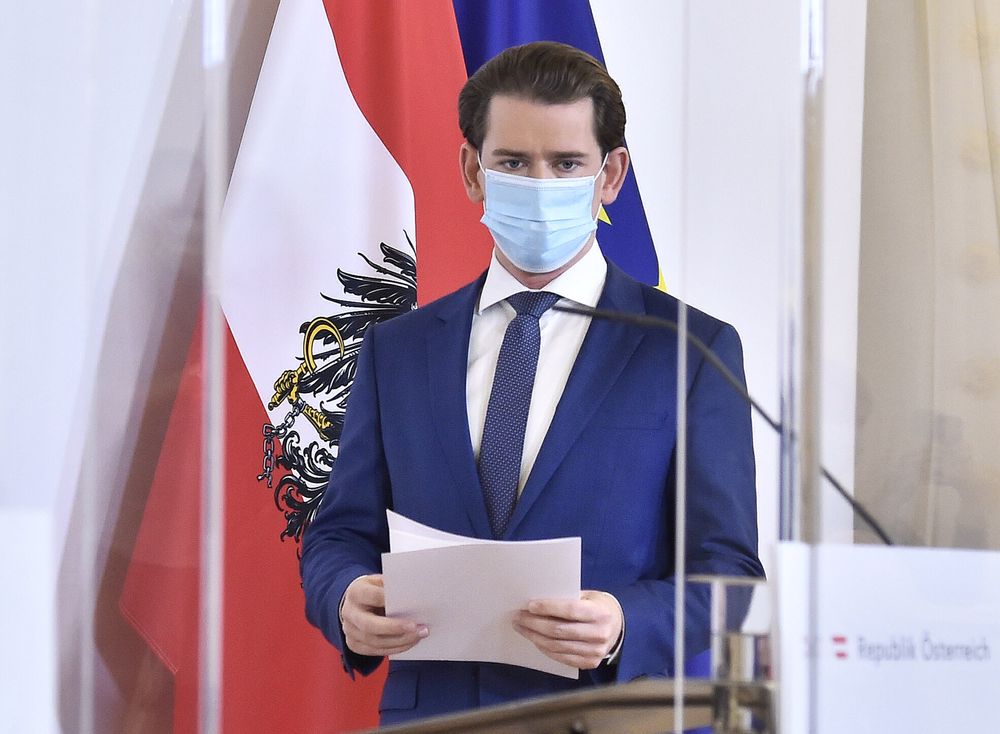
Establishments may only receive takeaway orders. However, factories, stores, kindergartens, and elementary schools will remain open, while secondary schools and universities will switch to distance learning.
The measures came into force on November 3rd and will extend until the end of the month.
Greece
The Greek government announced the closure of restaurants, cafes, clubs, cinemas, museums, and gyms as of Tuesday, November 3rd. Stores supplying essential products and schools will remain open. University classes will be held remotely, and half the workforce in the public and private sectors will work from home.
In addition to the capital, the most severe restrictions apply to most major cities in northern Greece. The rest of the country will have to comply with curfews between midnight and 5 AM.
Portugal
Quarantine with permission to leave home only in cases of emergency is again the rule in 121 regions, where over 7.1 million Portuguese live, about three-quarters of the population.
The list of cities impacted by the decision will be reconsidered every two weeks. The home office is again mandatory for jobs where this is possible.
All commercial establishments (except pharmacies, medical practices, clinics, and funeral homes) will close by 10 PM. Restaurants may not seat more than six people per table.
Spain
As in Austria and Greece, Spain has also implemented a curfew between 11 PM and 6 AM. Spain’s regional leaders may change the start and end of curfew times in their territory by one hour.
The measures came into force on October 25th and are initially effective for only 15 days, but Prime Minister Pedro Sánchez said he will ask the parliament to extend them for six months if needed.
Switzerland
Since Thursday, October 29th, clubs and nightclubs were forced to shut their doors. Bars, restaurants, and cafés should close at 11 PM and tables can accommodate a maximum of four people.
Public events with over 50 people are banned, including cultural and religious meetings and sports games. Exceptions include organized political meetings.
Denmark
The Danish government has banned the sale of alcoholic beverages after 10 PM in an attempt to keep people at home. The number of people allowed to attend meetings was reduced from 50 to 10. The mandatory wearing of masks in public places was also decreed.
The restrictions are expected to run until January 2nd, 2021, and the government has already reported that new restrictions may be imposed at any time.
Source: InfoMoney
More: Brazil news in English, every day from The Rio Times.
This article was produced by The Rio Times’ automated newsroom system. How we use AI · Report an error
Read More from The Rio Times