UN Development Agency Proposes Temporary Basic Income to Halt Covid-19 Pandemic
RIO DE JANEIRO, BRAZIL – Hundreds of millions of people face the dilemma of confining themselves daily so as not to catch the novel coronavirus, thus halting the spread of the pandemic, or to go out to work and keep eating. The majority – the impoverished in poor countries, casual workers who live one day at a time and have no support network if their income is lost – choose the second option. It is therefore impossible to bend downward the contagion curve, as has been achieved in advanced economies by confining the population, and SARS-CoV2 continues its uncontrollable spread.

This is the finding of a study by the United Nations Development Programme (UNDP), which proposes that the governments of developing nations should ensure a temporary basic income, while the pandemic persists, to people in poverty or at serious risk of falling into it, thereby putting an end to this dilemma between catching Covid-19 and going hungry.
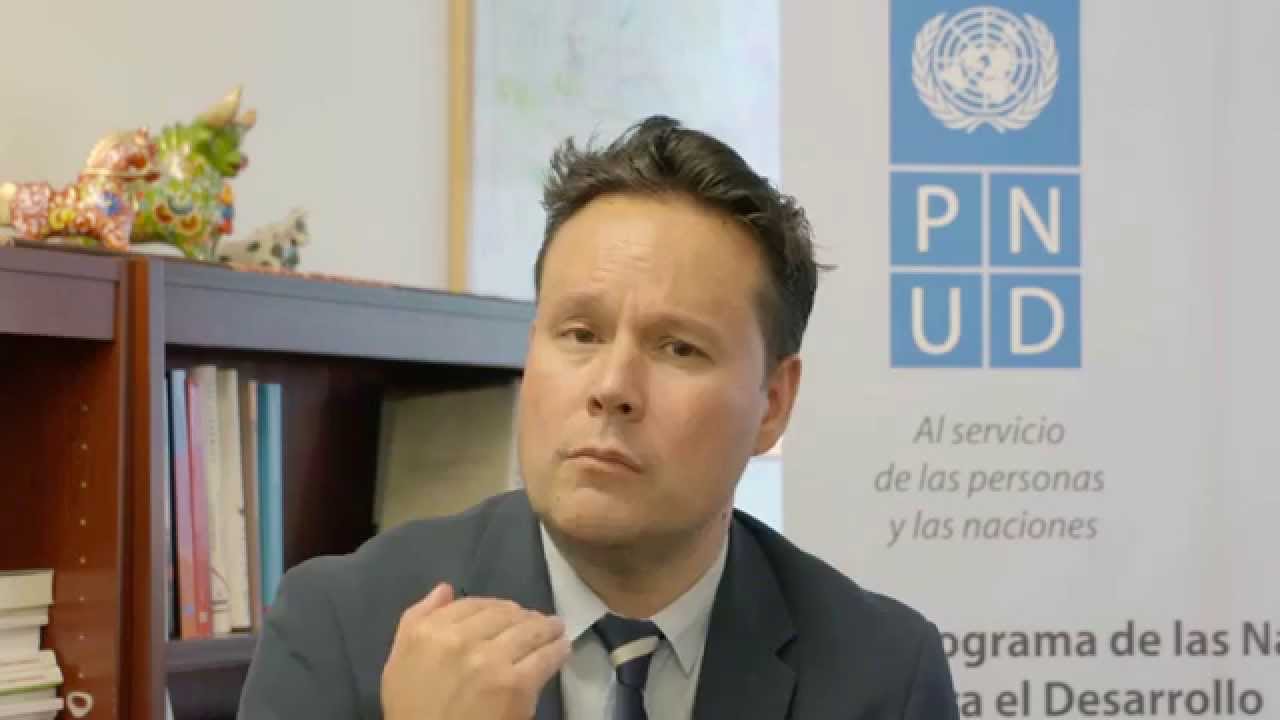
Specifically, the “Temporary Basic Income: Protecting Poor and Vulnerable People in Developing Countries” report, published on Thursday, July 23rd, proposes that 132 low and middle-income countries ensure a basic income for a limited time to nearly three billion people, 44 percent of the global population. “This is not a plea for donations, it is not an aid from the UN Emergency Fund for the poorest nations, but rather a proposal for these countries’ governments to consider their options for tackling the pandemic,” Achim Steiner, UNDP administrator, said in a teleconference interview.
The spread of SARS-CoV2 has increased in recent weeks, particularly in developing countries and emerging economies, where casual labor rates are high, with no unemployment benefits or other public aid. “We need atypical solutions, we must think differently, because the greatest challenge we are facing at the moment is that, in the absence of a treatment and vaccines, this pandemic will continue to spread,” Steiner comments.
“The problem is that in trying to contain it, we have an impact on people’s economic and social livelihoods. And clearly, and particularly in developing countries where there is no social safety net, where between 70 and 80 percent of people make a living in the casual sector, confinement means no income. Temporary basic support is a legitimate option to consider in national strategies,” he said.
“The projections made two or three months ago about poverty and job and income loss are now being fulfilled,” cautioned economist George Gray Molina, the UNDP’s head of strategic policy, during an online meeting with journalists. According to his estimates, between 70 and 100 million people could fall into extreme poverty (living on less than US$1.90 or around R$10 per day) due to the economic crisis unleashed by Covid-19.
This projection is now a real problem. That is why Gray urges that his proposal be heard and embraced as soon as possible. There’s no time to waste. “We’ve reached over 14.5 million cases this week. It took three months to reach the first million, then it increased at a rate of one million a week, and lately, one million every four or five days,” he cautions.
Faced with the uncertainty of how less advanced economies could afford such a measure, UNDP researchers estimated its cost and where it could be obtained. “It is feasible,” says Steiner. “Countries have different poverty thresholds,” notes Gray. The UNDP’s proposal is to ensure that all citizens are above these thresholds, either by supplementing their meager earnings or by transferring a fixed amount, which they have estimated at US$5.50 (R$28.16) daily, which is the most commonly accepted poverty line.
In the first case – adapting the aid to the national poverty threshold – if it stands at US$1.90 a day, an income of US$3.20 would need to be granted to each citizen. If the threshold stands at US$3.20, each person should be granted a minimum of US$5.50. And where one lives in poverty despite earning over US$5.50 per day, as in most of Latin America and Europe, then ensuring up to US$13 per day would be required. Promoting this measure would cost approximately US$200 billion (a little over R$1 trillion) per month. The option of a uniform aid of US$5.50 per day for 2.78 billion people would represent an investment of US$465 billion per month.
According to Gray, these funds could come from three sources. “We are not proposing additional taxes because this is a temporary measure, which will last six, nine, or 12 months until a vaccine or cure is found. But we are speaking about reusing the existing resources,” he explains. One of them is the debt that developing countries pay their creditors. The G20 has agreed to a moratorium on debt repayments for the world’s 77 poorest countries, but UN Secretary-General António Guterres has asked that this suspension be extended to all developing countries, including middle-income countries, as well as small island states.
If fulfilled, this debt suspension would reach US$3.1 trillion this year, which is what developing countries would disburse to their creditors in 2020, estimates the UNDP. This amount would cover all or part – depending on the option – of the temporary basic income the agency proposes through the end of the year. According to the UNDP, another source could be to provide people with the subsidies that are currently earmarked for fossil fuels. And, finally, it suggests a kind of self-financing system for the aid.
“Most of the money transfers to the poor or vulnerable are for consumption and have a very strong multiplier effect at a local level. And part of the investment will be recovered through direct or indirect taxes that could in turn finance part of the aid itself,” Gray points out.
In addition to financing the measure, there are other challenges, such as the administrative aspect. How to find and pay so many people, many of them unregistered and out of the system? “We’ve seen a lot of innovation with digital tools in recent months,” says the expert. And there is the experience of countries that have already implemented aid packages for the most needy. The majority are from wealthy countries, but there are also developing nations that have started programs to protect the most vulnerable, like Togo. However, many will have to devise their own solutions.
“Clearly, we are in uncharted territory. But we can leverage on the best practices of many countries and try to apply them in an exceptional situation to establish an extraordinary set of measures to address what would otherwise arise in an intractable situation in many countries,” Steiner adds. “We are in an unprecedented situation. We need unprecedented responses. The number of infections and deaths continues to rise exponentially. What we’ve done so far is not enough.”
Source: El País
More: Brazil news in English, every day from The Rio Times.
This article was produced by The Rio Times’ automated newsroom system. How we use AI · Report an error · Editorial responsibility: Matthias Camenzind, Editor-in-Chief