Who Secures the Most Doses in Race for Covid-19 Vaccine?
RIO DE JANEIRO, BRAZIL – The race for vaccines against the novel coronavirus had begun long before they even entered the last phase of trials.
In June, the United Kingdom invested US$79 million (R$395 million) in the Oxford program in exchange for being granted 30 million doses. The United States secured 300 million doses of the same vaccine by signing an agreement of up to US$1.2 billion with the British pharmaceutical company AstraZeneca.
This week was one of good news, which may further intensify the battle over whoever will secure the first doses of each of the vaccines produced worldwide.

On Wednesday, the vaccine developed by Pfizer in partnership with the German BioNTech presented a 95 percent efficacy in phase 3 trials. According to the company, the efficacy rate is based on 170 Covid-19 cases that were observed in the study, with 162 infected people were being administered placebo doses and not the vaccine. The result, according to Pfizer, was similar in individuals despite their age, race, or ethnicity.
The new result offers even more hope to end a pandemic that has already killed over 1.3 million people worldwide. Moderna said on Monday that its vaccine was able to reduce infections by 94.5 percent. If in some cases both vaccines are taken together, the chances of a more effective protection may increase even further.
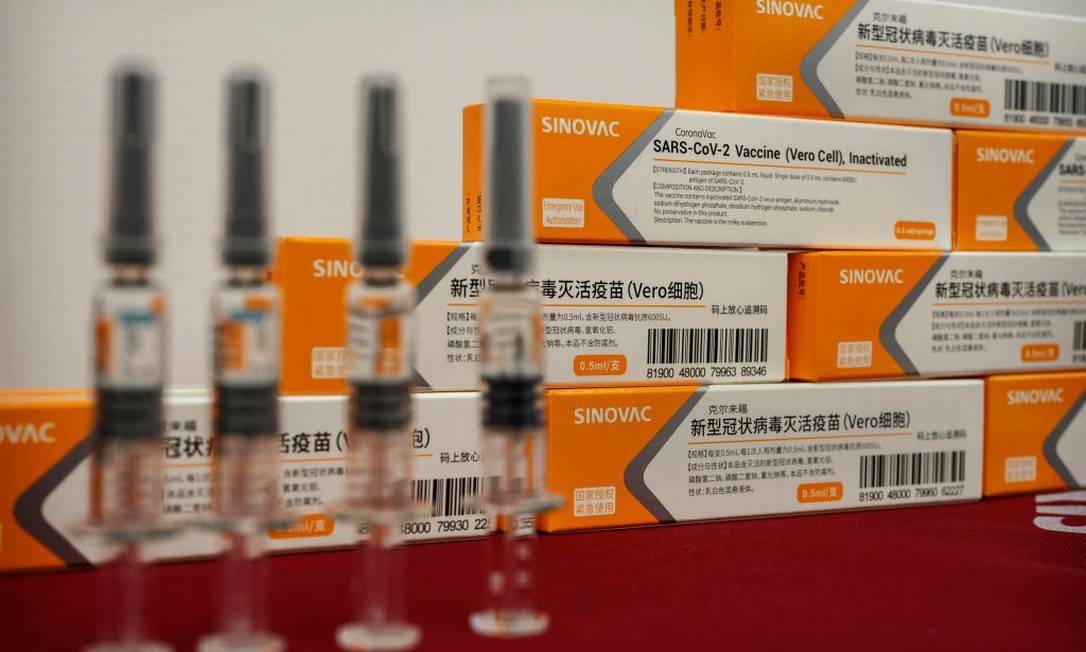
Another study published in The Lancet pointed out that the Coronavac, also tested in Brazil, is safe and was capable of producing antibodies in 97 percent of the 700 volunteers who participated in phases 1 and 2 trials in China.
For each of these vaccines, and also for the others that are under development or that are already being tested, there is a waiting list and guaranteed doses to be delivered by the companies responsible.
The state of São Paulo, for instance, has made an agreement with Sinovac to receive 46 million doses, six million of which will come ready from China, while the other 40 million should be produced on-site in Brazil, in a facility being built by the Butantan Institute.
In total, Brazil has already secured 196.4 million doses when including the Coronavac, Russian Sputnik V, and British Oxford and AstraZeneca vaccines, while Canada has made an agreement to receive 100 million doses of the protection developed by Pfizer, as well as New Zealand, which will receive 1.5 million doses.
The European Union has already reserved 850 million doses of several vaccines. In the United Kingdom, 280 million doses have been reserved in agreements. The United States, the epicenter of Covid-19 in the world, has already made a deal to receive 1.4 billion doses of virtually all vaccines in development – with the exception of the Chinese, Russian and Indian vaccines.
The fact that the deal with Pfizer is the only one to appear on the China chart means that the vaccines produced there will be automatically distributed in the country.
The United Nations UNAIDS program said that African nations are now at the end of the line to receive vaccines in the pandemic and that “it will be worse should a vaccine be found.”
With that in mind, AstraZeneca has signed a US$750 million agreement with the Coalition for Innovations in Preparing for Epidemics (CEPI) and the Gavi Alliance to secure 300 million doses for impoverished countries.
It has also made an agreement with the Serum Institute of India, which will receive 400 million doses reserved for low and middle-income countries. The pharmaceutical company has guaranteed that it will not profit in the neediest nations. The same was pledged by American Johnson & Johnson.
The European Union has assured that it will try to prevent the poorest countries from falling behind in the line of vaccines. “When we talk about a global pandemic, there’s no room for ‘me first,'” said European Commission President Ursula von der Leyen on Wednesday, November 18th.
China has also joined the fight for the development of a vaccine and has promised to donate any one that succeeds first to countries on the African continent.
Company and country initiatives are promising, but while a vaccine is not available, it is difficult to assess how quickly it will reach more needy locations with more fragile healthcare systems.
To date, no therapy or vaccine has been clinically approved or endorsed by the World Health Organization to be administered specifically to patients infected with the novel coronavirus.
How are we doing?
Of the 48 vaccines in the trial phase, only 11 are in phase 3, the last one before a potential approval. They are the Chinese Sinovac Biotech, the Chinese Sinopharm, the British Oxford in partnership with AstraZeneca, the American Moderna, Pfizer and BioNTech, the Russian Gamaleya Institute, the Chinese CanSino, the American Janssen Pharmaceutical Companies and Novavax.
Who will be prioritized for vaccination?
No vaccine against Covid-19 has been approved yet, but countries are racing to better understand what the priority order will be for the population once the protection reaches the market. A group of experts in the United States in September released a list of recommendations that can shed light on how the vaccination campaign should be conducted.
According to the American experts’ report (still in draft form), in the first phase high-risk healthcare professionals, medics, then people of all ages with preexisting health issues and conditions that place them at high risk, and the elderly living in crowded areas should be vaccinated.
In the second phase, the vaccine should be given to essential workers with a high risk of exposure to the disease, teachers and other professionals in the education area, people with preexisting medium risk diseases, older adults not included in the first phase, homeless people who spend their nights in shelters, prisoners and professionals who work in the areas.
The third phase should focus on young people, children, and essential workers who were not included in the first two. It is only in the fourth and final phase that the general population will be vaccinated.
How effective does a vaccine need to be?
According to a research study published in the American Journal of Preventive Medicine, a vaccine must be 80 percent effective to put an end to the pandemic. To prevent others from occurring, the prevention needs to be 70 percent effective.
A vaccine with an efficacy rate of between 60 and 80 percent may even reduce the need for other measures to avoid the transmission of the virus, such as social distancing. But it is not that simple.
This is because the efficacy of a vaccine is directly proportional to the amount of people who take it, that is, if 75 percent of the population is immunized, the protection needs to be 70 percent able to prevent an infection to prevent future pandemics and 80 percent effective to end the outbreak of a disease.
The prospects change if only 60 percent of people are immunized, and the efficacy needs to be 100 percent to be able to end a pandemic that is already happening – like that of Covid-19.
This means that life may not return to “normal” once a vaccine finally passes all clinical trial phases and is approved, and it may take until 75 percent of the world’s population is vaccinated.
Source: Exame
More: Brazil news in English, every day from The Rio Times.
This article was produced by The Rio Times’ automated newsroom system. How we use AI · Report an error · Editorial responsibility: Matthias Camenzind, Editor-in-Chief
Brazil runoff, Sunday, October 25: When is the Brazil runoff election. Latest: Brazil runoff polls, Flávio 51%, Lula 49%.