IBOV 177,866 ▲ 2.97% IPSA 11,032 ▲ 0.06% IPC MEX 66,496 ▲ 0.59% MERVAL 3,280,224 ▲ 2.43% COLCAP 2,307.67 ▲ 0.65% BVL PERÚ 56,194.27 ▲ 1.29% USD/BRL5.11▼ 0.19% USD/MXN17.46▼ 0.48% USD/CLP923.90▼ 0.41% USD/COP3,247▼ 2.86% USD/PEN3.39▼ 0.31% USD/ARS1,487▼ 0.03% USD/UYU40.22▲ 1.20% USD/PYG6,055▲ 1.53% USD/BOB10.14▲ 4.01% USD/DOP58.48▼ 0.12% USD/CRC448.82▲ 1.40% USD/GTQ7.63▲ 2.28% USD/HNL26.72▲ 1.50% USD/NIO36.62▲ 0.26% USD/VES707.92▼ 0.13% USD/PAB1.00— 0.00% USD/BZD2.00— 0.00% USD/JMD158.07▲ 0.80% USD/TTD6.75▲ 1.32% EUR/BRL5.83▼ 1.10% WTI 71.53 ▼ 0.76% IRON ORE 161.91 — — COPPER 6.29 ▲ 1.14% GOLD 4,120 ▼ 0.25% SILVER 60.20 ▼ 0.30% CORN 460.25 ▲ 7.60% WHEAT 639.25 ▲ 4.58% COFFEE 337.75 ▼ 5.38% SUGAR 14.86 ▼ 1.72% ORANGE JUICE 143.25 ▼ 4.44% COCOA 5,973 ▼ 5.33% CATTLE 354.38 ▼ 0.50% LITHIUM 72.32 ▼ 0.69% PETR4 39.65 ▲ 1.12% VALE3 74.18 ▲ 1.41% ITUB4 44.30 ▲ 4.02% BBDC4 18.86 ▲ 4.78% ABEV3 15.82 ▲ 0.64% BBAS3 20.58 ▲ 2.90% B3SA3 15.42 ▲ 4.26% WEGE3 46.51 ▲ 1.68% PRIO3 55.45 ▼ 0.29% SUZB3 41.55 ▲ 1.27% RENT3 41.10 ▲ 4.31% AZZA3 19.10 ▲ 3.47% CSAN3 4.07 ▲ 5.44% RAIZ4 0.35 ▼ 5.41% PCAR3 2.73 ▼ 1.09% GMAT3 3.97 ▲ 1.02% PSSA3 54.97 ▲ 3.04% CVCB3 1.25 — 0.00% POSI3 3.97 ▲ 3.12% SLCE3 14.02 ▲ 1.67% NATU3 8.68 ▲ 2.60% BRKM5 6.63 ▲ 4.25% RANI3 8.01 ▲ 1.91% CSNA3 5.18 ▲ 7.92% CMIN3 5.23 ▲ 8.28% USIM5 8.45 ▲ 1.20% GGBR4 23.01 ▲ 2.36% ENEV3 27.55 ▲ 5.15% CPFE3 47.87 ▲ 3.41% CMIG4 11.38 ▲ 2.71% EQTL3 40.91 ▲ 3.54% LREN3 14.62 ▲ 3.32% VIVT3 35.75 ▲ 3.62% RAIL3 14.36 ▲ 4.44% KLABIN 17.54 ▲ 0.80% RAIA DROGASIL 18.77 ▲ 3.53% RDOR3 36.02 ▲ 2.48% HAPV3 10.60 ▲ 5.26% FLRY3 16.42 ▲ 4.25% SMTO3 16.37 ▲ 1.99% UGPA3 30.71 ▲ 2.03% VBBR3 33.00 ▲ 2.80% BBSE3 40.35 ▲ 2.72% BPAC11 58.73 ▲ 5.48% CURY3 34.21 ▲ 4.62% AERI3 2.09 ▲ 1.46% VIVARA 23.53 ▲ 4.21% COMPASS 25.50 ▲ 3.32% VAMOS 3.06 ▲ 3.38% SANB11 27.62 ▲ 5.22% ASAI3 8.87 ▲ 4.85% SBSP3 31.11 ▲ 3.70% WALMEX 49.31 ▲ 0.59% GMEXICO 198.62 ▲ 1.68% FEMSA 223.20 ▲ 0.37% CEMEX 21.82 ▲ 0.51% GFNORTE 186.51 ▲ 0.63% BIMBO 56.10 ▲ 0.30% TELEVISA 9.73 ▲ 2.53% AMX 22.70 ▲ 0.27% GAP 412.01 ▼ 0.41% ASUR 285.12 ▲ 0.53% OMA 235.73 ▼ 0.95% KOF 181.73 ▲ 0.46% GRUMA 282.99 ▲ 0.14% KIMBER 38.07 ▼ 0.96% SQM-B 67,750 ▼ 1.95% COPEC 6,139 ▲ 1.98% BSANTANDER 79.00 ▲ 1.94% FALABELLA 5,905 ▲ 0.92% ENELAM 85.40 ▲ 1.47% CENCOSUD 2,045 ▼ 0.55% CMPC 1,109 ▲ 1.32% BANCO CHILE 188.88 ▲ 1.01% LATAM AIR 26.26 ▼ 0.53% YPF 74,400 ▼ 1.81% GGAL 8,350 ▲ 5.96% PAMPA 5,185 ▼ 0.38% TXAR 671.00 ▲ 0.98% ALUAR 978.00 ▲ 0.98% TGS 9,595 ▲ 3.06% CEPU 2,405 ▲ 3.89% MIRGOR 17,375 ▲ 1.02% COME 45.90 ▲ 1.06% LOMA NEGRA 3,583 ▲ 2.43% BYMA 314.00 ▲ 1.37% TELECOM ARG 4,245 ▲ 3.03% ECOPETROL 15.59 ▲ 1.27% BANCOLOMBIA 82.95 ▲ 2.50% GRUPO AVAL 5.08 ▲ 1.20% CREDICORP 400.81 ▲ 2.27% SOUTHERN COPPER 175.83 ▲ 0.80% BUENAVENTURA 30.00 ▲ 1.52% MERCADOLIBRE 1,852 ▲ 2.46% NUBANK 13.76 ▲ 0.66% XP 16.92 ▲ 3.11% PAGSEGURO 9.25 ▲ 2.78% STONE 11.21 ▲ 2.28% GLOBANT 29.96 ▼ 4.25% TECNOGLASS 43.90 ▲ 1.76% GAP AIRPORT 235.64 ▲ 0.50% ASUR 285.12 ▲ 0.53% OMA AIRPORT 108.09 ▼ 0.22% AMX ADR 26.04 ▲ 0.77% FEMSA ADR 127.70 ▲ 0.55% CEMEX ADR 12.48 ▲ 0.89% PETROBRAS ADR 17.32 ▲ 1.70% VALE ADR 14.46 ▲ 1.69% ITAU ADR 8.62 ▲ 4.11% SANTANDER BR 5.39 ▲ 4.86% AMBEV ADR 3.07 ▲ 0.99% CSN 1.01 ▲ 5.79% GERDAU 4.50 ▲ 2.04% LATAM ADR 56.45 ▼ 1.03% BTC 63,799 ▲ 0.96% ETH 1,790 ▲ 2.63% SOL 77.83 ▼ 0.28% XRP 1.10 ▲ 1.00% BNB 575.48 ▲ 1.23% ADA 0.17 ▲ 0.17% DOGE 0.07 ▲ 1.80% AVAX 6.74 ▲ 0.85% LINK 7.91 ▲ 2.38% DOT 0.87 ▲ 5.68% LTC 44.60 ▲ 1.91% BCH 245.50 ▲ 3.25% TRX 0.33 ▼ 0.41% XLM 0.19 ▲ 1.96% HBAR 0.07 — 0.00% NEAR 1.87 ▼ 2.42% ATOM 1.59 ▲ 2.53% AAVE 96.97 ▲ 6.26% SELIC 14.25% EMBRAER 84.60 ▲ 0.88% EMBRAER ADR 66.01 ▲ 0.72% JBS 11.91 ▲ 1.53% JBS BDR 60.78 ▲ 1.22% MBRF3 15.55 ▲ 0.91% MBRFY 2.97 ▼ 1.00% INTER 5.82 ▲ 1.93% EGX 52,312 ▲ 0.54% USD/ZAR16.31▼ 0.13% USD/NGN1,376▼ 0.12% NIKKEI 68,558 ▲ 1.20% CSI300 4,781 ▼ 1.96% HSI 24,175 ▲ 0.60% NIFTY 24,207 ▲ 1.02% KOSPI 7,476 ▲ 2.52% JCI 5,924 ▲ 0.20% USD/JPY161.72▼ 0.41% USD/CNY6.78▼ 0.25% DAX 25,067 ▼ 0.20% CAC 8,339 ▲ 0.15% FTSE 10,497 ▲ 0.24% MIB 52,614 ▲ 0.44% IBEX 19,385 ▲ 0.32% STOXX 641.10 ▲ 0.04% EUR/USD1.14▼ 0.11% GBP/USD1.34▲ 0.01% SPX 7,575 ▲ 0.42% DJI 52,637 ▲ 0.29% NDX 29,825 ▲ 0.33% RUT 2,978 ▼ 0.49% TSX 35,305 ▲ 0.30% VIX 15.03 ▼ 5.11% USD/CAD1.42▼ 0.09% US10Y 4.5690 ▲ 0.66% IBOV 177,866 ▲ 2.97% IPSA 11,032 ▲ 0.06% IPC MEX 66,496 ▲ 0.59% MERVAL 3,280,224 ▲ 2.43% COLCAP 2,307.67 ▲ 0.65% BVL PERÚ 56,194.27 ▲ 1.29% USD/BRL 5.11 ▼ 0.19% USD/MXN 17.46 ▼ 0.48% USD/CLP 923.90 ▼ 0.41% USD/COP 3,247 ▼ 2.86% USD/PEN 3.39 ▼ 0.31% USD/ARS 1,487 ▼ 0.03% USD/UYU 40.22 ▲ 1.20% USD/PYG 6,055 ▲ 1.53% USD/BOB 10.14 ▲ 4.01% USD/DOP 58.48 ▼ 0.12% USD/CRC 448.82 ▲ 1.40% USD/GTQ 7.63 ▲ 2.28% USD/HNL 26.72 ▲ 1.50% USD/NIO 36.62 ▲ 0.26% USD/VES 707.92 ▼ 0.13% USD/PAB 1.00 — 0.00% USD/BZD 2.00 — 0.00% USD/JMD 158.07 ▲ 0.39% USD/TTD 6.75 ▲ 1.44% EUR/BRL 5.83 ▼ 1.11% WTI 71.53 ▼ 0.76% IRON ORE 161.91 — — COPPER 6.29 ▲ 1.14% GOLD 4,120 ▼ 0.25% SILVER 60.20 ▼ 0.30% CORN 460.25 ▲ 7.60% WHEAT 639.25 ▲ 4.58% COFFEE 337.75 ▼ 5.38% SUGAR 14.86 ▼ 1.72% ORANGE JUICE 143.25 ▼ 4.44% COCOA 5,973 ▼ 5.33% CATTLE 354.38 ▼ 0.50% LITHIUM 72.32 ▼ 0.69% PETR4 39.65 ▲ 1.12% VALE3 74.18 ▲ 1.41% ITUB4 44.30 ▲ 4.02% BBDC4 18.86 ▲ 4.78% ABEV3 15.82 ▲ 0.64% BBAS3 20.58 ▲ 2.90% B3SA3 15.42 ▲ 4.26% WEGE3 46.51 ▲ 1.68% PRIO3 55.45 ▼ 0.29% SUZB3 41.55 ▲ 1.27% RENT3 41.10 ▲ 4.31% AZZA3 19.10 ▲ 3.47% CSAN3 4.07 ▲ 5.44% RAIZ4 0.35 ▼ 5.41% PCAR3 2.73 ▼ 1.09% GMAT3 3.97 ▲ 1.02% PSSA3 54.97 ▲ 3.04% CVCB3 1.25 — 0.00% POSI3 3.97 ▲ 3.12% SLCE3 14.02 ▲ 1.67% NATU3 8.68 ▲ 2.60% BRKM5 6.63 ▲ 4.25% RANI3 8.01 ▲ 1.91% CSNA3 5.18 ▲ 7.92% CMIN3 5.23 ▲ 8.28% USIM5 8.45 ▲ 1.20% GGBR4 23.01 ▲ 2.36% ENEV3 27.55 ▲ 5.15% CPFE3 47.87 ▲ 3.41% CMIG4 11.38 ▲ 2.71% EQTL3 40.91 ▲ 3.54% LREN3 14.62 ▲ 3.32% VIVT3 35.75 ▲ 3.62% RAIL3 14.36 ▲ 4.44% KLABIN 17.54 ▲ 0.80% RAIA DROGASIL 18.77 ▲ 3.53% RDOR3 36.02 ▲ 2.48% HAPV3 10.60 ▲ 5.26% FLRY3 16.42 ▲ 4.25% SMTO3 16.37 ▲ 1.99% UGPA3 30.71 ▲ 2.03% VBBR3 33.00 ▲ 2.80% BBSE3 40.35 ▲ 2.72% BPAC11 58.73 ▲ 5.48% CURY3 34.21 ▲ 4.62% AERI3 2.09 ▲ 1.46% VIVARA 23.53 ▲ 4.21% COMPASS 25.50 ▲ 3.32% VAMOS 3.06 ▲ 3.38% SANB11 27.62 ▲ 5.22% ASAI3 8.87 ▲ 4.85% SBSP3 31.11 ▲ 3.70% WALMEX 49.31 ▲ 0.59% GMEXICO 198.62 ▲ 1.68% FEMSA 223.20 ▲ 0.37% CEMEX 21.82 ▲ 0.51% GFNORTE 186.51 ▲ 0.63% BIMBO 56.10 ▲ 0.30% TELEVISA 9.73 ▲ 2.53% AMX 22.70 ▲ 0.27% GAP 412.01 ▼ 0.41% ASUR 285.12 ▲ 0.53% OMA 235.73 ▼ 0.95% KOF 181.73 ▲ 0.46% GRUMA 282.99 ▲ 0.14% KIMBER 38.07 ▼ 0.96% SQM-B 67,750 ▼ 1.95% COPEC 6,139 ▲ 1.98% BSANTANDER 79.00 ▲ 1.94% FALABELLA 5,905 ▲ 0.92% ENELAM 85.40 ▲ 1.47% CENCOSUD 2,045 ▼ 0.55% CMPC 1,109 ▲ 1.32% BANCO CHILE 188.88 ▲ 1.01% LATAM AIR 26.26 ▼ 0.53% YPF 74,400 ▼ 1.81% GGAL 8,350 ▲ 5.96% PAMPA 5,185 ▼ 0.38% TXAR 671.00 ▲ 0.98% ALUAR 978.00 ▲ 0.98% TGS 9,595 ▲ 3.06% CEPU 2,405 ▲ 3.89% MIRGOR 17,375 ▲ 1.02% COME 45.90 ▲ 1.06% LOMA NEGRA 3,583 ▲ 2.43% BYMA 314.00 ▲ 1.37% TELECOM ARG 4,245 ▲ 3.03% ECOPETROL 15.59 ▲ 1.27% BANCOLOMBIA 82.95 ▲ 2.50% GRUPO AVAL 5.08 ▲ 1.20% CREDICORP 400.81 ▲ 2.27% SOUTHERN COPPER 175.83 ▲ 0.80% BUENAVENTURA 30.00 ▲ 1.52% MERCADOLIBRE 1,852 ▲ 2.46% NUBANK 13.76 ▲ 0.66% XP 16.92 ▲ 3.11% PAGSEGURO 9.25 ▲ 2.78% STONE 11.21 ▲ 2.28% GLOBANT 29.96 ▼ 4.25% TECNOGLASS 43.90 ▲ 1.76% GAP AIRPORT 235.64 ▲ 0.50% ASUR 285.12 ▲ 0.53% OMA AIRPORT 108.09 ▼ 0.22% AMX ADR 26.04 ▲ 0.77% FEMSA ADR 127.70 ▲ 0.55% CEMEX ADR 12.48 ▲ 0.89% PETROBRAS ADR 17.32 ▲ 1.70% VALE ADR 14.46 ▲ 1.69% ITAU ADR 8.62 ▲ 4.11% SANTANDER BR 5.39 ▲ 4.86% AMBEV ADR 3.07 ▲ 0.99% CSN 1.01 ▲ 5.79% GERDAU 4.50 ▲ 2.04% LATAM ADR 56.45 ▼ 1.03% BTC 63,799 ▲ 0.96% ETH 1,790 ▲ 2.63% SOL 77.83 ▼ 0.28% XRP 1.10 ▲ 1.00% BNB 575.48 ▲ 1.23% ADA 0.17 ▲ 0.17% DOGE 0.07 ▲ 1.80% AVAX 6.74 ▲ 0.85% LINK 7.91 ▲ 2.38% DOT 0.87 ▲ 5.68% LTC 44.60 ▲ 1.91% BCH 245.50 ▲ 3.25% TRX 0.33 ▼ 0.41% XLM 0.19 ▲ 1.96% HBAR 0.07 — 0.00% NEAR 1.87 ▼ 2.42% ATOM 1.59 ▲ 2.53% AAVE 96.97 ▲ 6.26% SELIC 14.25% EMBRAER 84.60 ▲ 0.88% EMBRAER ADR 66.01 ▲ 0.72% JBS 11.91 ▲ 1.53% JBS BDR 60.78 ▲ 1.22% MBRF3 15.55 ▲ 0.91% MBRFY 2.97 ▼ 1.00% INTER 5.82 ▲ 1.93% EGX 52,312 ▲ 0.54% USD/ZAR 16.31 ▲ 0.02% USD/NGN 1,376 ▲ 0.08% NIKKEI 68,558 ▲ 1.20% CSI300 4,781 ▼ 1.96% HSI 24,175 ▲ 0.60% NIFTY 24,207 ▲ 1.02% KOSPI 7,476 ▲ 2.52% JCI 5,924 ▲ 0.20% USD/JPY 161.72 ▼ 0.39% USD/CNY 6.7761 ▼ 0.23% DAX 25,067 ▼ 0.20% CAC 8,339 ▲ 0.15% FTSE 10,497 ▲ 0.24% MIB 52,614 ▲ 0.44% IBEX 19,385 ▲ 0.32% STOXX 641.10 ▲ 0.04% EUR/USD 1.1417 ▼ 0.15% GBP/USD 1.3399 ▼ 0.04% SPX 7,575 ▲ 0.42% DJI 52,637 ▲ 0.29% NDX 29,825 ▲ 0.33% RUT 2,978 ▼ 0.49% TSX 35,305 ▲ 0.30% VIX 15.03 ▼ 5.11% USD/CAD 1.4158 ▼ 0.06% US10Y 4.5690 ▲ 0.66%
since 2009
Friday, July 10, 2026

Latest News Brazil

Experimental Technique Claims to Detect Coronavirus in 40 Minutes

By · April 24, 2020 · 6 min read

Daily Brief

The morning intel from across Latin America. Free.

By subscribing you agree to our privacy policy. We never share your email.

RIO DE JANEIRO, BRAZIL – US researchers are developing a rapid test for Covid-19 that could diagnose an infection within 40 minutes. The new technology is still experimental and is based on the revolutionary CRISPR genetic editing technique.

This system works as a text editor that allows changing the genetic material (DNA) of any living being. The technique was developed in 2011 by Jennifer Doudna and Emmanuelle Charpentier and represented an unprecedented revolution in basic research.

One-stop reference
Company Intelligence
Every listed company in Latin America — financials, ownership and structure for 1,450+ companies across 26 exchanges, in one place.
Browse the directory →

Little by little it also paves the way for the experimental treatment of a number of diseases, including cancer. Now, a team from the University of California in San Francisco, using Doudna’s original concept, is showing that this powerful tool can also be applied to the genetic material of the novel coronavirus, made from RNA.

US researchers are developing a rapid test for Covid-19 that could diagnose an infection within 40 minutes. The new technology is still experimental and is based on the revolutionary CRISPR genetic editing technique.
US researchers are developing a rapid test for Covid-19 that could diagnose an infection within 40 minutes. The new technology is still experimental and is based on the revolutionary CRISPR genetic editing technique. (Photo internet reproduction)
RT
Ask Rio Times
17 years of Latin America reporting, on demand.
Open the full Ask Rio Times →

“This technology is very interesting because it would allow the development of a test that anyone could perform in their home very quickly,” says Jennifer Doudna, a researcher at the University of California in Berkeley. “This could detect an infection, particularly in asymptomatic cases.”

The RNA is the intermediary molecule that reads the written instructions in the DNA and converts them into proteins, the molecules that perform vital functions. All living beings, from microscopic bacteria to colossal blue whales, need DNA to live and reproduce.

The coronavirus’s strategy is to penetrate into the middle of this process and to convince our cells that it is not an outsider. This enables it to use the cells’ own machinery to produce copies of itself. Our genome is stored in a spiral formed by two very long strips of DNA that staple to each other like a zipper. The material of the coronavirus, in turn, is made from a single strip of RNA, and this is the weak point that the North American team exploited.

CRISPR is modelled on the immune system of a number of microbes discovered by the Spaniard Francis Mojica in 1993, when he was studying unicellular beings from the salt flats of Santa Pola (east of the country). These organisms keep in their DNA genome fragments of the virus genome that they find throughout their lives. When the virus reappears, the bacteria trace it and activate a protein known as Cas, which cuts the virus genome in two and kills it.

The San Francisco team developed a CRISPR molecule that contains three elements: the genetic sequences of two genes of the novel coronavirus, which serve as a guide; the Cas-12 protein, which serves as scissors; and a third fragment of fluorescent DNA, as published in Nature Biotechnology.

The test uses a sample taken from the patient’s nose or mouth. First, chemicals are added to transcribe the RNA into DNA, because the Cas-12 can only cut DNA. If there is a virus, the guiding part attaches itself to the genome of the virus and activates the Cas-12, which is programmed to cut the chains of genetic material from a single strip in the sample.

This way, it also cuts the fluorescent strip and makes it glow. Lastly, a lateral flow test is performed, a simple process very similar to pregnancy tests, and a second black strip is then displayed that points to an infection. The whole process takes just over 40 minutes.

This technology is based on the prototype developed by Doudna in 2018 and was patented by a company to which she is linked, Mammoth Biosciences. According to Doudna, the company applied to the American Food and Drug Administration (FDA) for an emergency approval of the test in the context of the Covid-19 pandemic, but detailed development has yet to be completed so that the test is simple enough to be performed at home following basic instructions. “I believe we have a 50 percent chance of getting this test ready for use in this pandemic if we manage to complete all the regulatory steps,” says Doudna.

Feng Zhang’s team, another pioneer of the CRISPR technique working at the Broad Institute at the MIT and Harvard and involved in a long legal battle against the University of California over patents for this technology, has also developed a similar test for the novel coronavirus, which in this case is able to directly detect the virus’ RNA without the need to transcribe it.
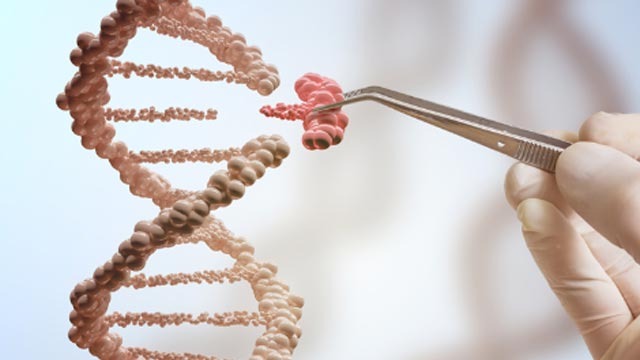
The San Francisco team developed a CRISPR molecule that contains three elements: the genetic sequences of two genes of the novel coronavirus, which serve as a guide; the Cas-12 protein, which serves as scissors; and a third fragment of fluorescent DNA, as published in Nature Biotechnology.
The San Francisco team developed a CRISPR molecule that contains three elements: the genetic sequences of two genes of the novel coronavirus, which serve as a guide; the Cas-12 protein, which serves as scissors; and a third fragment of fluorescent DNA, as published in Nature Biotechnology. (Photo internet reproduction)

“I believe we are looking at the beginning of a second conflict because we are the first to apply this technique to the diagnosis of Covid-19,” said Lluis Montoliu, a researcher at the National Center of Biotechnology (CNB) in Spain.

“On the one hand, in Doudna’s test, the virus detection capacity is one tenth of PCR. This is not a problem if the viral load is medium or high, but it could result in false negatives if the individual is at the very beginning of infection or coming out of it,” he explains. “On the other hand, this technique requires simpler chemical reagents than PCR and does not require specialized staff to perform it, which is an advantage,” he explains.

The next step in this race was clear, and the first to do so was another US team, led by Stanford University’s Lei Qi. His team developed a CRISPR to detect the virus’ RNA and kill it by cutting it in half. The coronavirus genome is a simple strip of RNA. At each end it contains protective molecules that mask it so that it cannot be detected and eliminated.

The new tool, christened PACMAN (“CRISPR antiviral prophylactic for human cells”), is aimed at an intermediate region of the genome, to which it can be easily attached and activate the scissors, which in this case is the Cas-13d protein, capable of directly slicing the RNA. The system is able to eliminate 80 percent of genetic sequences of the coronavirus in human lung cells, according to a study published in Biorxiv, yet to be reviewed by other experts.

The study adds that only six CRISPR variants would be required to eliminate 90 percent of all known coronaviruses. This tool “has the potential to be implemented quickly to fight coronavirus pandemic variants,” write the authors.

This type of genetic editing would be more feasible than the DNA-centric one, as it does not require penetrating the cell nucleus and manipulating its sacrosanct sequence, where any fault or defect introduced could lead to damage or be passed from generation to generation. But RNA is a vital molecule to life and it is possible that this type of intervention cuts not only the RNA of the virus, but also that of its host. The Cas-13d molecular scissors is in this respect more precise, as it does not cut indiscriminately.

Molecular biologist Miguel Ángel Moreno Mateos, researcher at the Andalusian Center for Developmental Biology, is one of the leading Spanish specialists in these molecular scissors. In a recent work, his team explored the effectiveness of Cas-13d in embryos of zebrafish and mice. “What we saw is that the technique is clean, safe and efficient, because it cuts 80 percent of the target sequences and causes no damage; the animals develop normally,” he notes.

Just this month, a team of Chinese scientists announced the application of these scissors for the first time on adult animals. They demonstrated that they can administer CRISPR to mice suffering neuronal death and convert glia immune cells from their brains into new neurons, which relieved paralysis and Parkinson-like symptoms, as explained in Cell magazine. The work points out that this may be a new way to address untreatable neurological conditions in humans.

But like any other potential therapy, these versions of CRISPR now face the so-called valley of death: the long process of pre-clinical validation in animals and the required testing in humans, in which over 95 percent of all experimental treatments fail.

“This is a promising system, but we still need to develop a means to safely and efficiently pass it into the patient’s cells, for example their lungs, without causing damage,” warns Moreno Mateos, whose team uses this technology to disable specific RNAs for basic studies on the role of certain genes in animals.

“As for Covid-19 therapies, the ones that currently offer the most possibilities are those that are already approved for other uses. The issue is that probably none of them are perfect, and that is where CRISPR has much to say for its ability to specifically break down the genome of this and other viruses. There is a very promising field of research,” he says.

Read More from The Rio Times

The Rio Times · Power Map
See who really holds power in Latin America
Click to open the Power Map

Rotate for Best Experience

This report is optimized for landscape viewing. Rotate your phone for the full experience.