Gaudy “Flamingos” Return to Florianópolis Mangroves after 200 Years
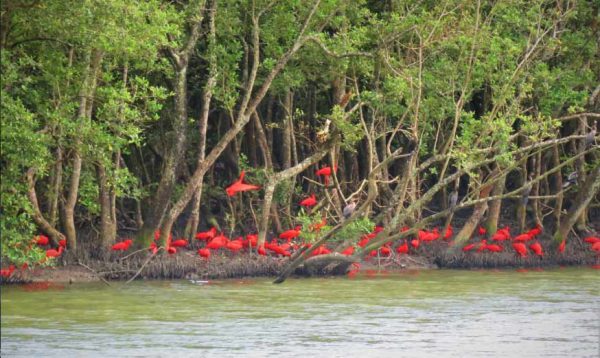
RIO DE JANEIRO, BRAZIL – A large group of the birds was seen this week near the Manguezal do Itacorubi. There are also sightings of them in Saco dos Limões, Daniela, Carijós Ecological Station, and the Pirajubaé Reserve.

The Scarlet Ibis returned to Florianópolis after conservation work in the mangroves of the capital. The areas managed by ICMbio (Chico Mendes Institute for Biodiversity Conservation) and by the City Hall of the Capital, are preserving the typical fauna and flora.
“If there were no conservation area, perhaps there would be no mangrove swamps or Scarlet Ibis,” explains researcher Fabrício Basílio, a researcher at the Observatory of Protected Areas and the Integrated Coastal Management Laboratory of the UFSC – Federal University of Santa Catarina.
The maintenance of local biodiversity ensures that the life cycle of several animals, such as sharks, that come to reproduce in the area and help in the protection of the coastline.
History
During the 17th century, the bird flew over the skies of the Brazilian coast, traveling from Amapá to Santa Catarina. Its disappearance does not have a defined cause.
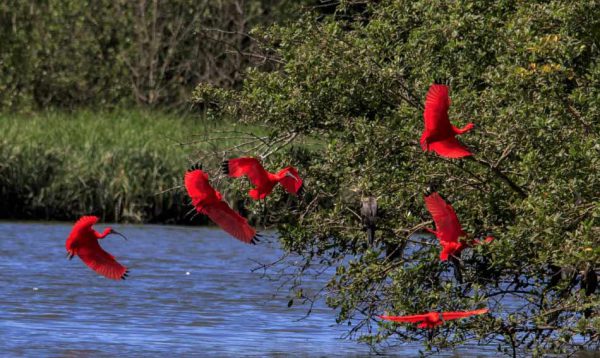
The Scarlet Ibis has disappeared from virtually the entire coast over the years, being observed only in the 1453 km that separate Amapá and Ceará. In Santa Catarina, it had been seen for the last time in Palhoça in 1859.
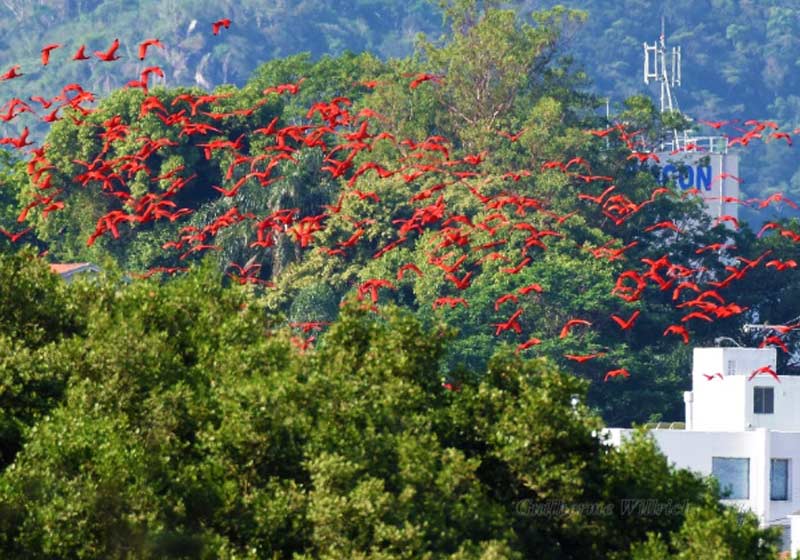
The Scarlet Ibis acquires its red coloration as a result of its diet based on crustaceans. As it cannot digest the pigment that comes from its meal, it ends up gaining this color.
More: Brazil news in English, every day from The Rio Times.
This article was produced by The Rio Times’ automated newsroom system. How we use AI · Report an error · Editorial responsibility: Matthias Camenzind, Editor-in-Chief
Living in or visiting Florianópolis? See this month's events and our Florianópolis city guide with rents, safety and upcoming concerts.