How Blood of Recovered Covid-19 Patients Can Help the Critically ill
RIO DE JANEIRO, BRAZIL – “Give life, give blood.” The call to donate blood takes on new meaning in coronavirus times. Countless university hospitals in Switzerland, Germany and some other countries are currently looking for blood – but very specific blood.
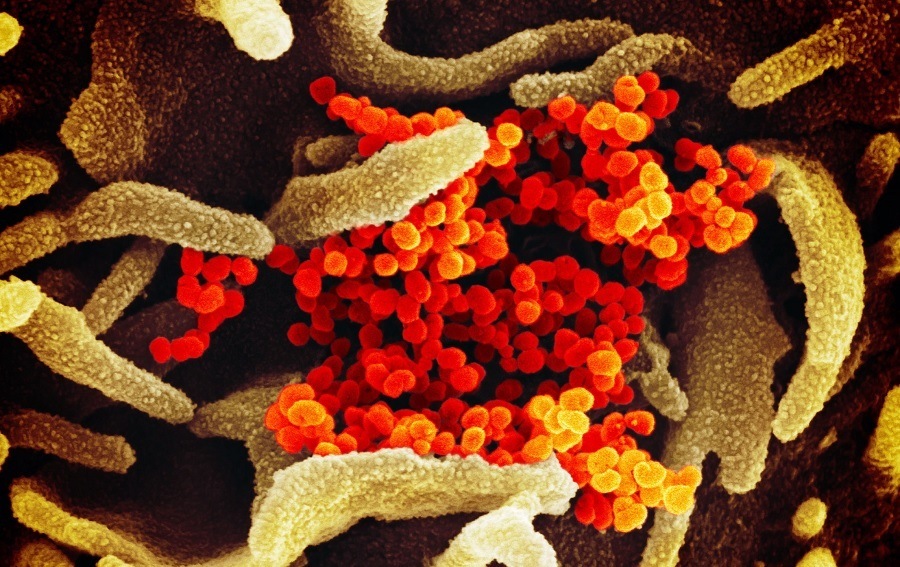
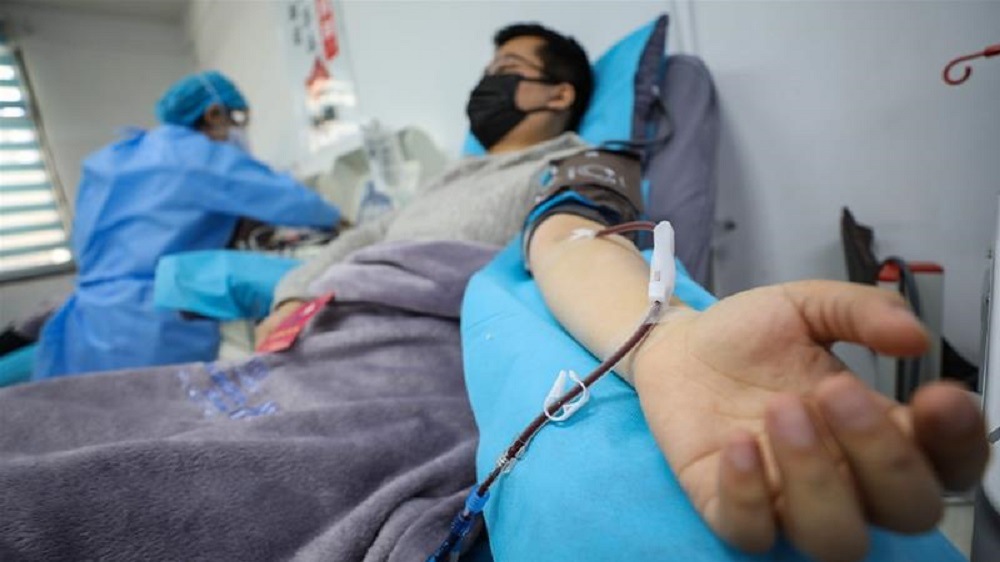
The blood of recovered Covid-19 patients, i.e. people who have survived the lung disease caused by the novel coronavirus Sars-CoV-2. Millions of antibodies specifically directed against Sars-CoV-2 are floating in their blood, thereby triggering the immune system to destroy the viruses in the body.

An old concept used in a new way
These antibodies will now be injected into critically ill patients suffering from Covid-19 in hospitals. It is hoped the donor’s antibodies will also attack the virus in the recipient.
The antibodies are obtained from the blood plasma, i.e. the cell-free part of the blood. The idea of this so-called passive immunization is old: As early as the 1890s, Emil von Behring and his team treated people with diphtheria and tetanus using this method.
“It is a pragmatic and local approach that can also help quickly if there is no established therapy for a new pathogen such as Sars-CoV-2,” says Markus Manz from the University Hospital in Zurich.
His team is currently waiting for the therapy protocol to be approved by the authorities. Other therapies are also being developed elsewhere; the Hanover Medical School is currently collecting blood from convalescents.
The University Hospital in Basel is one step ahead, where the first Covid-19 patients have already been treated with blood plasma from former patients.
Starting early
The plan is to first treat patients with severe Covid-19 disease. “However, we do not want to treat people who are already in intensive care and require ventilation,” explains Manz.
“It is this very condition that we want to prevent.” High-risk patients with pre-existing conditions as well as those with poor oxygen saturation who do not require ventilation could be considered.
An earlier study conducted in Hong Kong shows that an antibody transfusion should not be administered too late. There, 80 patients with severe SARS disease were treated with the blood plasma of recovered patients. At the time, only administering it early on in the disease would increase the chances of a cure.
Current reports from China also raise hopes for the effectiveness of the donor antibodies. According to several Chinese media reports, more than 200 Covid-19 patients were treated with blood plasma in February and March – with “good results”, it is said.
However, scientifically proven results are only available from five patients in Shenzhen. These patients received the donor antibodies late in the course of Covid-19 disease when they already required ventilation in the ICU.
According to the doctors, in the 12 days following the transfusion, both body temperature and the viral load in the body dropped, oxygen saturation increased and various blood parameters returned to normal.
Three patients were discharged from the hospital after 50 days, the other two were stable by late March.
Still many unanswered questions
Although this sounds promising, no one knows at present whether the cure or stabilization of the five Chinese patients was indeed due to antibody administration. There were also passive immunizations during the 1918 influenza pandemic, the SARS and MERS pandemics (2003 and 2015 respectively) and the Ebola outbreak in 2014.
These reports show that a cure is coming. But not in every patient.
In addition, currently, it is not only the optimal start of therapy that is unclear. The minimum number of antibodies that should be present in the transfusion, how often they should be administered or who the ideal donors are – those with moderate or mild disease – is also unknown.
This is partly because in exceptional circumstances, during an epidemic, there is typically no time to conduct a careful study.
Doctors and virologists now want to clarify some of the many remaining questions by starting therapy trials in Switzerland and Germany. For Manz, it is an advantage that the respective teams are developing their own therapeutic protocols. This saves time, and in addition, local features and specific issues could be better addressed.
The experts emphasize that the risks of this still experimental therapy are minimal, according to everything that is known. After all, blood plasma has been used in medicine for decades, and collection and processing are standardized procedures.
All donors are tested for other pathogens such as HIV, hepatitis or syphilis, and the blood plasma is also treated so that the genetic material of potential undetected pathogens is destroyed.
Source: NZZ
More: Brazil news in English, every day from The Rio Times.
This article was drafted with automated assistance and reviewed before publication. How we use AI · Report an error · Editorial responsibility: Matthias Camenzind, Editor-in-Chief