RIO DE JANEIRO, BRAZIL – “There will now be a painful slump. But it will be over quickly. By the summer, the economy and society can return to normal and take off again.” This statement from a CEO reflects the views of many about the coronavirus crisis. After three months, it should be over.
Alarming scenarios
However, doubts have arisen regarding this perspective. A study by epidemiologists from Imperial College London, who are among the leading scientists in the field, has raised a stir. Their key message is that lockdowns may need to be maintained until a vaccination against the coronavirus is available.
However, a vaccination is not expected to be available for 12 to 18 months. This suggests that difficult decisions have to be made: would this be tolerable for people and the economy?

Individual scientific studies should always be viewed with caution. For instance, the London epidemiologists have already been criticized by their peers as being far too pessimistic in their conclusions (more on this later).
Nevertheless, their arguments are worth exploring as they provide much information on the political options for tackling the coronavirus pandemic.
Controlled containment is not enough
For the first time, researchers have compared the three most discussed scenarios. A first approach is the lockdown strategy adopted in many countries (event bans, school closures and social distancing).
A second strategy is that of “controlled containment” (mitigation), which the UK has pursued for some time: Although vulnerable individuals are isolated, the remainder of the population is expected to continue to lead a fairly normal life and to become infected with the virus in order to achieve herd immunity.
The third strategy is that of doing nothing.
Researchers come to the first major conclusion: that a strategy of controlled containment, as recently proposed by some economists, does not work. It is true that the number of infections and deaths can be reduced by more than half compared to doing nothing.
Nevertheless, intensive care units would still be eight times overburdened, with the United Kingdom and the United States being considered in this specific case. According to the simulations, there would be 250,000 (UK) and 1.1 million (USA) deaths. Only a lockdown can reduce the number of infections and severe diseases to a tolerable level (“flattening the curve”).
Risk of a second wave
However, a lockdown must be ended at some point. The second significant statement made by the researchers is that after the lockdown is lifted, a second and large wave of infections will quickly occur, for instance in summer, because no herd immunity has been able to develop among the population.
The authorities would then have to rapidly freeze public life again. Alternating between lockdown and relaxation would be required until an effective vaccination against the coronavirus is found.
This second core statement has been sharply criticized by expert colleagues from the American New England Complex Systems Institute. In their opinion, a second major wave of infection towards winter can be prevented if known measures such as contact tracing and quarantine are then consistently applied.
They argue that this has worked in China in recent weeks. The authorities in Europe could learn from this.
Psychological costs of isolation
The debate among epidemiologists shows that it is important to understand the social and economic costs that arise during a lockdown. Fortunately, this will now save countless lives. But in the medium term, it could also cause much suffering and loss of lives due to its social and economic consequences.
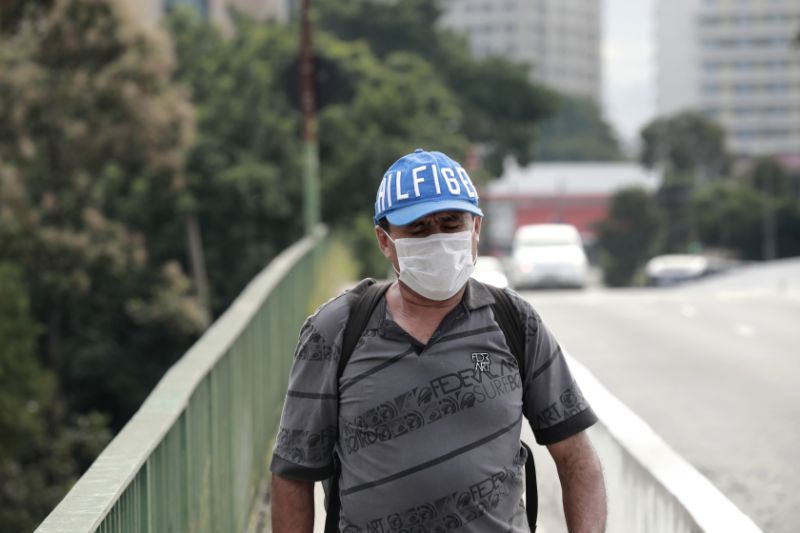
The social costs can be many and varied. Single people no longer have social contact. Older people become lonely. This leads to tensions in families and domestic violence. Psychological problems and even suicides occur. On the positive side, families and partners may become closer.
Science can say a great deal about the psychological costs of restrictions on freedom of movement. A recent overview in the specialist journal “Lancet” summarizes 24 case studies that examined people in quarantine.
Overall, the people affected suffered from considerable psychological stress – and in some cases these were still apparent years after the event.
This is no reason not to order restrictions on freedom, the researchers write. An uncontrolled pandemic may cause even greater anxiety among the population. But what is important psychologically is that the end of isolation is imminent.
This means that a lockdown – particularly if combined with curfews – should not last very long. In fact, it would hardly be surprising if, after two to three months, strong resistance to restrictions on freedom erupted among the population.
What is economically at stake
A more precise figure can be provided for the economic costs of a lockdown. A rough calculation for Switzerland and Austria may illustrate the costs; it is likely to apply to other European countries in general.
The following projection is based on conservative assumptions. Only some of the most affected sectors are considered: retail, industry (excluding food production and pharmaceuticals), construction and hotels and restaurants. Many companies in these sectors across Europe have closed down entirely or switched to emergency operations in recent days.
According to the official statistics (data for 2017), these sectors generate a total value added of US$ 12.2 billion (Switzerland) and US$ 9.5 billion (Austria) per month. If we cautiously assume a 50 percent decline, economic losses per month will amount to around US$ 6.1 billion (Switzerland) and US$ 4.7 billion (Austria).
In both countries this corresponds to approximately one percent of GDP. These costs must be shouldered by someone – whether by companies (from reserves) or employees (through loss of earnings) or the state (through wage compensation or liquidity support).
However, there are also much more pessimistic estimates. For instance, a report by leading economists generally assumes that the global economy will collapse by 50 percent in the first month of lockdown and by 25 percent in the second and third months. Then the loss will amount to approximately eight percent of annual GDP by the summer alone.
Limits of state aid
According to these figures, the state could possibly last for a few months – even if it pays for most of the costs, which is likely to happen virtually everywhere in Europe. On Wednesday, Austria was the most recent in a number of countries to raise a protective shield of over ten percent of GDP.
On Friday the Swiss government announced an aid package amounting to at least six percent of GDP.
However, such government aid can hardly be sustained over a longer period of time such as a whole year. On the one hand, the aforementioned monthly costs of one percent of GDP are a conservative estimate.
On the other hand, the cost can be much higher if the shockwaves are spread more widely throughout the economy – for instance if payment flows dry up, triggering a chain reaction.
Necessity is the mother of invention
But there is reason for hope: it lies in the human inventive spirit. Particularly in difficult times, people are capable of unimagined creativity and innovation.
This may well play a role in the medical fight against the coronavirus crisis. For instance, the development of inexpensive rapid tests could noticeably ease the situation when adults can go to work and children can go to school again with greater ease.
The innovative power of companies in the development of drugs and vaccines must also not be underestimated. In addition, the authorities are likely to learn from the containment strategies.
More: Brazil news in English, every day from The Rio Times.
This article was produced by The Rio Times’ automated newsroom system. How we use AI · Report an error · Editorial responsibility: Matthias Camenzind, Editor-in-Chief