‘Latinwood’ Emerges as New Mecca of Cinema
RIO DE JANEIRO, BRAZIL – The elves, dwarves, and men, in addition to saving humankind from Sauron and killing every possible orc, have put New Zealand on the map.
Director Peter Jackson made an effort to film the saga of ‘The Lord of the Rings’ at home and the world fell in love with the country’s landscapes. Years later, the film continues to be an incentive for tourism and also for the audiovisual sector, which generates an income of two million dollars annually in a country that does not have even five million inhabitants.

Latin America and the Caribbean also aspire to that future. They want the cinema that is produced in the region to be a showcase for their cultures as well as an industry that leaves millions of dollars behind.
Today there are many arms paddling in the same direction: “Latinwood”. This was one of the topics most discussed at Foromic, the microfinance conference organized by the Inter-American Development Bank (IDB).
Between 2008 and 2012, the film market in the region grew 73 percent, seven times more than in Europe, the Middle East, and Africa, and five times more than in the United States. Mexico, Brazil, and Argentina are among the top ten countries in film production.
The weight that Latin American directors have gained with the success of Iñárritu, Cuarón and Del Toro cannot be ignored. The second, for the first time, managed to get a Spanish-language film nominated for the best film in the Oscars.
These figures contributed to some countries’ having taken a step forward in attracting productions. In 2012, Panama passed a movie law with this objective in mind. Although it has fluctuated during these seven years, the balance is that in the period 6,000 Panamanians were employed in different projects, local or international, and the sector generated US$56 million.
“Sometimes the finance and treasury ministries forget the impact that tax incentives can have, but their economic and social effect has been demonstrated,” said Pituka Ortega, director of Panama’s international festival.
The Dominican Republic is another destination that has focused more on this market and now has an average of 45 film productions per year, 30 local and 15 foreign. “For a country with ten million inhabitants, that’s a lot,” said Albert Martínez, of Lantica Media, a production company based in the Caribbean country, which is behind great commercial hits like ‘XXX’ and ’47 Meters Down’.
“Incentives are one of the main reasons for filming in one place or another. Before those, there was at most one foreign film shot per year in the Dominican Republic,” he says. In 2017, the industry contributed US$66 million to the country’s economy.
Achieving box-office success is one of the great challenges. “We need to provide the opportunity to watch stories that talk about us,” said Ortega. And he provides data: in the past five years, 18 Panamanian films have raised less than one U.S. film – The Avengers – which raised more than US$3.5 million last year.
“Latin Americans are producing, but we have to be able to convey that there is another option besides the usual one,” he says. In 2017, nearly the same number of films produced in Latin America debuted in the region as those coming from Hollywood.
Initiatives such as the Chilean network of independent rooms, in which director Matías Bize, a Goya laureate, found great support, are gradually contributing to this. “Many cinema planners with a great love for cinema have launched this network, which supports films by authors that are crushed by the great films in the commercial theater multiplexes, which allow the public to have an added value because after the showings there are lectures and talks with the team,” says the director.
New platforms such as Netflix have revolutionized the work environment. Bize, as director, guarantees that his goal is that his work “will be in all possible channels”. In fact, his latest film, ‘7:20 Once a Week’, will be available on HBO.
“They came to the Dominican Republic for several reasons: the locations, the incentives and the infrastructure we could provide. Netflix finances so many projects that it is always looking for new places and this one is now very attractive. These platforms have greatly changed the rules. Before, it was very difficult to watch films from other Latin American countries and the same happened in Spain. Only one or two of them crossed borders”.
For Ortega, the wide variety of productions from these new platforms is an example of how there is an audience for everything: “It’s fascinating what they’re able to understand from the audience thanks to their data analysis. This shows that we are not subject to just one type of story”.

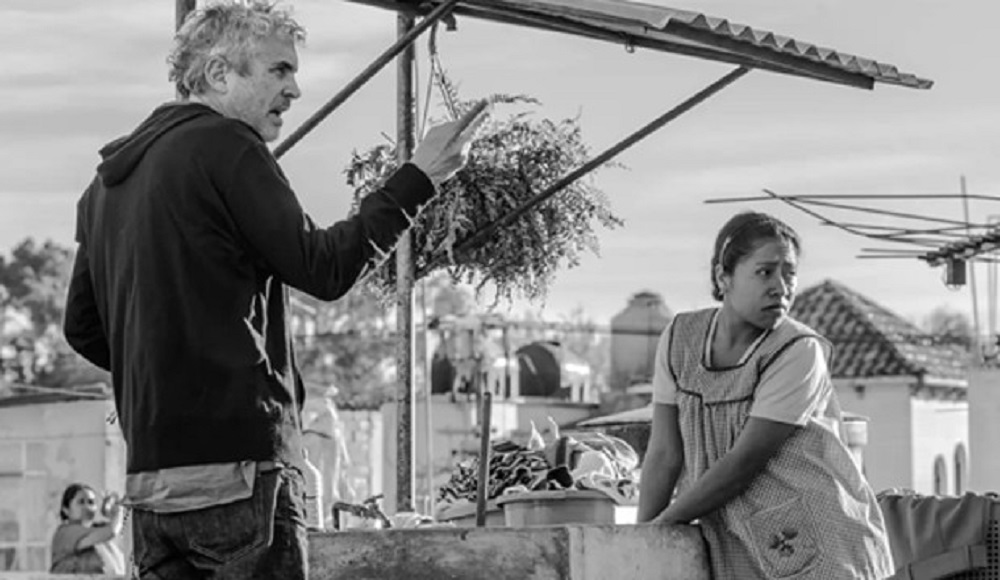
In addition to numbers, creators claim the powerful social role of cinema. The phenomenon of the movie ‘Roma’ has awakened in Mexico a debate about the conditions of household domestic workers. “The American films of the 1940s were instrumental in securing the support of the population in participating in World War II, but they also achieved positive things.
The Pakistani short film, ‘A Girl in the River’, caused the Prime Minister to ban honor crimes in 2016,” says Ortega. The director of the Panama festival ends with a different question for Latinwood: “Is there anyone who hasn’t been touched by a movie? We deal with cinema as something obvious and we don’t realize how important it is in our lives”.
Source: El País
More: Brazil news in English, every day from The Rio Times.
This article was produced by The Rio Times’ automated newsroom system. How we use AI · Report an error · Editorial responsibility: Matthias Camenzind, Editor-in-Chief