RIO DE JANEIRO, BRAZIL – The detection of a coronavirus outbreak among 650 German slaughterhouse workers has caused concern in central Europe, amid its de-escalation phase, that the country could suffer a relapse.
In Spain, one day before travel between regions is allowed for tourists from abroad on June 21st, the case is being closely monitored for the implications it could have on the transition into the so-called new normalcy. The situation in Germany, reported on Wednesday, was a wake-up call for everyone.

Why is it so important?
Spain, like Germany, is one of the countries that chose to live with the virus, with no commitment to its total eradication, explains Patricia Guillem, professor of epidemiology at the European University of Valencia. In both countries, virtually the same measures were implemented, and both had incidences of less than seven cases per 100,000 inhabitants in one week, before the North Rhine-Westphalia outbreak.
In fact, the first tourists to come to the Balearic Islands this week are Germans, in a government’s pilot plan before reopening its borders next Monday, chosen precisely because they come from a country considered safe – and very important for tourism.
Can this be repeated?
“Considering that the virus is not gone, yes,” says Pedro Gullón of the Spanish Society of Epidemiology. “The German case is an alarm, and something similar can happen here,” agrees Daniel López Acuña, former director of Health Action in Crises of the World Health Organization (W.H.O.) and current professor-associate at the Andalusian School of Public Health. “There will be another wave. This means that the virus is still in circulation, although its rate has decreased greatly. It only takes one carrier to start a chain, because the virus is highly transmissible,” Guillem adds.
Joan Ramon Villalbí, a member of the board of directors of the Spanish Society of Public Health and Sanitary Administration (SESPAS), says that “this is already happening here, although on a smaller scale,” and mentions the recent outbreaks in Castilla y León, Girona and Madrid.
Detection
“When we talk about 650 cases, we are certainly referring to a period of transmission, a window-period, possibly asymptomatic,” says Gullón. Guillem is more critical: “It seems that in Germany the cases started to grow earlier, but they took time to be reported. This cannot happen.” Nevertheless, “the main thing is that it was able to be detected and controlled,” says Gullón.
“At the most critical moments they wouldn’t have been able to spot it,” he adds. “In many of these places, workers have precarious conditions, and it is very likely that someone who is sick won’t stay home and go to work,” Villalbí says. “This has certainly been the case in the United States.”
Preparing for relapses
It’s the key point, experts agree. “In Spain, there will be new outbreaks. The main thing is that we are able to detect them,” Gullón says. “That’s the point of the de-escalating: to be prepared to follow up the new cases. In order to do that it is important that the public health services are well equipped.”
Patricia Guillem points out that this Tuesday in Germany, a mobile phone app for voluntary use came into operation, in which the government invested €20 million (about R$120 million).
“In Spain, there is much rejection because of data protection,” adds the epidemiologist, who sees another aspect to consider: the limited number of places in hospitals and health centers and the impact of this on patient care. “Telemedicine cannot be trusted for everything. If a doctor sees 30 patients a day, he or she may have to double shifts to see 15 in the morning and 15 in the afternoon”.
Villalbí alerts to the need and challenge of making everything work right from the outset: “If even when things are done right there are situations we don’t know about, it’s easy to imagine what will happen when something goes wrong,” he says.
Protection
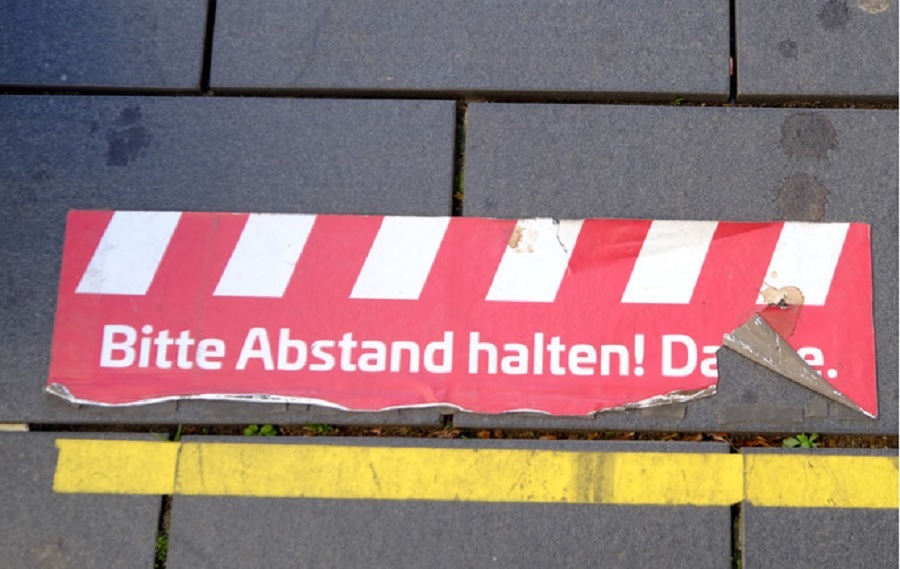
The potential for new outbreaks requires protective measures to be continued, says Gullón. Guillem adds that she sees many unfiltered fabric masks that can be counterproductive. “They don’t protect you, nor do you protect [others],” she says.
“Continuing to observe physical distancing, the use of masks, hygienic measures, and reinforced epidemiological surveillance is required. And avoid crowds at all costs,” López Acuña recommends.
Those affected
In the German case, those infected are Eastern European immigrants who work in the company for a season. Villabía points out that these conditions were important in other outbreaks, such as in Singapore, associated with immigrants from Southeast Asia; in Sweden, closely linked to Somali refugees; and in the Middle East, with a very high incidence in workers from Bangladesh and the Philippines. And he adds that in many of these places the working conditions are precarious “and it is possible that some patients preferred to work because otherwise they would not get paid.”
The workplace
The German spike occurred among workers in a slaughterhouse, a typical scenario in other coronavirus outbreaks in the world. In the United States, there was a crisis when closing some of these facilities was planned, and in Spain, there were several cases, such as those in Lleida in the second week of May or the current case at the Noel (Girona, Catalonia) slaughterhouse. These are closed areas, where it is difficult to maintain a safe distance, thereby conducive to the spread of the virus, says epidemiologist Guillem.
The same is true for markets – such as the recent Beijing case, with 137 affected in hospital centers, and, alerts the professor, it will be necessary to monitor what happens at schools once the holidays are over. In addition, Guillem points out another factor: they are noisy places, and noise, like exercise, leads to people breathing differently and can even cause some to become distracted and reduce protective measures.
Housing and transportation
In the German case, in addition to closeness during daily working hours at the company, workers shared accommodation, and several traveled on a crowded bus to their countries in Eastern Europe. In Spain, no outbreaks on public transportation were recorded, although it is certain that this was a decisive factor in the spread of the virus at the start of the pandemic, particularly in cities’ subways. But it seems that the crowding of workers in some sectors also played its part.
The type of outbreak
“A spike is not the same as a generalized transmission,” says Gullón. In Germany, there was the latter, at a time when there is still community transmission. “It is great news that we are able to detect it, isolate, and run tests. It is now possible to detect these outbreaks of disease ”, he says. On the other hand, with less than 200 cases around the Beijing market, China has implemented drastic measures to control it.
Although the authorities ensure that this outbreak has been controlled, López Acuña recommends great attention. “Everything seems to suggest that this is not a spike of the Wuhan virus, but rather an outbreak of a mutated virus, possibly more aggressive. This needs to be better studied and would place us at the risk of a new pandemic cycle if it is not quickly and properly controlled.”
The trips
Villalbí says that although Spain will reopen its borders next Monday, it will only do so within the framework of the Schengen area, composed of countries “with the same conditions as Spain or better, in the case of Germany”. And yes, “we will cross paths with more people, and investigating cases and their transmission will be more challenging,” he adds. Consequently, “there will certainly be an incidence of cases”.
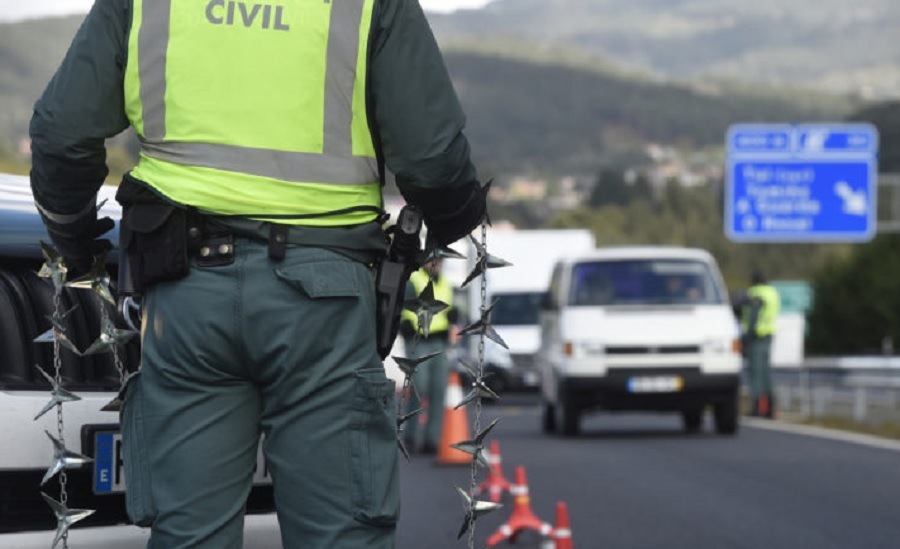
“Caution with foreign tourism must be stressed, the removal of quarantines and the closing and opening of borders. It is very premature to release the flow of travelers from countries with active community transmission, be it the USA, Russia, India, China, Iran or Latin America”, says López Acuña. “If a spike were to occur, and the borders were closed again, the damage would be irreparable,” says Guillem. “Safe corridors are not such a crazy idea either,” he adds, but with strict controls. “Temperature checks are of little use.”
Source: El País
More: Brazil news in English, every day from The Rio Times.
This article was produced by The Rio Times’ automated newsroom system. How we use AI · Report an error · Editorial responsibility: Matthias Camenzind, Editor-in-Chief