Novel Coronavirus’ Multiplication in Throat 1,000 Times Higher Than SARS
RIO DE JANEIRO, BRAZIL – Humankind has not yet understood how a virus, unknown only three months ago, has traveled all over the planet and forced billions of people to hide in their homes. The scientific community is equally intrigued by this, but a thorough examination of nine infected youths in Germany is starting to unveil at least how the SARS-CoV-2 coronavirus is spreading.

The new pathogen multiplies much more and in much less time than its older sibling, the first serious acute respiratory syndrome virus (SARS), another coronavirus that surfaced in China in 2002 and killed nearly 800 people before an international campaign stopped the epidemic. The viral load of the novel coronavirus is a thousand times higher.
The nine people examined became infected in an outbreak detected on January 27th in Munich, southern Germany. The study does not mention the fact that, according to the date, these were the first people infected in Europe: workers at the Webasto auto parts plant who took a training course with a Chinese colleague.
The German tourist detected in La Gomera, in the Canary Islands, was also the first case confirmed in Spain. The monitoring of the nine patients by doctor Clemens Wendtner shows that the virus does not only multiply in the lungs, like the 2002 SARS, but also replicates in an incredibly aggressive way in the throat during the first week with symptoms.
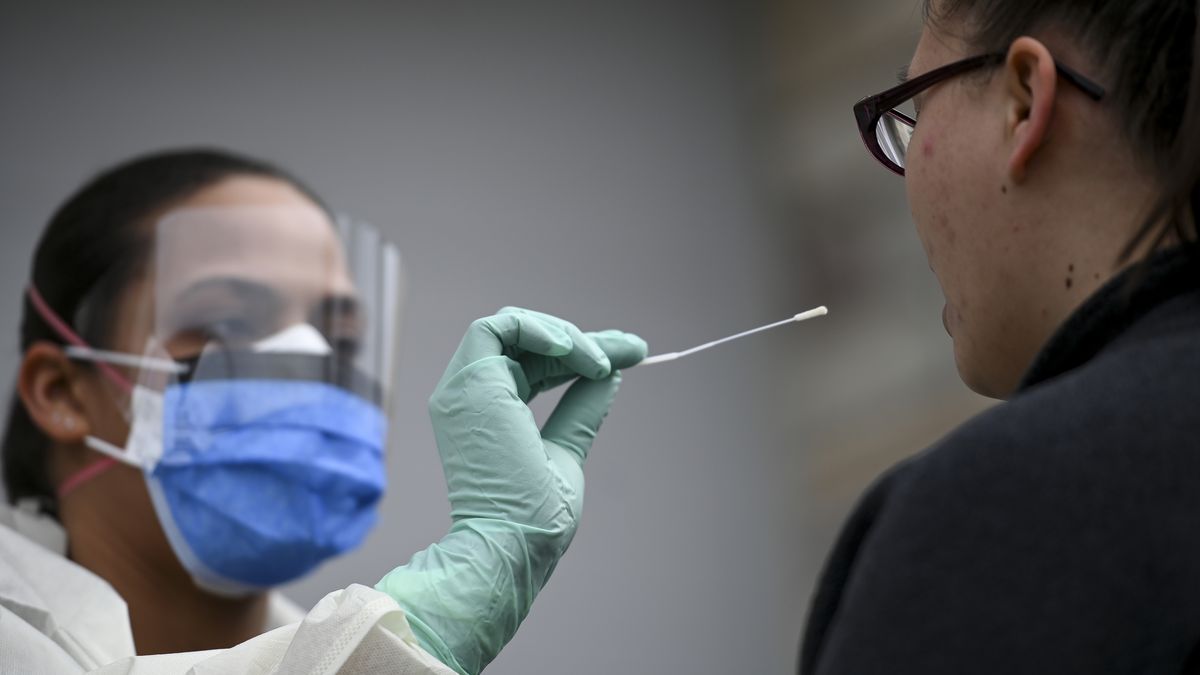
Wendtner’s team at the Schwabing Clinic in Munich examined samples from the patients’ throats, lungs, saliva, feces, urine and blood to understand the behavior of the novel coronavirus. In mild patients, who were virtually all, the researchers isolated active viruses in the throat and lungs only until the eighth day after the onset of symptoms.
The peak viral load occurred before the fifth day. In the 2002 SARS virus, this peak, with one-thousandth the intensity, occurred between seven and ten days after the onset of symptoms. The difference is crucial because the powerful and fast spread of the virus in the throat of people with very mild symptoms converts them into time bombs for the spread of the disease.
The mathematical models, fed by the movement patterns of hundreds of millions of Chinese recorded by telecommunications companies, have already shown that up to 86 percent of infections at the onset of the pandemic were caused by people with mild or completely undetectable symptoms.
China, South Korea, and other Asian countries recommend the widespread use of masks to prevent these invisible carriers from spreading the virus. WHO only recommends the use of masks if the person has a cough or sneeze.
“It is scary and has implications,” says Spanish virologist Margarita del Val about the new study, in which she did not participate. “We already knew how contagious the virus is. Here they show us why,” she explains.
The novel coronavirus and the 2002 SARS virus use the same gateway to the human organism, the ACE2 protein, which is expressed on the surface of lung cells. It is like a lock that the viruses open with a key: its S protein.
The German study, published on Wednesday in Nature scientific magazine, suggests that a mutation in this key allows the novel coronavirus to open another door, that of the throat cells.
“This study also provides good news: no active viruses were found in the blood, urine or feces,” reports Del Val, from the Severo Ochoa Molecular Biology Center in Madrid. The blood tests of the nine patients showed that half of them had antibodies against the virus after seven days of symptoms, and all had them after 14 days.
However, as German scientists note, “the levels of neutralizing antibodies do not suggest a close correlation with the clinical course of the disease”. The appearance of antibodies – generated by the human body to defend itself against the invader – does not imply the immediate elimination of the virus.
The researchers caution that future vaccines focused on instigating antibody production will have to “induce very strong responses to be effective”.
Margarita del Val believes this will be a boost to the strategy of Spanish virologist Luis Enjuanes, whose team at the National Center for Biotechnology is working to achieve a vaccine from an attenuated version of the virus, able to trigger a complete immune response without causing the disease.
Some types of white blood cells produce antibodies to fight viruses moving outside human cells. Other white blood cells, called cytotoxic T-lymphocytes, destroy the infected cells themselves, which are then converted into genuine factories of new viruses.
Once inside a human cell, a coronavirus can produce up to 100,000 copies of itself in just 24 hours.
“With a vaccine such as that of Luis Enjuanes’ group, the chance would be created of inducing cellular immunity that could act on the factories of new viruses, the infected cells, while the antibodies neutralize the particles of circulating infectious viruses,” explains Del Val.
Another way to develop vaccines is to use only specific viral proteins, but the stimulation of the immune system could be insufficient, as the virologist warns.
In her opinion, the new findings also require “cautious evaluation” of direct blood plasma transfusions from recovered patients as experimental treatment for patients. “It would be necessary to use the plasmas with the highest possible concentration of antibodies,” she points out.
Loss of smell
Four of Munich’s nine patients reported loss of smell and taste much stronger and longer than typical for a common cold. For some weeks now, medical agencies in several countries have been recommending preventive isolation at this time of a pandemic for people who suddenly experience loss of smell with no apparent cause.
According to the new study, this symptom could be related to the intense multiplication of the virus in the upper respiratory tract cells, from nose to throat.
The examination of nine German patients suggests that the virus attacks the human body in “two waves”, in the words of Margarita del Val. The first, concentrated in the throat and with mild or undetectable symptoms, would ease the explosive spread of the virus.
In the second phase, only present in a minority of patients, the multiplication of the virus would be concentrated in the lungs, in a similar way to the 2002 SARS, causing pneumonias that can be fatal.
Two of the nine German patients even showed preliminary evidence of pneumonia. In their saliva, the virus remained at high levels until days ten and eleven.
According to the authors, these results suggest that, in mild cases, doctors could discharge patients from day ten if the presence of viral RNA in the saliva is low.
To avoid the “small residual risk of contagion”, the researchers recommend home isolation of these patients until complete cure.
Source: El País
More: Brazil news in English, every day from The Rio Times.
This article was produced by The Rio Times’ automated newsroom system. How we use AI · Report an error · Editorial responsibility: Matthias Camenzind, Editor-in-Chief