Pará Beaches Should Reopen in July; Schools May Reopen in August
RIO DE JANEIRO, BRAZIL – After 19 days of implementing the program to restart economic activities in the state, Governor Helder Barbalho announced the start of a new stage of the ‘Retoma Pará’, which includes the immediate release of interstate and inter-municipal transportation.
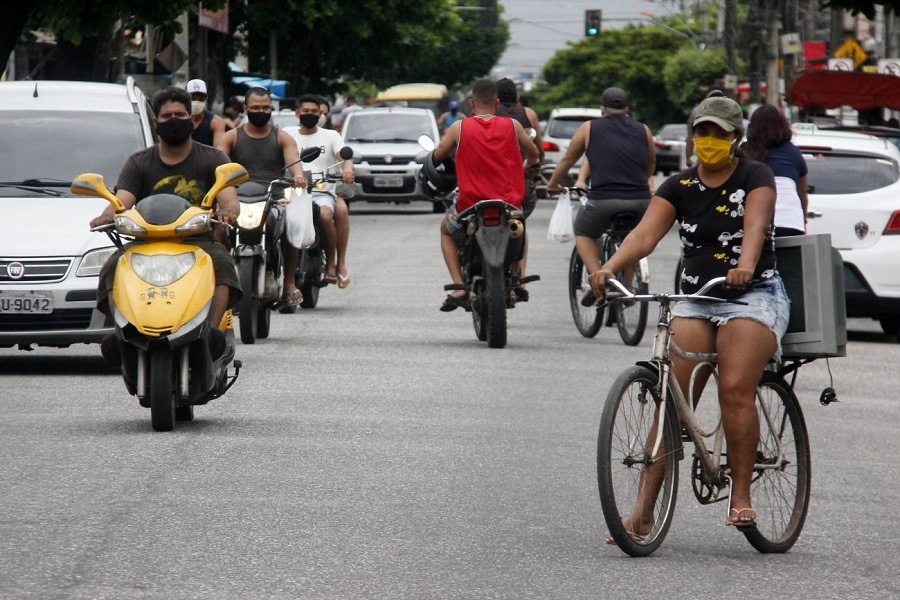
During a live broadcast early Friday afternoon, he also confirmed the start of the gradual reopening to the public of beaches, streams, resorts, and clubs, starting the first weekend of July, as well as the return of the state public school system classes for August 1st – conditional on the stability of the number of infections and the percentage of bed occupancy in the health system.
Currently, the municipalities in the Northeast of the state – Greater Belém, Marajó Oriental, and Lower Tocantins – are the closest to this resumption.

Together with the Secretary of State for Economic Development, Mining and Energy (SEDEME), Adler Silveira, and the Secretary of State for Public Health (SEGUP), Ualame Machado, Helder seems to have embraced a purposeful “conservative” stance in terms of reopening activities in all eight regions covered by the program, and which are classified by color – from black ‘lockdown’ to blue ‘new normal’, passing through red, orange, yellow and green.
Currently, only the regions of Araguaia, Metropolitan Belém/Marajó Oriental/Lower Tocantins, and Northeast, are flying the orange flag. The others – Lower Amazonas, Carajás, Marajó Ocidental, Tapajós, and Xingu – are red. The flagging criterion is the relationship between bed supply x bed occupation x bed demand.
Helder announced that the Intensive Care Unit (ICU) bed occupancy stands at 68.62 percent of the total 701 places, while the clinical bed occupancy stands at 47.93 percent of the 1500 offered. “These data confirm that the state health system is stable and coping with the demand, with no waiting list or struggle to provide care,” he said.
The state governor confirmed that all efforts aimed at increasing the number of intensive care beds are focused on the inland municipalities at this time.
During the live broadcast, he announced the coming of ten more ICU kits (each with ventilator + multiparametric monitor + four infusion pumps), to the field hospital of Santarém, in western Pará; five to the field hospital of Marabá, in southeastern Pará; an increase of beds at the Redenção Regional Hospital; 12 new ICU beds and 35 clinical beds for the Conceição do Araguaia Regional Hospital; and the inauguration of Tapajós Regional Hospital on June 26th, with 164 beds.
The recent inauguration of the Regional Hospital of Castanhal helped to stabilize the epidemiological curve in the northeast region, according to the governor.
Cooperation
Helder explained that the strategy of strengthening in other regions is aimed at preventing the potential need for lockdown rather than changing the flag to a more positive color. “For instance, the Araguaia region shows stability, but with an increase in the number of cases we will, therefore, increase the number of beds to have peace of mind in this fight,” he said.
“This coming week is decisive to the behavior of the curve based on the flexibilizations already performed. If we have stability and equate bed occupancy, we can move on to a new flexibilization stage,” he said.
In addition to the hospital spaces, the governor confirmed that the ‘Policlínica Itinerante’ (Traveling Polyclinic), aimed at treating patients with mild and moderate symptoms of the novel Coronavirus, continues to travel the state, with 30 municipalities visited and is now heading to the west, south and southeast Pará.
The dean of the Federal Rural University of the Amazon (Ufra), Professor Marcel Botelho, also present in the broadcast, confirmed that the surveys continue to be conducted weekly and that the numbers, in fact, confirm the drop in cases in the three regions.
But this should not encourage non-compliance with social isolation. “It’s important to show that we have different pandemics in the state,” he said. “If in Metropolitan Belém we have the decreasing curve, Santarém is heading towards the peak. The decrease in new cases does not mean the pandemic is over,” he said.
Lastly, Ualame expressed concern about the drop in the isolation rate that is declining sharply every week. “We’ve recorded over 60 percent, and today we’re at around 38 percent. The end of lockdown is not the end of isolation,” insisted the head of SEGUP.
Other areas
– The release of interstate and inter-municipal transport is conditioned to the limit of 60 percent occupation of each vehicle and must follow a strict hygiene protocol.
– During the live broadcast, a suggestion was made to open sectors by the flag. In all eight regions, the flag is red for reopening public spaces, real estate activities, bars, restaurants, gyms, theaters, and cinemas, promoting events that generate crowds including sports, education, tourism, schools, and social clubs.
– In the regions of Araguaia, RMB/Marajó Oriental/Lower Tocantins, and Northeast, the flag is yellow for industry, with no maximum limit of people; 50 percent occupation for dealerships, offices, street trade, shopping malls, beauty salons and building construction, and 15 percent or 100 people for churches.
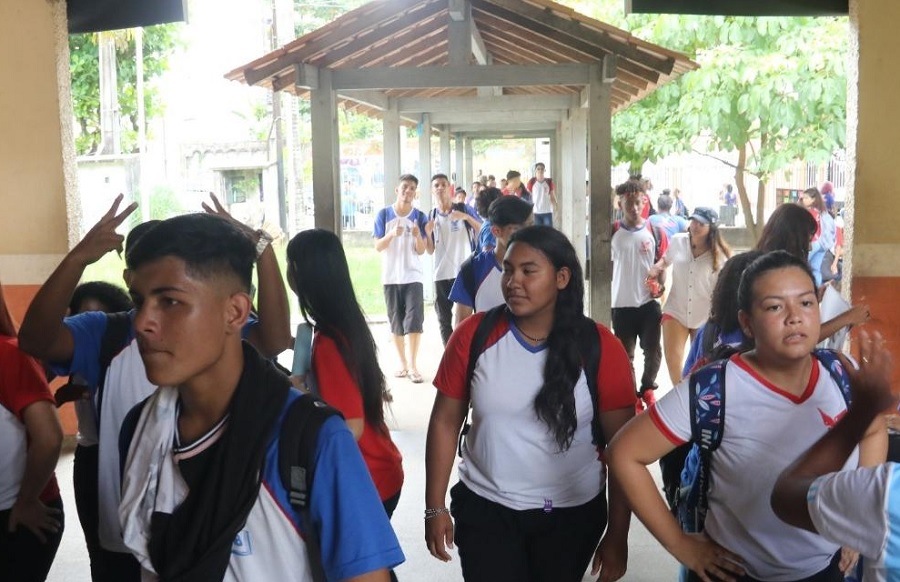
– A credit line will be opened at the state-owned bank Banpará for institutions and private educational establishments, as well as for bars and restaurants and gyms, which should only join in the last stage of resumption.
– The Pará Soccer Federation (FPF) has sent a protocol for the gradual resumption of training, and the State Government confirmed that next week, based on new epidemiological data, it will discuss if and when this resumption is possible.
More: Brazil news in English, every day from The Rio Times.
This article was produced by The Rio Times’ automated newsroom system. How we use AI · Report an error · Editorial responsibility: Matthias Camenzind, Editor-in-Chief