“The Neoliberal Prophets Have Become Advocates of the Social Economy. We Must Return to Social Imperatives”
RIO DE JANEIRO, BRAZIL – One of the greatest experts on international relations, Bertrand Badie says that the crisis unleashed by Covid-19 is painfully exposing the true face of globalization.
That a virus originating in a Wuhan market has spread across five continents in just a few weeks, causing one of the most severe health crises in human history, does not surprise Bertrand Badie, one of France’s leading experts on globalization.

The 69-year-old political scientist, professor emeritus at Sciences Po (Institute of Political Studies of Paris) and associate researcher at the Center for International Studies and Research (CERI), has argued for decades that the individual action of one of the planet’s six billion inhabitants may be more important than any government’s decision.
In a “single world” where borders no longer prevent what happens in one country from having immediate impact on others, where interdependence between different sectors of human activity has never been so critical and mobility, both of humans and goods, so fast, “a handshake in Wuhan” can place all humanity in check, he says.
For this reason, the author of the recent essay ‘L’Hégémonie Contestée’ (Challenged Hegemony) believes that the current crisis needs to open our eyes to the significance of the social dimension of globalization, abandoning the neoliberal dogma that limits itself to conceiving the human being as a simple economic actor, to embrace an inclusive multilateralism.
Question. Do you think the coronavirus pandemic has exposed the true face of globalization?
Answer. I think that, until this crisis, public opinion and, what is even more surprising, the leaders of the world’s various countries, ignored and wanted to ignore what this phenomenon really means.
Globalization profoundly changes the very meaning of otherness. The other, in our ancient Westphalian system, was the potential enemy; later, with free trade and the increase of commercial exchanges, the other became a competitor, a rival, and we did not see that, on the social level, another definition of otherness was being created, in which the other was a partner whose fate is deeply linked to ours.
This means that we enter a world that is no longer one of hostility and competition, but necessarily one of solidarity, because now if I want to survive and, even more, win, I have to make sure that the other survives and that the other wins, and we have great difficulty in admitting that.
This difficulty has led us to listen to nonsense like “it is a Chinese virus” and “the virus is an enemy of the American people”, as the president of the United States said.

Donald Trump did not understand that the true meaning of globalization lies in the generation of social integration requirements that we must satisfy urgently, otherwise we will be heading for disaster.
Question. You argue that it is weakness, rather than power, that governs the globalized world in which we live. What do you mean?
Answer. In an inclusive, interdependent and mobile world, it is the weak who decide while the powerful are perpetually in a reactive and defensive stance. We must take the new human security needs very seriously, as the most insecure segments of the population, those fragile in terms of health, economy, food and climate conditions, are necessarily the most acute risk in the crisis.
We must not forget that this virus was born in a Wuhan market marked by great health precariousness. The vulnerability of our extraordinarily sophisticated societies is ultimately very high. We are entering an inverted world where the logic of weakness is the law.
This is evident in other conflicts that threaten the planet such as the Sahel, the Middle East, the Congo basin and the African Horn, which remain areas of great weakness and in a way conform the international agenda.
Question. Why do states continue to prioritize military investment to ensure their security, regardless of the hotspots of vulnerability that you mention?
Answer. We have lived for many centuries with the notion that what threatens us and causes our insecurity is of a military and interstate nature. In today’s world, around US$2 trillion dollars (R$10 trillion) is spent on the military budget.
We must admit that this competition only flatters the arrogance of states and has no value in human terms. The United Nations Development Program made it clear in a 1994 report that the main threat to the world was human, food, health, environment, among others, and no one, no leader on the planet, took this warning seriously, following the uncertain paths of military investment.
If at least this crisis serves to make those leaders who until now were not up to their responsibility, and who did not want to see what was in front of their eyes, take it seriously, then it will have been good for something.
Q. What inspires you about the Keynesian twist that suddenly pervades the discourse of some politicians better known for their liberal leanings like Donald Trump and Emmanuel Macron?
A. We must remember that the social (component) was killed by neoliberalism and relegated to a mere trickle-down effect. The famous formula so praised by the World Bank that “growth is good for the poor” because they will end up benefiting from its effects, reflects the way the social was conceived over the past 30 years.
If today the prophets of neoliberalism are becoming promoters of the social economy, it is because they conceive, faced with the current catastrophe, that it will no longer be possible to do the same as before and that a return to social imperatives will be required.
Q. Do you think this social change will be lasting?
A. It is too early to tell whether it will continue after the crisis or whether the old practices will return. There is a signal of optimism, however, in the fact that the new focus of this right-wing that was mistaken for ultraliberalism, responsible for the dismantling of public services, was prior to the health crisis.
The year 2019 was extremely turbulent with the worldwide multiplication of social movements and this had consequences. Proof of this is, for instance, the social tone adopted by Boris Johnson in the United Kingdom during the last legislative elections.
The idea of investing in social issues has virtually become the slogan of the British Conservative Party. I think that means that this rediscovery of the social does not entirely rely on the fear of the coronavirus, there is something else, and that makes me think that whatever happens, it will never be the same again.
We must take the new human security needs very seriously.
Q. The solution to emerge from this crisis is, according to you, greater multilateralism and common decisions. The world today, however, is filled with nationalist leaders, from Trump to Bolsonaro, to Johnson. It’s paradoxical, don’t you think?
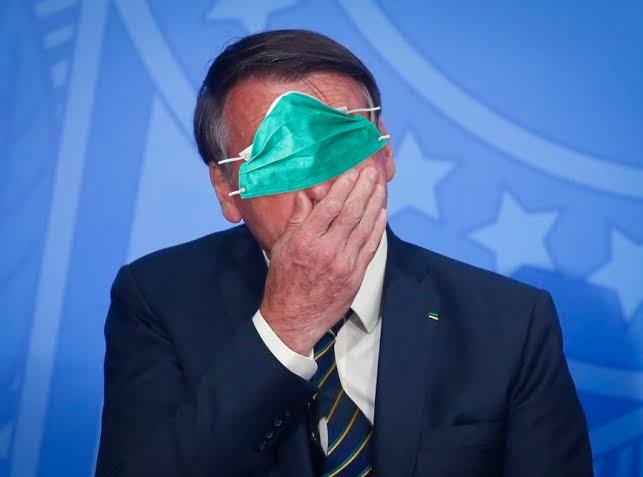
A. I guess you could say the planets have never been so misaligned. There is a need for local governance like never before in our history, and at the same time a peak of nationalism that had not been seen until now. Both are incompatible. So the only reason for hope is that nationalism is an empty ideology that has nothing to offer.
All attempts at strictly national crisis management have failed. Leaders like Johnson, Trump and even Bolsonaro, who came from nationalistic, negative premises, needed to change their discourse, each in their own way.
In addition, the contempt of these liberal politicians for the health challenges leads us to another key point that I addressed in the essay ‘L’impuissance de la Puissance’ (The Powerlessness of Power), which is the blatant powerlessness of a country like the United States in the face of this pandemic. The development of the crisis in the United States is terrifying and is partly due to this concept, inherited from the Chicago School (of economic theory), of total blindness in the face of collective threats and dramas.
Q. There are other major threats, such as climate change, that require joint action in the short term. Do you think that the coronavirus will change the mentality of the most skeptical politicians about the need to invest resources before there can be no turning back?
A. Logically, that reasoning is undisputable. Humanly it is already different and politically even more so. Humanly, it is difficult to look at the two goals simultaneously even though they are closely linked, but politically, the fact that the fight against global warming means spending, efforts, sacrifices in the short term in order to have long-term achievements renders this investment something politically suspicious.
After this crisis, states will have to invest heavily to rebuild the global economy. Will we accept to spend and invest a lot for the climate, that is, to add spending to spending? I am very pessimistic.
Q. Will anything good come out of this crisis?
A. There is always hope. The very thing about a crisis, increasing fear, is that it allows the development of human and social creativity. The economic crisis of 1929, which led the nationalists to win the elections, also invented Keynesianism and allowed the national economy to revitalize itself until the vengeance of neoliberalism in the eighties.
It was also the great wars, and the most deadly, that brought, at least in Europe, absolutely extraordinary inventions that ultimately allowed the solution of problems that could not be solved in contexts of peace and mobilization.
The stronger this crisis is, therefore, the more it will break the vicious circles and schemes, and so I think that something positive may come out of it. When, how and why, we don’t know.
Source: El País
More: Brazil news in English, every day from The Rio Times.
This article was produced by The Rio Times’ automated newsroom system. How we use AI · Report an error · Editorial responsibility: Matthias Camenzind, Editor-in-Chief