RIO DE JANEIRO, BRAZIL – The Covid-19 pandemic is much more than a “black swan” (an unexpected, exceptional event). The pandemic will certainly pass, but the crisis – social, economic, and political – will remain. And it means a different world that even the boldest social and political scientists could not have imagined, with an estimated 300 million additional unemployed.
The need for “staying home” has forced workers to continue to produce in the form of “home office”; teachers and students to continue part of the curriculum virtually; and it affects the most vulnerable groups, particularly pensioners, who are currently the highest risk group.

What world will the new generations have to live in? In “Brave New World” (1932) by British author Aldous Huxley, people live happily under the influence of the fictitious drug called ‘Soma’, manipulated by a higher plan in which top-level research serves only a domination structure.
We don’t have Soma, but we do have Netflix and an infinite number of apps and free services specifically designed to make us happy addicts and turn us into the real resources that allow the accumulation of wealth in the new capitalism – the surveillance capitalism that runs the world. Never before have we felt so free, even though we are under constant surveillance.
Man has become a terminal of data streams. Today, we know that with this knowledge, people can be fully influenced, controlled, and dominated, using algorithms and artificial intelligence. The pandemic has fuelled the greed of the providers of surveillance systems and technologies for tracking people, with the assumption that data science will be an essential component in the victory over the invisible enemy.
Spurred on by the success of China and South Korea (among other Asian countries) in the fight against Covid-19, both right-wing and left-wing political leaders in liberal democracies are delighted with the control capabilities of digital devices and the statistical model of algorithms that work out patterns and make predictions.
Cameras, software, sensors, mobile phones, apps, and monitors are now presented as the most sophisticated weapons for fighting the virus … and for taming populations.
The telecommunications and data industry, which together with the pharmaceutical industry will be one of the big winners of this crisis, is flourishing thanks to a basic principle: collecting personal data and selling user-behavior predictions to advertisers. But so far, only forecasts that allowed predictions about circumstances, events (and of course their manipulation) have been achieved – not certainties.
Corporations (and governments) have understood that in order to achieve increased financial and particularly manipulative benefits, changing human behavior on a large scale is necessary.
Labor is no longer provided by employees who receive a wage in exchange for their work, but instead by users of apps and free services who, in exchange for such services, agree to allow countless companies to record their lifestyle without further consent.
In the new capitalism, personal data is accumulated in order to produce the goods that can be offered for sale on the market: Predictions about ourselves. The owners of the means of production are none other than those who exercise the monopoly of digital business: Google, Facebook, Apple, and Amazon, Patricia Serrano explains in the Spanish business paper El Economista.
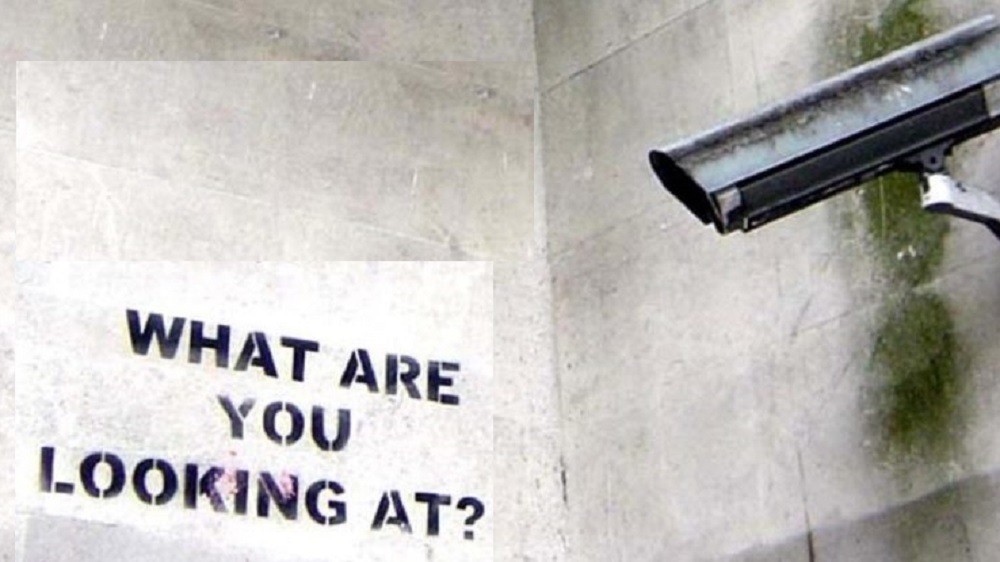
The exceptional measures taken, the so-called flexibility of employment rights, the salary cuts, the disregard for fundamental civil rights, the violations of privacy, with the declared aim of countering the virus and the crisis, may not remain an exception, but rather become permanent. They may even grow. The virus will not destroy capitalism. Everything suggests that (police, cybernetic) surveillance will continue to expand.
“Industrial capitalism, with all its atrocities, was the capitalism of people… In surveillance capitalism, however, we are above all other sources of information. It is not capitalism for us, but about us,” says Shoshana Zuboff, professor emeritus at Harvard Business School, in an interview with BBC.
Your Smart TV is watching you. But also your phone, your car, your household robot, your Google voice assistant, and even this little wristband that monitors the number of steps you take. A tip: All products that bear the word “smart” or the inscription “personalized” serve as loyal soldiers to surveillance capitalism. This is how Zuboff sums up our world.
The South Korean philosopher Byung-Chul Han, professor at the Berlin University of the Arts and author of countless books, deepens this concept: “Man is a terminal of data streams, the result of an algorithmic operation. With this knowledge, people can be completely influenced, controlled, and dominated.”
“There is a surveillance tower in the prison. The prisoners themselves cannot see anything, but they are all being watched. At present, a kind of surveillance is being set up where individuals are watched but have the feeling of freedom rather than surveillance,” he explains in his work ‘The Expulsion of the Other’, which analyses the impact of hyper-communication and hyper-connectivity in society.
For Han, the feeling of freedom that sprouts in individuals is deceptive: “People feel free and expose themselves by their own will. Freedom is not limited, it is exploited”. He adds that “the main difference between the Internet and a disciplinary society is that in the latter, repression is felt. In contrast, today we are controlled and monitored without being aware of it”.
Paloma Llaneza, an attorney, expert in cybersecurity and author of “Datanomics”, points out that consent does not really exist when we promptly enter our personal data to download a free app or subscribe to a weekly newsletter. “Consent is one of the great lies of the Internet,” she stresses.
The problem starts when our data is used for other purposes and transferred to third parties who want to learn more about us and build our profile. “Unbeknownst to them, users can give their consent to be scanned on social media, thereby creating a personal profile. Behavioral patterns can be inferred from the photos on Instagram alone,” she explains.
While some political leaders appealed to “unity” in the war against the invisible enemy and, on the other hand, deniers led their nations into genocide, some fracture lines emerged. Through social media and noisy protests (pot banging), governments were urged to take drastic measures to protect populations and public health.
The coronavirus impacts the entire highly technical manufacturing industry (including the automotive, aerospace and telecommunications industries), mainly because people have to work closely together in production lines, they are not considered to be systemically relevant, and they are ultimately geared to demand projections, which are not exactly bright at the moment.
Only a few sectors are spared in this analysis. First and foremost, these are service providers, among which we have the case of OTT (over-the-top content), i.e. telecommunications companies that offer streaming services. In other words, they reach users through the internet with video (Netflix), audio (Spotify), or news services (WhatsApp from Facebook) and/or with apps for video conferencing (such as Skype or Zoom).
With “social isolation”/”social distancing”, the platforms collecting personal data and selling it on the market are becoming not only major intermediaries and providers of entertainment but also of education. This cannot be accepted as something natural, let alone an excellent solution, stresses Sérgio Amadeu da Silveira, professor at Brazil’s ABC Federal University.
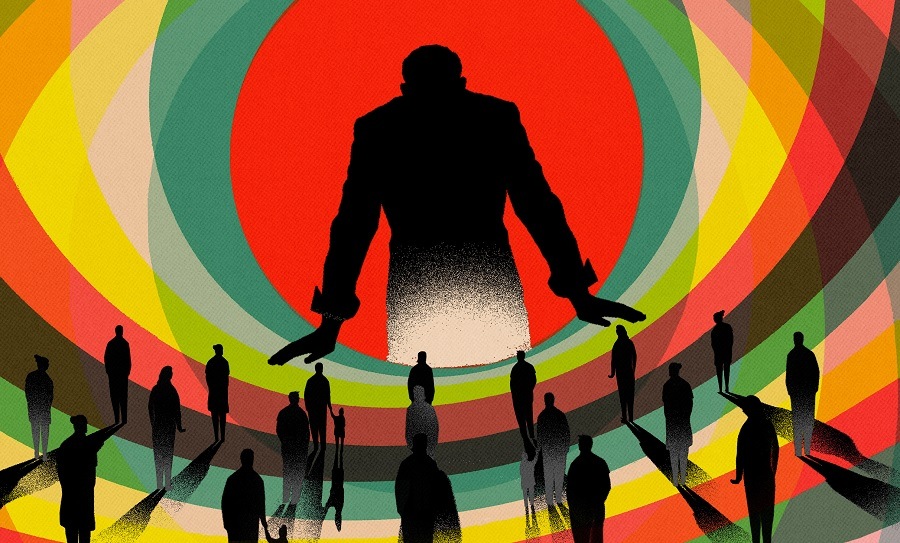
Covid-19 will certainly pass. Neoliberalism is also a pandemic, one that has infected even the left-wing powers that should have fought it over the past four decades. We are facing two pandemics.
More: Brazil news in English, every day from The Rio Times.
This article was produced by The Rio Times’ automated newsroom system. How we use AI · Report an error · Editorial responsibility: Matthias Camenzind, Editor-in-Chief
LatAm Markets: Live Signals → — real-time movers, turnover leaders and FX across Latin America.