The South American Guyana-Suriname Basin Could Be The Last Big Oil Boom
By Matthew Smith for Oilprice.com
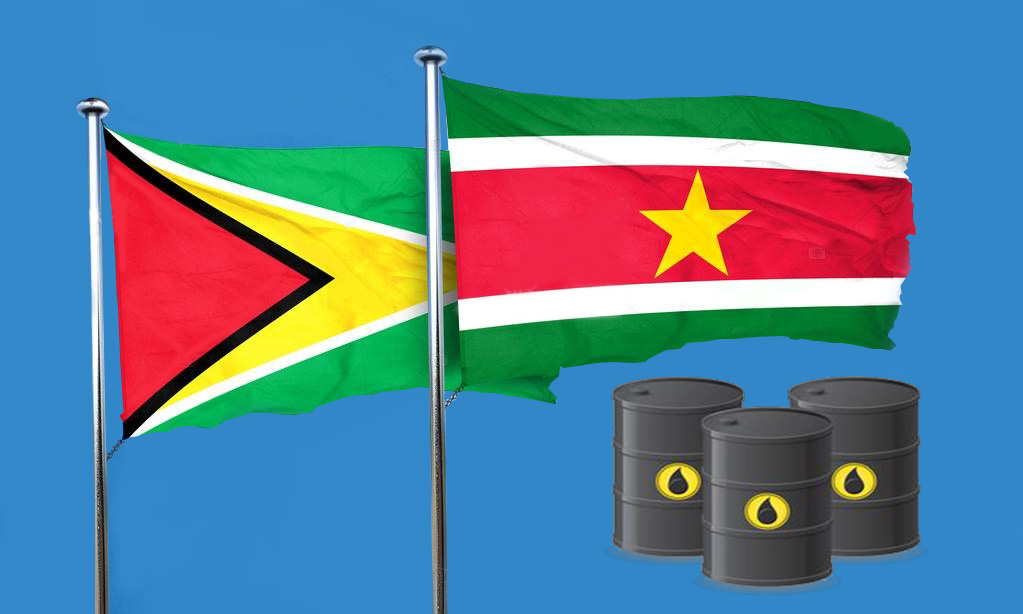
RIO DE JANEIRO, BRAZIL – The tiny South American countries of Guyana and Suriname are the focus of Latin America’s latest oil boom. A slew of oil discoveries by ExxonMobil since 2015 in its offshore Guyana Stabroek block which now sees the global energy supermajor estimating that the block contains over eight billion barrels of recoverable oil resources has captured the international oil industry’s attention.
This is not only because of the sheer volume of discoveries, but also due to the extremely low breakeven prices, estimated to be US$35 per barrel and falling, associated with offshore drilling there.

By some estimates, breakeven prices in the Stabroek block have already fallen below US$35 per barrel. The Liza phase two development, which comes online next year lifting production capacity of the Liza oilfield to 340,000 barrels daily, is expected to pump crude oil at a breakeven price of an extremely low US$25 a barrel. The quality of the discovered crude oil is also another factor explaining the considerable interest in the Guyana-Suriname Basin.
Exxon is pumping relatively low sulfur content light API gravity crude oil at its Liza-1 oilfield in the Stabroek Block and after receiving approval from Guyana’s government for its Payara project expects to be pumping 750,000 barrels daily by 2026.
The energy supermajor is planning to install up to 10 FPSOs in the block with five operational by the end of 2026. In a global operating environment where cost cutting is a key focus for oil companies in the wake of the March 2020 oil price crash, demand for lighter sweeter crude oil grades is climbing and the popularity of offshore Guyana is soaring.
Even Exxon’s latest disappointing drilling results in Guyana have done little to curb that growing interest. During November 2020, Exxon announced that while it had discovered the presence of hydrocarbons at the Tanger-1 well in the Kaieteur block, which neighbors the Stabroek block, the find was not economic to operate on a stand-alone basis.
That was followed by the integrated oil supermajor failing to find oil at the Hassa-1 exploration well drilled in the prolific Stabroek block earlier this month. Earlier this month Exxon announced the spudding of the Bulletwood-1 well in the offshore Guyana Canje block, which is adjacent to the Stabroek block.
The integrated oil company which owns a 35% interest in the block is also the operator and the remainder is owned by Total also with a 35% stake, JHI Associates at 17.5%, and Mid-Atlantic Oil & Gas owning the remaining 12.5%.
This is the first well being drilled on the Canje block and it is targeting a Liza style late Cretaceous and Campanian age geological formations estimated to contain prospective oil resources of around 500 million barrels. The hope is that despite the recent setbacks for Exxon in offshore Guyana the company can repeat the runaway success it experienced with the Stabroek block.
It is not only Guyana’s portion of the Guyana-Suriname Basin where major oil discoveries are being made. At the end of 2020, Exxon and partner Malaysian national oil company Petronas announced oil had been discovered at the much-hyped Sloanea-1 exploration well in Block 52 offshore Suriname. Apache and partner French oil supermajor Total, which is now the operator, have had to date outstanding success at Block 58 offshore Suriname.
Since January 2020 they have made four discoveries, the latest being in January 2021, of what Apache described as light to medium API gravity oil which amount to world class hydrocarbon resources.
According to investment bank Morgan Stanley, the 1.4-million-acre Block 58 holds potential oil resources of up to 6.5 billion barrels of oil equivalent. That number accords with Exxon’s experience with the Stabroek block and is supported by the spate of discoveries made by Apache and Total. While Apache and Total both hold a 50% interest in the block, Suriname’s national oil company Staatsolie has the contractual right to farm-in and gain a 20% stake at an estimated cost of US$1 to US$1.5 billion. As far back as August 2020, Staatsolie was reputedly considering exercising that right.
Oil industry consultancy Rystad Energy, last year, projected that Block 58 and new projects in Suriname’s waters potentially have a breakeven price of US$45 per barrel. That number, like in offshore Guyana, will fall as expertise, technology and infrastructure improves. It is speculated that the breakeven price for offshore oilfields in the Guyana-Suriname Basin could eventually be as low as US$23 per barrel, making operations highly profitable even at US$55 per barrel Brent.
That compares to US$46 to US$52 per barrel for the major U.S. shale oil basins and a 2021 fiscal breakeven price of just under US$68 a barrel for Saudi Arabia. Those numbers alone make Suriname a compelling location for global oil majors to invest.
The attractiveness is further amplified by Suriname’s government offering favorable production sharing contracts with 30-year terms, considerably longer than many other jurisdictions. Paramaribo has established a royalty rate of 6.25% which, while higher than neighboring Guyana’s 2%, is still lower than most other jurisdictions where the global average is 10% to 15%.
For those reasons, Guyana and Suriname have a competitive advantage over many other oil-producing jurisdictions, especially in a world where a crude oil supply glut is weighing heavily on prices and demand is expected to peak in less than a decade. The Guyana-Suriname Basin and its considerable petroleum potential will become the hottest offshore drilling location globally, attracting considerable investment from foreign oil companies.
The favorable conditions in the Guyana-Suriname Basin, coupled with a long running global crude oil supply glut and diminishing demand means this may be the last major oil boom ever witnessed.
More: Latin America news in English, every day from The Rio Times.
Read More from The Rio Times