The missing Inca settlement on which Santiago de Chile was founded
RIO DE JANEIRO, BRAZIL – The official history of Santiago de Chile suggested until a few years ago that the Spaniard Pedro de Valdivia had founded the city on unoccupied land.
But a body of archaeological and documentary evidence reveals that an Inca settlement was already in full activity on the site in the Mapocho River valley where Valdivia chose to settle in 1541.

This is the conclusion reached by archaeologist Rubén Stehberg and historian Gonzalo Sotomayor (who died in 2016) in the article “Mapocho Incaico”, published in 2012 in the Chilean National Museum of Natural History (MNHN) journal.
The article says that “an urban Tawantinsuyu (name of the Inca empire) center could have been present under the ancient city of Santiago, from which Inca roads branched out in different directions and whose base of sustenance was hydro-agriculture and gold and silver mining.”
“The infrastructure in this site would have been used by Pedro de Valdivia to found the city of Santiago,” the study adds.
Stehberg explains that he and his team of researchers define the Inca settlement as an “Inca administrative and ceremonial center” (not as a city, for being a very “European” concept) and that “it was in full operation.” “Apparently it was the administrative headquarters of the Inca governor,” Stehberg says.
“Pedro de Valdivia took over the administrative and ceremonial center and the whole network of agricultural fields of Maipo-Mapocho. Other indigenous structures such as guacas, shrines and pucaraes (fortresses) were destroyed as part of the policy of extirpation of idolatry,” Stehberg adds.
But what is the evidence of Inca presence in the current Chilean capital’s territory?
Documentary evidence
“The Inca presence in the Mapocho Valley is very strong,” says geographer Juan Carlos Cerda, part of Stehberg’s team. The Incas “arrived in approximately 1400 and brought with them labor, agricultural technologies, road networks and, most importantly, a network of canals that allowed for increased agricultural production.”
In 2012, the article “Mapocho Incaico”, gathered all the archaeological and documentary evidence available to date on this Tahuantinsuyo presence in the valley.
One of the oldest pieces of evidence is the Santiago’s minutes of council meeting dated June 10th, 1541, the year of its foundation, and which narrates the moment when the city was about to appoint Valdivia as governor.
The minutes say that all the people were to gather “in a large tambo next to the city square.” Tambos were Inca warehouses and lodging places built along Inca roads throughout Tahuantinsuyo. Stehberg believes it can be inferred that the quote refers to one of these Inca public buildings.
“Given the war context, the scarcity of food and labor, it is unlikely that (the Spaniards) would have built this ‘tambo grande’. Moreover, they would have given it a Castilian name, such as Edificio de la Gobernación, or Edificio del Cabildo or similar, never the name of an Inca building,” he explains.
Another evidence of the Inca presence in the Mapocho is the “List of services of Pedro de Valdivia,” written in 1552. The document says that he “populated the province of Mapocho, which was inhabited by Indians who were subject to the Ingas, lords of Peru, the city of Santiago”, details the article “Mapocho Incaico”.
Additional evidence comes from the testimonies of Geronimo de Vivar, chronicler of Pedro Valdivia and his deeds in what would become Chile. Vivar writes in 1558, in his texts on the foundation of Santiago, that Valdivia was going to “populate a town like Cuzco on the banks of a river named Mapocho.”
The quote refers to Valdivia’s intentions in moving to Mapocho from Peru, where he had been at the service of the conquistador Francisco Pizarro.
The passage means, according to “Mapocho Incaico,” that Valdivia “was already informed of the existence of a town or city like Cuzco on the banks of the Mapocho (…) He did not employ the concept of building, constructing or founding (…) The quotes are clear in the sense that he was going to inhabit a pre-existing town.” The article also states that Vivar “repeatedly mentioned the existence of Inca roads, a system of posts and transport on stilts” and a suspension bridge.
One of the latest documentary evidence surfaced in 2011, when historian Sotomayor found a court file from the early 17th century about a dispute over the location of the Inca road, which served as a boundary to some properties.
“The road they call Chille (Inca road) runs from the houses of Doña Ysabel de Caseres where the walls of the inga’s house are,” says one of the witnesses to the dispute, Gaspar Jauja, a Peruvian Indian who had come to the Mapocho valley with Valdivia in 1541.
But the presence of the Tahuantinsuyo in the Mapocho left not only documentary but also archaeological traces.
Archaeological evidence
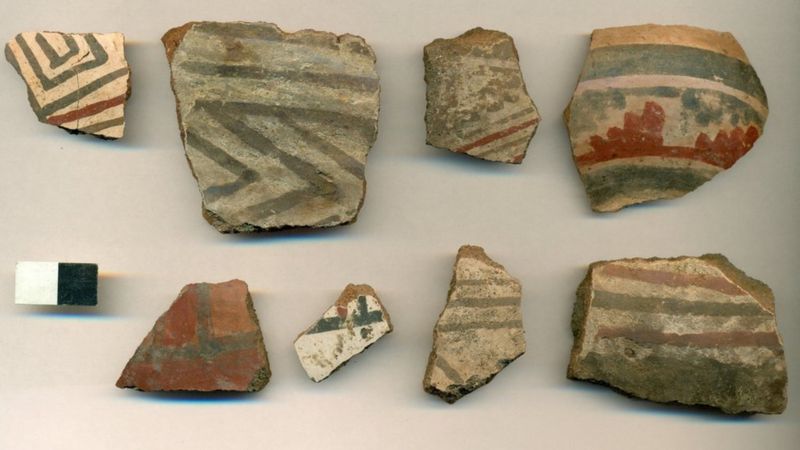
Throughout the 20th and 21st centuries, various excavations have uncovered graves, tombs, cemeteries and thousands of Inca ceramics (such as aribaloids, globular vessels with narrow necks) in different parts of Santiago, such as the Cathedral and the Chilean Museum of Pre-Columbian Art, and in the outskirts of the city.
For example, in 1954, at the top of Cerro El Plomo, 45 kilometers from Santiago de Chile, archaeologists found the frozen body of an Inca child, surrounded by coca leaves and silver, gold and shell ornaments.
Later, when Santiago expanded its subway network in the 1970s and 1980s, in the center of the city, “vestiges of ancient cemeteries and vessels that were clearly of Cusquenian origin began to emerge,” recounted Fernando Ulloa, a historian at the University of Chile.
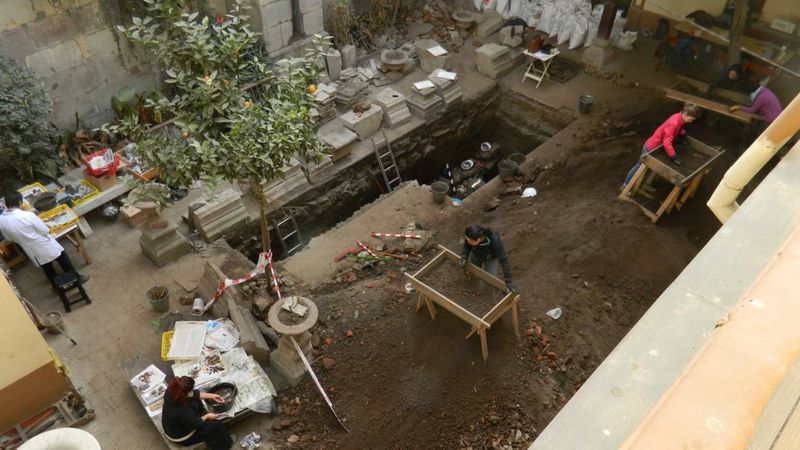
One of the most recent findings occurred between 2015 and 2016, in the excavation of the Los Naranjos courtyard, in the Santiago Cathedral, located in the Plaza de Armas.
“Rolled stones were found under the foundation of a wall. This is an Inca feature and is also found in Cuzco. It was used to diffuse the energy of earthquakes,” says Stehberg. “I want to change the myth that we have believed that the bad Spaniard conquered the good Inca.”
The courtyards of other buildings surrounding the Plaza de Armas were also excavated.
“Ceramic remains from the Inca period were consistently found in virtually all the shafts. Even a remarkably high proportion of fine pottery decorated with Cusquenian motifs drew attention,” says Stehberg.
The reference to the “house of the Inga”, the “large tambo” and the quantity of ceramics allow inferring that the settlement was an administrative and ceremonial center, Stehberg adds.
Around this center, the Mapocho valley “was crossed by large (Inca) irrigation ditches that fed a significant number of farms,” says geographer Juan Carlos Cerda, also co-author along with Stehberg and Sotomayor of the article “Mapocho Incaico Norte” (2016), published in the Chilean National Museum of Natural History (MNHN) bulletin four years after “Mapocho Incaico.”
In addition to all these vestiges, the research has also uncovered a set of tombs, such as that of La Reina, found in 1947. In this place, “there is no doubt that the Inca elite of the Mapocho was buried”, says the article “Mapocho Incaico”. “It would not be far-fetched to assume that it was the burial ground of the Quilicanta family.”
Because although the name of the Inca settlement is unknown, researchers are aware of who was in charge: an Inca named Quilicanta, according to chroniclers of the time.
Who ruled the city?
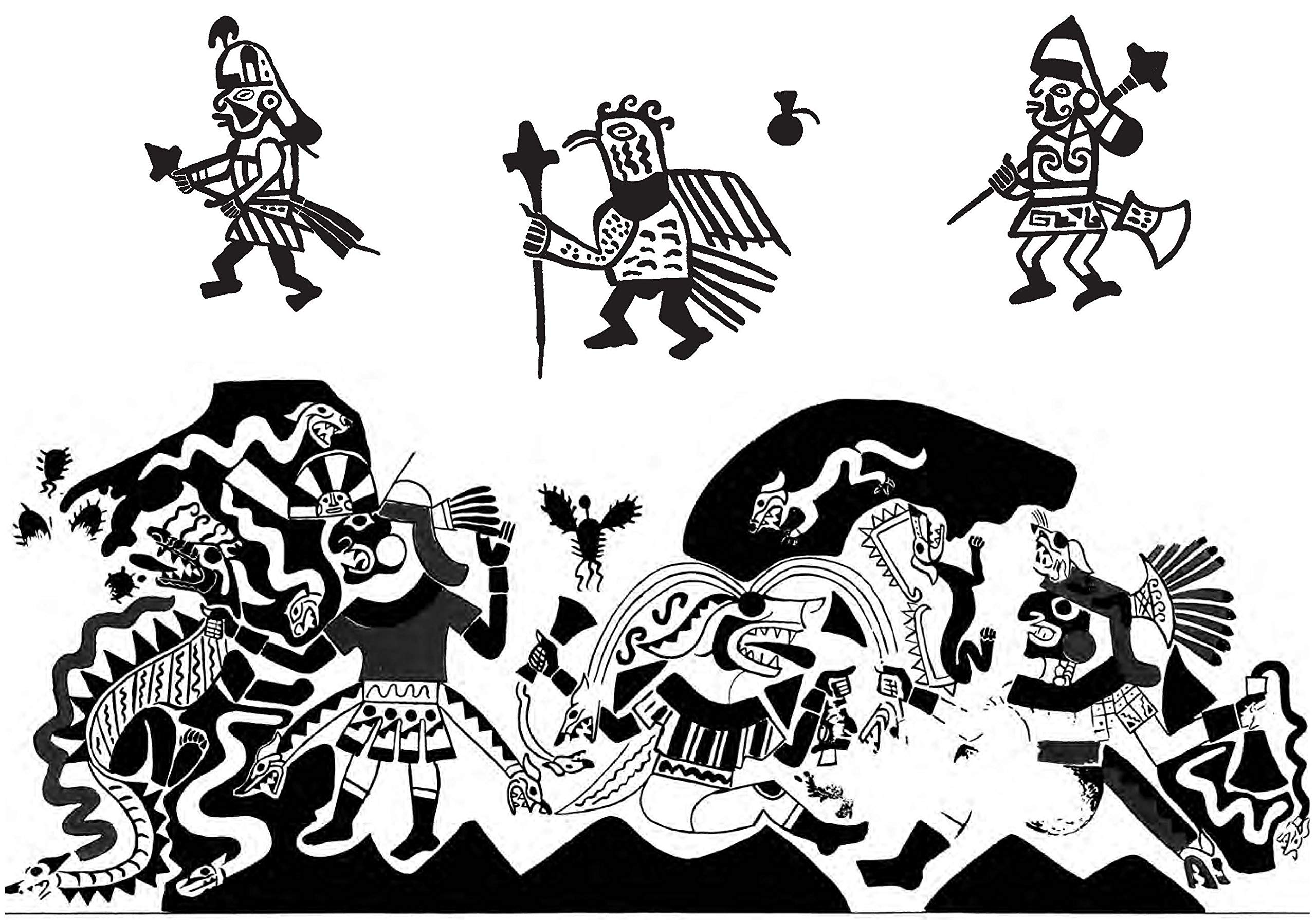
Gerónimo de Vivar, Valdivia’s chronicler, says that Quilicanta “for being valiant and one of the Incas of Pirú was placed by the Inca in this land as governor.”
“He was there to administer the payment of tributes, which was the way in which the Tahuantinsuyo occupied the area,” says historian Ulloa.
“It was Quilicanta’s turn to host Pedro de Valdivia, to whom he provided help. At some point, the relationship deteriorated. Doña Inés de Suárez, Valdivia’s wife, ordered Quilicanta’s beheading. This event put a dramatic end to the presence of the Tawantinsuyu in the central region of Chile,” says Stehberg.
Stehberg adds that “Cuzco had fallen into Spanish hands in 1532, so the Maipo-Mapocho basin managed to survive for (more than) eight years after the fall of its capital. Quilicanta played a crucial role in this.”
Source: BBC Brasil
More: Chile news in English, every day from The Rio Times.
Live Market IntelligenceChile — Live Market Board
Rio Times · Live Market Intelligence
Chile — Live Market Board
+0.22%
206,220.24
+0.94%
64,871.81
+0.34%
11,024.22
+0.22%
2,832,472
+0.30%
2,525.90
-0.36%
60,766.81
-1.71%
| Instrument | Last | Change | YoY | Prev. | High | Low | Volume |
|---|---|---|---|---|---|---|---|
| IPSA | 11,024.22 | +0.22% | — | 10,999.64 | 11,210 | 10,984 | 1,513,213,483 |
| USD/CLP | 913.98 | +0.04% | -5.67% | 913.65 | 915.11 | 906.68 | — |
| COPPER | 6.61 | +0.03% | +46.70% | 6.61 | 6.71 | 6.61 | 39,543 |
| SQM-B | 65,305 | -0.84% | +49.03% | 65,860 | 66,949 | 64,978 | 76,539 |
| COPEC | 5,964 | -1.09% | -11.70% | 6,030 | 6,100 | 5,960 | 634,331 |
| BSANTANDER | 78.37 | -2.28% | +35.94% | 80.20 | 81.69 | 78.34 | 36,288,711 |
| FALABELLA | 6,334 | -1.48% | +23.28% | 6,429 | 6,450 | 6,300 | 26,085,814 |
| ENELAM | 87.09 | +0.10% | -10.13% | 87.00 | 87.40 | 86.50 | 13,106,417 |
| CENCOSUD | 1,946 | -2.19% | -35.30% | 1,990 | 2,010 | 1,945 | 966,528 |
| CMPC | 1,020 | -1.96% | -29.10% | 1,040 | 1,050 | 1,015 | 3,526,677 |
| BANCO CHILE | 184.96 | -1.01% | +32.87% | 186.85 | 189.99 | 184.33 | 18,101,240 |
| LATAM AIR | 24.08 | -1.11% | +16.61% | 24.35 | 24.59 | 23.88 | 573,612,753 |
| SOUTHERN COPPER | 193.97 | -0.26% | +104.01% | 194.48 | 199.36 | 192.59 | 367,102 |
This article was produced by The Rio Times’ automated newsroom system. How we use AI · Report an error · Editorial responsibility: Matthias Camenzind, Editor-in-Chief