IBOV 171,031.73 ▲ 1.85% IPSA 11,338.38 ▲ 0.89% IPC MEX 65,729.18 ▲ 2.14% MERVAL 2,913,184 ▲ 1.30% COLCAP 2,459.23 ▲ 0.61% BVL PERÚ 58,698.13 ▲ 2.60% USD/BRL5.14▼ 0.14% USD/MXN16.90▼ 0.36% USD/CLP914.28— 0.00% USD/COP3,038▼ 1.18% USD/PEN3.35▼ 0.06% USD/ARS1,499▲ 0.12% USD/UYU40.20▲ 1.58% USD/PYG5,996▲ 1.55% USD/BOB11.43▲ 0.41% USD/DOP58.82▲ 0.20% USD/CRC450.05▲ 3.34% USD/GTQ7.62▲ 2.21% USD/HNL26.81▲ 0.31% USD/NIO36.62▲ 0.61% USD/VES778.00▼ 0.13% USD/PAB1.00— 0.00% USD/BZD2.00— 0.00% USD/JMD 157.28 — 0.00% USD/TTD6.71▲ 0.79% EUR/BRL6.00▼ 0.64% BRENT 88.88 ▼ 0.03% WTI 83.11 ▼ 0.11% IRON ORE 161.91 — — COPPER 6.61 ▲ 0.03% GOLD 4,461 ▲ 1.78% SILVER 65.59 ▲ 1.26% SOY 1,184 ▲ 3.20% CORN 480.50 ▲ 10.02% WHEAT 655.00 ▲ 3.93% COFFEE 317.25 ▼ 5.51% SUGAR 16.43 ▼ 1.79% ORANGE JUICE 138.55 ▼ 0.47% COTTON 85.03 ▲ 2.33% COCOA 5,719 ▲ 3.18% BEEF 223.60 ▼ 3.93% CATTLE 339.10 ▼ 3.16% LITHIUM 75.20 ▲ 1.47% PETR4 41.64 ▼ 0.05% VALE3 72.97 ▲ 0.83% ITUB4 38.60 ▼ 1.03% BBDC4 16.85 ▲ 0.36% ABEV3 14.89 ▼ 0.80% BBAS3 19.37 ▲ 0.47% B3SA3 14.26 ▼ 0.21% WEGE3 47.59 ▲ 0.49% PRIO3 59.14 ▼ 0.19% SUZB3 41.33 ▲ 2.35% RENT3 34.68 ▼ 0.09% AZZA3 15.89 ▼ 2.63% CSAN3 3.22 ▼ 1.83% RAIZ4 0.25 — 0.00% PCAR3 2.75 ▼ 0.36% GMAT3 3.65 ▼ 1.08% PSSA3 48.13 ▼ 0.54% CVCB3 1.33 ▼ 2.92% POSI3 3.36 ▲ 2.44% SLCE3 13.34 ▲ 0.30% NATU3 8.14 ▼ 0.73% IBOV 171,031.73 ▲ 1.85% IPSA 11,338.38 ▲ 0.89% IPC MEX 65,729.18 ▲ 2.14% MERVAL 2,913,184 ▲ 1.30% COLCAP 2,459.23 ▲ 0.61% BVL PERÚ 58,698.13 ▲ 2.60% USD/BRL 5.16 ▲ 0.01% USD/MXN 17.06 ▼ 0.24% USD/CLP 913.98 ▲ 0.04% USD/COP 3,140 ▲ 0.03% USD/PEN 3.36 ▼ 0.66% USD/ARS 1,493 ▲ 0.10% USD/UYU 40.27 ▲ 1.24% USD/PYG 5,939 ▲ 1.68% USD/BOB 11.64 ▼ 0.76% USD/DOP 58.34 ▲ 1.25% USD/CRC 445.92 ▲ 0.89% USD/GTQ 7.62 ▲ 2.21% USD/HNL 26.79 ▲ 1.57% USD/NIO 36.62 ▲ 0.69% USD/VES 762.44 ▼ 0.13% USD/PAB 1.00 — 0.00% USD/BZD 2.00 — 0.00% USD/JMD 157.28 — 0.00% USD/TTD 6.70 ▲ 0.61% EUR/BRL 5.95 ▲ 1.01% BRENT 88.88 ▼ 0.03% WTI 83.11 ▼ 0.11% IRON ORE 161.91 — — COPPER 6.61 ▲ 0.03% GOLD 4,461 ▲ 1.78% SILVER 65.59 ▲ 1.26% SOY 1,184 ▲ 3.20% CORN 480.50 ▲ 10.02% WHEAT 655.00 ▲ 3.93% COFFEE 317.25 ▼ 5.51% SUGAR 16.43 ▼ 1.79% ORANGE JUICE 138.55 ▼ 0.47% COTTON 85.03 ▲ 2.33% COCOA 5,719 ▲ 3.18% BEEF 223.60 ▼ 3.93% CATTLE 339.10 ▼ 3.16% LITHIUM 75.20 ▲ 1.47% PETR4 41.64 ▼ 0.05% VALE3 72.97 ▲ 0.83% ITUB4 38.60 ▼ 1.03% BBDC4 16.85 ▲ 0.36% ABEV3 14.89 ▼ 0.80% BBAS3 19.37 ▲ 0.47% B3SA3 14.26 ▼ 0.21% WEGE3 47.59 ▲ 0.49% PRIO3 59.14 ▼ 0.19% SUZB3 41.33 ▲ 2.35% RENT3 34.68 ▼ 0.09% AZZA3 15.89 ▼ 2.63% CSAN3 3.22 ▼ 1.83% RAIZ4 0.25 — 0.00% PCAR3 2.75 ▼ 0.36% GMAT3 3.65 ▼ 1.08% PSSA3 48.13 ▼ 0.54% CVCB3 1.33 ▼ 2.92% POSI3 3.36 ▲ 2.44% SLCE3 13.34 ▲ 0.30% NATU3 8.14 ▼ 0.73%
since 2009
Saturday, August 22, 2026

Mining Brazil

There is no Safe Dam in Brazil, Says Minister

By · May 24, 2019 · 3 min read

Daily Brief

The morning intel from across Latin America. Free.

By subscribing you agree to our privacy policy. We never share your email.

By Lise Alves, Senior Contributing Reporter

SÃO PAULO, BRAZIL – Brazil’s Mines and Energy Minister, Bento Albuquerque, said on Thursday that there is no safe dam in the country.

Brazil,Mines and Energy Minister Bento Albuquerque, during the hearing of the Senate's Environment Commission,
Mines and Energy Minister Bento Albuquerque, during the hearing of the Senate Environment Commission, photo by Marcelo Camargo/Agencia Brasil.
One-stop reference
Company Intelligence
Every listed company in Latin America — financials, ownership and structure for 1,450+ companies across 26 exchanges, in one place.
Browse the directory →
RT
Ask Rio Times
Latin American markets, currencies and companies.
Open the full Ask Rio Times →

“There is no safe dam. That concept does not exist,” said Albuquerque during a hearing before the Senate Environment Committee on dam safety.

The minister went on to say that the probability of ruptures of tailings dams built upstream, as was the case with Mariana, Brumadinho, and now Gongo Soco, all located in Minas Gerais state, is far superior to the rupture of other types of dams and that authorities are closely monitoring Gongo Soco.

“The monitoring is daily and uninterrupted. Everything is being monitored minute by minute and information is being passed on to people who have the responsibility and competence to take actions and measures, especially so as not to lose human lives,” he told lawmakers.

The minister assured senators that despite budget cuts announced by the federal government, including reductions in the Ministry of Mines and Energy (MME), the budget for the departments responsible for inspection of mining activities and development remains unaltered.

According to the minister, of the total of R$9.9 million of the additional budget requests for dam inspections, R$1.7 million have already been released.

“The MME was one of the ministries which suffered the largest budget cuts but the National Mining Agency was not affected because we carried out the reallocation of funds, and all the resources needed for it are guaranteed,” he said.

According to Albuquerque, by the end of 2019, all dams in the country will be monitored, and by 2021 all tailings dams will be decommissioned (emptied).

“We have about 500 tailings dams, 150 of which have already been surveyed this year, and all will be surveyed this year. Decommissioning is also a risky activity, which has to be planned very well,” Albuquerque told the Congressional committee.

On Friday, the Senators from the Environment Commttee are scheduled to go to the Gongo Soco mine region, in Barão de Cocais (Minas Gerais), for a tour of the region. According to officials, the senators want to verify the risks and also to see the efforts of local, state, and federal governments to minimize a possible disaster.

Mining giant Vale has warned that the breach of the northern slope of the tailings pit at the Gongo Soco mine is very likely to occur by Saturday, May 25th.

The Brumadinho disaster, on January 25th, was the largest mining disaster in Brazilian history in terms of victims. The rupture of a tailings dam at the Feijão Mine, owned by Vale, released thousands of liters of muddy water through the nearby countryside. The avalanche of mud buried several houses and buildings, including the cafeteria and administrative offices of the mining company, killing over 120 employees.
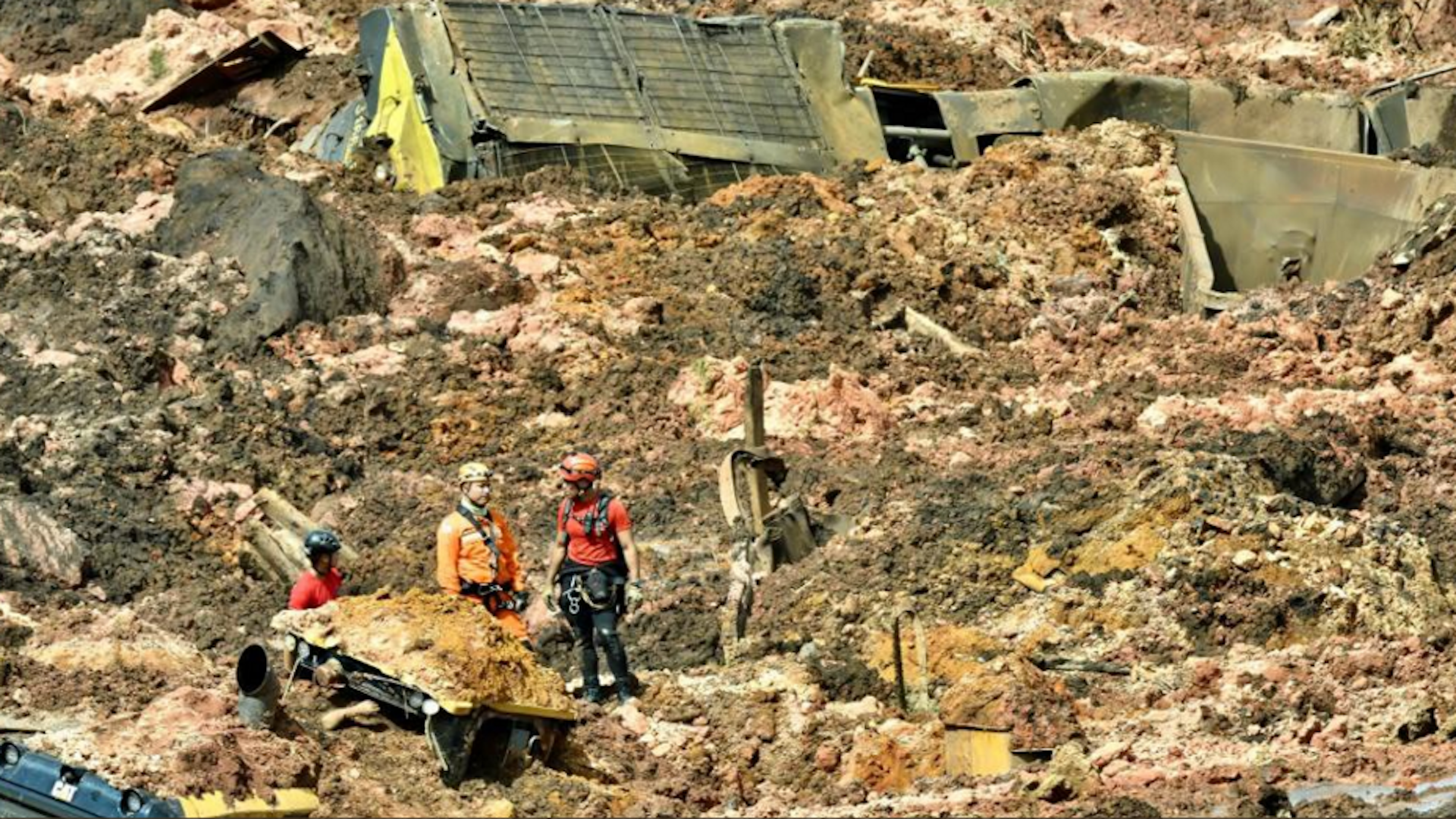
Brazil, Firefighters look for survivors in Brumadinho where on Friday a dam broke, burying part of the town under mud.
Firefighters look for survivors in Brumadinho where in January a dam broke, burying part of the town under mud, photo internet reproduction.

In all 270 persons disappeared under the mud that day; firefighters have only been able to locate the bodies of 233 of those victims.

And while Brumadinho was the most massive dam disaster in terms of number of victims, the Samarco dam disaster in Mariana, Minas Gerais, five years earlier, caused the worst environmental disaster in Brazilian history. The rupture of the dam caused over 60 million cubic meters of toxic mud to spill over into the countryside and into the Rio Doce River, polluting the river across two states and reaching the Atlantic Ocean.

Read More from The Rio Times

The Rio Times · Power Map
See who really holds power in Latin America
Click to open the Power Map

Rotate for Best Experience

This report is optimized for landscape viewing. Rotate your phone for the full experience.