Why, Despite Sluggish Economy, Does Brazil’s Stock Exchange Keep Hitting Records?
RIO DE JANEIRO, BRAZIL – The Brazilian stock market has been breaking successive positive records. The last one was on Monday, December 16th, when the Ibovespa, the main index, closed above 113,000 points, beating last week’s record.
The climate of good market mood was intensified in recent days, with the signaling of trade negotiations between the United States and China and also with the improvement of the outlook for Brazil’s rating to investment grade, stamping it as a good payer, which the country lost in 2015 – by the S&P rating agency.

On Monday, the news of the lowest country risk in nine years also increased investor interest. By the beginning of the month, the Ibovespa, which represents more than 80 percent of the Exchange’s operations, had already recorded an annual increase of 26 percent.
The magnitude of the optimism and euphoria in the financial market is not yet reflected, however, in the real economy. Despite having shown positive results this year, Brazil’s economic activity is growing at a slow pace – it should advance only one percent in 2019 – and is still far from reaching the level before the economic recession.
The unemployment line in the country also does not give respite: 12.4 million people remain unemployed. So why, even with an economy moving sideways, does the stock market continue to record so many highs?

According to experts, even though Brazil is recovering from the worst recession in its recent history, there has been a change in expectations since former President Dilma Rousseff’s impeachment, with market agents gambling on an improved economy in the medium and long term in the face of reform agendas.
The fact also explains why this upward trajectory of the stock market was initiated precisely in 2016, when Dilma left power.
Another crucial factor for this trend, however, is the sharp drop in the basic interest rate (the SELIC), which dropped from 14.25 percent in 2016 to 4.5 percent – its lowest historical level – at the end of this year.
As a result, several investors left fixed income investments – attractive in high interest scenarios – and migrated to the stock market to see their money yield a little more.
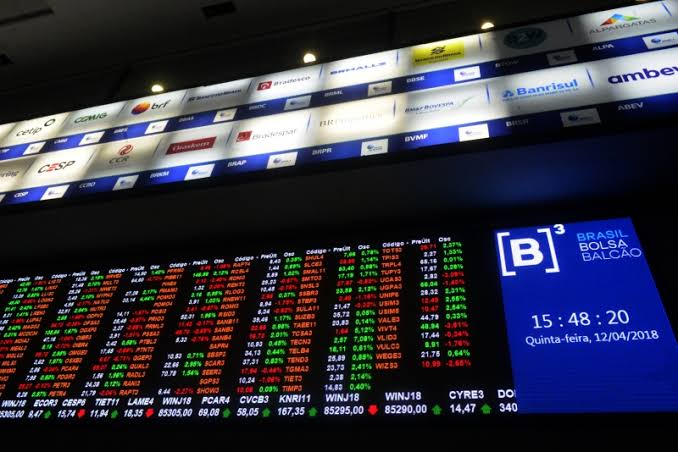
According to Ricardo Teixeira, coordinator of the MBA in Financial Management at Fundação Getúlio Vargas (FGV), with the low interest people are realizing that they need to go for options with higher returns, even though this represents greater risk. “As the SELIC continues to signal a low trajectory, the stock market starts to become much more attractive,” he explains.
Part of this attraction has led the number of investors in the stock market to triple in the last four years, from 564,000 to more than 1.5 million.
Teixeira points out that this is a radical change in relation to the preferred way, by the average Brazilian, of investing financial resources. And according to him, it will require extensive financial education and legislation to prevent fraud attempts.
In his opinion, Brazilian investors (mainly the youths that focuses on the creation of savings to support their retirement period) will need to learn to live with a higher risk and a longer-term vision.

“Until recently, it was comfortable for investors to place money in fixed income government bonds, sit back and watch TV, and earn money at zero risks. When we lower interest rates, it’s no longer interesting. Those who want a higher income will have to take risks and the alternative is the Stock Exchange,” says Diogo Carneiro, a professor at the FIPECAFI (Foundation Institute of Accounting, Actuarial and Financial Research) College.
According to Carneiro, operations on the Stock Exchange grow because the alternatives are poor: “It is rising for the same reason that President Jair Bolsonaro was elected, that is, lack of options,” he says.
The FIPECAFI professor emphasizes that the market is already resigned that there will not be a growth boom, but the expectation is growing again in the face of some positive data, such as the increase in household consumption, and should follow this trajectory next year due to the lower interest.
High interest on cards and overdraft
Although, in practice, the drop in the SELIC rate does not quickly reach the end consumer, it influences the long-term drop in interest rates on loans and credit cards, for instance. But in the short term, factors such as defaults and bank concentration keep rates high.

The average rate fpr revolving charge cards, for instance, rose 9.4 percent between September and October, reaching 317.2 percent per year. The level of interest on overdraft dropped 1.7 percent in October, compared to August, but is very high, at 305.9 percent per year.
Carneiro also points out that the foreign trade war scenario creates great instability for many strong markets around the world. And that, for the time being, Brazil is not yet affected by the waves of protests in Latin America.
“We began the year thinking that we would have a series of measures sent quickly, but after three months the disappointment has already come. If the Government had a more consistent discourse, with a legislative alignment, the Stock Exchange could be in an even better mood. We are losing potential,” he concludes.
More: Brazil news in English, every day from The Rio Times.
Live Market IntelligenceBrazil — Live Market Board
Rio Times · Live Market Intelligence
Brazil — Live Market Board
+2.63%
192,114.55
+2.63%
64,531.68
+1.10%
10,916.57
+0.08%
2,767,663
+0.32%
2,515.02
-0.59%
59,751.67
+0.18%
| Instrument | Last | Change | YoY | Prev. | High | Low | Volume |
|---|---|---|---|---|---|---|---|
| IBOV | 192,114.55 | +2.63% | +21.85% | 187,197.46 | 168,310 | 167,142 | — |
| USD/BRL | 5.16 | +0.01% | -5.13% | 5.16 | 5.18 | 5.14 | — |
| SELIC | 14.00% | — | — | — | — | — | |
| PETR4 | 41.64 | -0.05% | +35.19% | 41.66 | 41.97 | 41.15 | 41,499,400 |
| VALE3 | 72.97 | +0.83% | +30.75% | 72.37 | 73.54 | 72.66 | 17,658,000 |
| ITUB4 | 38.60 | -1.03% | +4.57% | 39.00 | 39.34 | 38.39 | 29,487,800 |
| BBDC4 | 16.85 | +0.36% | +3.50% | 16.79 | 16.90 | 16.67 | 19,416,900 |
| BBAS3 | 19.37 | +0.47% | +0.73% | 19.28 | 19.44 | 19.16 | 11,069,200 |
| B3SA3 | 14.26 | -0.21% | +12.73% | 14.29 | 14.47 | 14.11 | 33,037,800 |
| ABEV3 | 14.89 | -0.80% | +21.91% | 15.01 | 15.07 | 14.81 | 16,453,100 |
| WEGE3 | 47.59 | +0.49% | +29.99% | 47.36 | 48.08 | 47.36 | 3,364,600 |
| PRIO3 | 59.14 | -0.19% | +50.67% | 59.25 | 59.81 | 58.74 | 3,325,600 |
| SUZB3 | 41.33 | +2.35% | -23.55% | 40.38 | 41.48 | 40.35 | 3,914,900 |
| RENT3 | 34.68 | -0.09% | +0.84% | 34.71 | 34.96 | 34.35 | 7,979,100 |
| AZZA3 | 15.89 | -2.63% | -53.76% | 16.32 | 16.42 | 15.82 | 1,330,300 |
| CSNA3 | 4.30 | +0.47% | -42.65% | 4.28 | 4.41 | 4.26 | 10,076,100 |
| GGBR4 | 24.69 | +2.19% | +51.38% | 24.16 | 24.85 | 24.18 | 7,047,600 |
| ENEV3 | 24.21 | -1.38% | +70.49% | 24.55 | 24.64 | 23.99 | 9,297,000 |
This article was produced by The Rio Times’ automated newsroom system. How we use AI · Report an error · Editorial responsibility: Matthias Camenzind, Editor-in-Chief