IBOV 174,041.95 ▼ 1.52% IPSA 10,950.74 ▲ 0.31% IPC MEX 66,383.68 ▲ 0.21% MERVAL 3,283,854 ▼ 1.07% COLCAP 2,274.53 ▼ 0.38% BVL PERÚ 58,287.01 — — USD/BRL5.08▼ 0.24% USD/MXN17.49▲ 0.09% USD/CLP 948.45 — 0.00% USD/COP3,218▲ 0.16% USD/PEN3.40▲ 0.13% USD/ARS1,496▲ 0.47% USD/UYU40.14▲ 1.38% USD/PYG6,022▲ 1.26% USD/BOB11.18▲ 4.51% USD/DOP57.99▼ 0.28% USD/CRC449.17▲ 1.76% USD/GTQ7.63▲ 2.33% USD/HNL26.75▲ 0.82% USD/NIO36.62▲ 0.51% USD/VES740.37▼ 0.13% USD/PAB1.00— 0.00% USD/BZD2.00— 0.00% USD/JMD157.29▲ 0.11% USD/TTD6.71▲ 0.92% EUR/BRL5.78▲ 0.08% BRENT 96.78 ▼ 3.88% WTI 89.31 ▼ 3.12% IRON ORE 161.91 — — COPPER 6.36 ▲ 0.83% GOLD 4,071 ▲ 0.60% SILVER 58.91 ▲ 1.92% SOY 1,254 ▲ 1.29% CORN 487.25 ▲ 5.01% WHEAT 678.00 ▼ 2.62% COFFEE 298.25 ▼ 3.60% SUGAR 14.76 ▲ 0.48% ORANGE JUICE 142.65 ▼ 2.83% COTTON 79.89 ▲ 0.06% COCOA 5,467 ▲ 3.13% BEEF 222.50 ▼ 1.29% CATTLE 341.45 ▼ 0.68% LITHIUM 67.81 ▼ 1.75% PETR4 42.21 ▼ 1.72% VALE3 75.24 ▼ 0.58% ITUB4 42.10 ▼ 1.08% BBDC4 18.48 ▼ 1.28% ABEV3 15.64 ▼ 1.76% BBAS3 20.35 ▼ 2.77% B3SA3 15.44 ▼ 1.34% WEGE3 45.99 ▲ 0.70% PRIO3 58.82 ▼ 2.84% SUZB3 41.84 ▼ 1.39% RENT3 36.89 ▼ 0.67% AZZA3 16.65 ▼ 2.35% CSAN3 3.80 ▼ 2.56% RAIZ4 0.26 ▼ 3.70% PCAR3 2.79 ▼ 2.79% GMAT3 3.79 ▼ 2.07% PSSA3 54.78 ▼ 0.72% CVCB3 1.34 ▲ 2.29% POSI3 3.55 ▼ 3.27% SLCE3 13.64 ▼ 0.94% NATU3 8.38 ▼ 2.10% BRKM5 6.10 ▼ 1.13% RANI3 7.95 ▲ 0.25% CSNA3 5.36 ▲ 1.13% CMIN3 5.69 ▼ 2.40% USIM5 8.48 ▼ 0.12% GGBR4 24.26 ▲ 0.83% ENEV3 24.90 ▼ 3.11% CPFE3 45.09 ▼ 2.44% CMIG4 10.98 ▼ 1.88% EQTL3 38.34 ▼ 1.74% LREN3 13.27 ▼ 0.75% VIVT3 35.47 ▲ 2.22% RAIL3 13.57 ▼ 2.79% KLABIN 17.52 ▼ 0.79% RAIA DROGASIL 17.98 ▼ 1.15% RDOR3 33.38 ▼ 0.86% HAPV3 9.92 ▼ 5.25% FLRY3 16.26 ▼ 1.93% SMTO3 15.05 ▼ 4.20% UGPA3 32.71 ▼ 2.04% VBBR3 35.10 ▼ 1.40% BBSE3 41.49 ▼ 2.15% BPAC11 54.67 ▼ 2.90% CURY3 29.35 ▼ 0.91% AERI3 2.04 ▲ 0.99% VIVARA 21.42 ▼ 0.14% COMPASS 24.76 ▼ 1.28% VAMOS 3.15 ▼ 1.87% SANB11 26.34 ▼ 1.09% ASAI3 7.85 ▼ 2.12% SBSP3 28.38 ▼ 1.29% WALMEX 48.00 ▲ 1.39% GMEXICO 207.28 ▼ 0.94% FEMSA 221.92 ▼ 0.19% CEMEX 21.18 ▼ 1.40% GFNORTE 193.04 ▲ 2.00% BIMBO 58.26 ▼ 1.39% TELEVISA 9.73 ▼ 0.61% AMX 22.80 ▲ 0.18% GAP 377.44 ▲ 0.26% ASUR 267.99 ▼ 0.69% OMA 226.14 ▼ 0.51% KOF 179.29 ▼ 0.23% GRUMA 268.70 ▼ 0.09% KIMBER 39.70 ▲ 1.10% SQM-B 65,350 ▼ 0.23% COPEC 6,330 ▲ 1.12% BSANTANDER 79.32 ▼ 0.85% FALABELLA 5,990 ▼ 1.12% ENELAM 85.49 ▲ 0.58% CENCOSUD 1,958 ▼ 0.51% CMPC 1,025 ▼ 2.47% BANCO CHILE 193.10 ▲ 1.25% LATAM AIR 23.88 ▲ 1.62% YPF 82,000 ▼ 0.58% GGAL 7,890 ▼ 0.69% PAMPA 5,515 ▼ 2.04% TXAR 675.00 ▼ 0.74% ALUAR 972.00 ▼ 1.07% TGS 9,765 ▼ 2.30% CEPU 2,365 ▼ 2.27% MIRGOR 16,525 ▼ 1.20% COME 42.41 ▼ 0.28% LOMA NEGRA 3,623 ▼ 3.78% BYMA 299.75 ▲ 2.48% TELECOM ARG 4,380 ▲ 1.27% ECOPETROL 16.01 ▼ 1.96% BANCOLOMBIA 86.01 ▼ 0.90% GRUPO AVAL 4.78 — 0.00% CREDICORP 388.77 ▲ 0.29% SOUTHERN COPPER 179.29 ▼ 1.61% BUENAVENTURA 30.91 ▼ 1.31% MERCADOLIBRE 1,801 ▲ 0.15% NUBANK 14.09 ▼ 0.70% XP 16.69 ▼ 0.83% PAGSEGURO 9.20 ▼ 2.75% STONE 10.76 ▼ 2.00% GLOBANT 31.30 — 0.00% TECNOGLASS 45.30 ▲ 3.57% GAP AIRPORT 216.28 ▲ 0.39% ASUR 267.99 ▼ 0.69% OMA AIRPORT 103.43 ▼ 0.68% AMX ADR 26.01 ▲ 0.23% FEMSA ADR 127.12 ▲ 0.03% CEMEX ADR 12.06 — 0.00% PETROBRAS ADR 18.77 ▼ 1.21% VALE ADR 14.79 ▼ 0.27% ITAU ADR 8.28 ▼ 0.84% SANTANDER BR 5.30 ▼ 1.21% AMBEV ADR 3.06 ▼ 0.97% CSN 1.08 ▲ 1.89% GERDAU 4.81 ▲ 0.84% LATAM ADR 50.15 ▲ 0.62% BTC 64,403 ▲ 0.48% ETH 1,877 ▲ 0.89% SOL 74.71 ▲ 1.12% XRP 1.10 ▲ 0.67% BNB 569.43 ▲ 0.90% ADA 0.16 ▲ 0.60% DOGE 0.07 ▲ 4.07% AVAX 6.78 ▲ 7.67% LINK 8.39 ▲ 0.69% DOT 0.82 ▲ 0.95% LTC 46.68 ▲ 0.77% BCH 209.17 ▼ 0.67% TRX 0.33 ▲ 0.15% XLM 0.18 ▼ 0.43% HBAR 0.07 ▼ 0.69% NEAR 1.79 ▼ 0.93% ATOM 1.38 ▼ 0.68% AAVE 92.31 ▼ 0.79% SELIC 14.25% EMBRAER 82.50 ▼ 1.08% EMBRAER ADR 64.93 ▼ 0.82% JBS 12.28 ▲ 1.24% JBS BDR 62.04 ▲ 0.36% MBRF3 14.84 ▼ 4.81% MBRFY 2.94 ▼ 0.34% INTER 5.29 ▼ 3.11% IBOV 174,041.95 ▼ 1.52% IPSA 10,950.74 ▲ 0.31% IPC MEX 66,383.68 ▲ 0.21% MERVAL 3,283,854 ▼ 1.07% COLCAP 2,274.53 ▼ 0.38% BVL PERÚ 58,287.01 — — USD/BRL 5.08 ▼ 0.24% USD/MXN 17.49 ▲ 0.09% USD/CLP 948.45 — 0.00% USD/COP 3,218 ▲ 0.16% USD/PEN 3.40 ▲ 0.13% USD/ARS 1,496 ▲ 0.47% USD/UYU 40.14 ▲ 1.38% USD/PYG 6,022 ▲ 1.26% USD/BOB 11.18 ▲ 4.51% USD/DOP 57.99 ▼ 0.28% USD/CRC 449.17 ▲ 1.76% USD/GTQ 7.63 ▲ 2.33% USD/HNL 26.75 ▲ 0.82% USD/NIO 36.62 ▲ 0.51% USD/VES 740.37 ▼ 0.13% USD/PAB 1.00 — 0.00% USD/BZD 2.00 — 0.00% USD/JMD 157.29 ▲ 0.08% USD/TTD 6.71 ▲ 0.68% EUR/BRL 5.78 ▲ 0.08% BRENT 96.78 ▼ 3.88% WTI 89.31 ▼ 3.12% IRON ORE 161.91 — — COPPER 6.36 ▲ 0.83% GOLD 4,071 ▲ 0.60% SILVER 58.91 ▲ 1.92% SOY 1,254 ▲ 1.29% CORN 487.25 ▲ 5.01% WHEAT 678.00 ▼ 2.62% COFFEE 298.25 ▼ 3.60% SUGAR 14.76 ▲ 0.48% ORANGE JUICE 142.65 ▼ 2.83% COTTON 79.89 ▲ 0.06% COCOA 5,467 ▲ 3.13% BEEF 222.50 ▼ 1.29% CATTLE 341.45 ▼ 0.68% LITHIUM 67.81 ▼ 1.75% PETR4 42.21 ▼ 1.72% VALE3 75.24 ▼ 0.58% ITUB4 42.10 ▼ 1.08% BBDC4 18.48 ▼ 1.28% ABEV3 15.64 ▼ 1.76% BBAS3 20.35 ▼ 2.77% B3SA3 15.44 ▼ 1.34% WEGE3 45.99 ▲ 0.70% PRIO3 58.82 ▼ 2.84% SUZB3 41.84 ▼ 1.39% RENT3 36.89 ▼ 0.67% AZZA3 16.65 ▼ 2.35% CSAN3 3.80 ▼ 2.56% RAIZ4 0.26 ▼ 3.70% PCAR3 2.79 ▼ 2.79% GMAT3 3.79 ▼ 2.07% PSSA3 54.78 ▼ 0.72% CVCB3 1.34 ▲ 2.29% POSI3 3.55 ▼ 3.27% SLCE3 13.64 ▼ 0.94% NATU3 8.38 ▼ 2.10% BRKM5 6.10 ▼ 1.13% RANI3 7.95 ▲ 0.25% CSNA3 5.36 ▲ 1.13% CMIN3 5.69 ▼ 2.40% USIM5 8.48 ▼ 0.12% GGBR4 24.26 ▲ 0.83% ENEV3 24.90 ▼ 3.11% CPFE3 45.09 ▼ 2.44% CMIG4 10.98 ▼ 1.88% EQTL3 38.34 ▼ 1.74% LREN3 13.27 ▼ 0.75% VIVT3 35.47 ▲ 2.22% RAIL3 13.57 ▼ 2.79% KLABIN 17.52 ▼ 0.79% RAIA DROGASIL 17.98 ▼ 1.15% RDOR3 33.38 ▼ 0.86% HAPV3 9.92 ▼ 5.25% FLRY3 16.26 ▼ 1.93% SMTO3 15.05 ▼ 4.20% UGPA3 32.71 ▼ 2.04% VBBR3 35.10 ▼ 1.40% BBSE3 41.49 ▼ 2.15% BPAC11 54.67 ▼ 2.90% CURY3 29.35 ▼ 0.91% AERI3 2.04 ▲ 0.99% VIVARA 21.42 ▼ 0.14% COMPASS 24.76 ▼ 1.28% VAMOS 3.15 ▼ 1.87% SANB11 26.34 ▼ 1.09% ASAI3 7.85 ▼ 2.12% SBSP3 28.38 ▼ 1.29% WALMEX 48.00 ▲ 1.39% GMEXICO 207.28 ▼ 0.94% FEMSA 221.92 ▼ 0.19% CEMEX 21.18 ▼ 1.40% GFNORTE 193.04 ▲ 2.00% BIMBO 58.26 ▼ 1.39% TELEVISA 9.73 ▼ 0.61% AMX 22.80 ▲ 0.18% GAP 377.44 ▲ 0.26% ASUR 267.99 ▼ 0.69% OMA 226.14 ▼ 0.51% KOF 179.29 ▼ 0.23% GRUMA 268.70 ▼ 0.09% KIMBER 39.70 ▲ 1.10% SQM-B 65,350 ▼ 0.23% COPEC 6,330 ▲ 1.12% BSANTANDER 79.32 ▼ 0.85% FALABELLA 5,990 ▼ 1.12% ENELAM 85.49 ▲ 0.58% CENCOSUD 1,958 ▼ 0.51% CMPC 1,025 ▼ 2.47% BANCO CHILE 193.10 ▲ 1.25% LATAM AIR 23.88 ▲ 1.62% YPF 82,000 ▼ 0.58% GGAL 7,890 ▼ 0.69% PAMPA 5,515 ▼ 2.04% TXAR 675.00 ▼ 0.74% ALUAR 972.00 ▼ 1.07% TGS 9,765 ▼ 2.30% CEPU 2,365 ▼ 2.27% MIRGOR 16,525 ▼ 1.20% COME 42.41 ▼ 0.28% LOMA NEGRA 3,623 ▼ 3.78% BYMA 299.75 ▲ 2.48% TELECOM ARG 4,380 ▲ 1.27% ECOPETROL 16.01 ▼ 1.96% BANCOLOMBIA 86.01 ▼ 0.90% GRUPO AVAL 4.78 — 0.00% CREDICORP 388.77 ▲ 0.29% SOUTHERN COPPER 179.29 ▼ 1.61% BUENAVENTURA 30.91 ▼ 1.31% MERCADOLIBRE 1,801 ▲ 0.15% NUBANK 14.09 ▼ 0.70% XP 16.69 ▼ 0.83% PAGSEGURO 9.20 ▼ 2.75% STONE 10.76 ▼ 2.00% GLOBANT 31.30 — 0.00% TECNOGLASS 45.30 ▲ 3.57% GAP AIRPORT 216.28 ▲ 0.39% ASUR 267.99 ▼ 0.69% OMA AIRPORT 103.43 ▼ 0.68% AMX ADR 26.01 ▲ 0.23% FEMSA ADR 127.12 ▲ 0.03% CEMEX ADR 12.06 — 0.00% PETROBRAS ADR 18.77 ▼ 1.21% VALE ADR 14.79 ▼ 0.27% ITAU ADR 8.28 ▼ 0.84% SANTANDER BR 5.30 ▼ 1.21% AMBEV ADR 3.06 ▼ 0.97% CSN 1.08 ▲ 1.89% GERDAU 4.81 ▲ 0.84% LATAM ADR 50.15 ▲ 0.62% BTC 64,403 ▲ 0.48% ETH 1,877 ▲ 0.89% SOL 74.71 ▲ 1.12% XRP 1.10 ▲ 0.67% BNB 569.43 ▲ 0.90% ADA 0.16 ▲ 0.60% DOGE 0.07 ▲ 4.07% AVAX 6.78 ▲ 7.67% LINK 8.39 ▲ 0.69% DOT 0.82 ▲ 0.95% LTC 46.68 ▲ 0.77% BCH 209.17 ▼ 0.67% TRX 0.33 ▲ 0.15% XLM 0.18 ▼ 0.43% HBAR 0.07 ▼ 0.69% NEAR 1.79 ▼ 0.93% ATOM 1.38 ▼ 0.68% AAVE 92.31 ▼ 0.79% SELIC 14.25% EMBRAER 82.50 ▼ 1.08% EMBRAER ADR 64.93 ▼ 0.82% JBS 12.28 ▲ 1.24% JBS BDR 62.04 ▲ 0.36% MBRF3 14.84 ▼ 4.81% MBRFY 2.94 ▼ 0.34% INTER 5.29 ▼ 3.11%
since 2009
Sunday, July 26, 2026

Brazil Business - Brazil

The Challenges of Freezing the Economy

By · April 1, 2020 · 5 min read

Daily Brief

The morning intel from across Latin America. Free.

By subscribing you agree to our privacy policy. We never share your email.

RIO DE JANEIRO, BRAZIL – For weeks, with China already paralyzed and supply chains striking the first blow, the word recession remained outside the common lexicon: the debate still revolved around how much the coronavirus would subtract from growth.

But the pandemic reached the West and doubts quickly became volatile: a confined economy leaves little room for escape. There will be recession in Spain. There will be recession in Europe. There will be recession in the United States. And there will be recession in Latin America.

For weeks, with China already paralyzed and supply chains striking the first blow, the word recession remained outside the lexicon: the debate still revolved around how much the coronavirus would subtract from growth.
For weeks, with China already paralyzed and supply chains striking the first blow, the word recession remained outside the lexicon: the debate still revolved around how much the coronavirus would subtract from growth. (Photo internet reproduction)
One-stop reference
Company Intelligence
Every listed company in Latin America — financials, ownership and structure for 1,450+ companies across 26 exchanges, in one place.
Browse the directory →
RT
Ask Rio Times
Latin American markets, currencies and companies.
Open the full Ask Rio Times →

The initial ruin will be tremendous, almost certainly greater than the 2008 and 2009 recession, and the economic authorities’ current challenge – governments, central banks, IMF, World Bank, G20, G7 – is to prevent this time-limited blow from turning into something else: a Great Depression, as in the 1930s. Success depends, to a large extent, on experimental methods: freezing the productive sector until the nightmare is over, and then waiting for the activity to revert, as closely as possible, to where it was before.

In short, avoid a short circuit in the production system that strangles growth for years rather than months.

“It is already too late to avert recession: we are facing a massive and sudden slowdown, with devastating effects on both consumption and production. But we can and must do everything possible to prevent a depression. This is the challenge that will define an entire generation,” said Mohamed El-Erian, head of Allianz’s economic advisory and former president of the US Global Development Council under Barack Obama.

“We’re in what’s most like a dead period for the economy, where people and businesses need, above all, to survive,” says Alan Blinder, a former Fed number two and White House advisor in Bill Clinton’s presidency. As long as the stop lasts, all efforts by governments and central banks will be directed toward a single goal: to do everything possible to get them out of this predicament. “Support less privileged families, grant credit to businesses and prevent insolvencies and dismissals,” adds Ricardo Reis, economist at the London School of Economics (LSE).
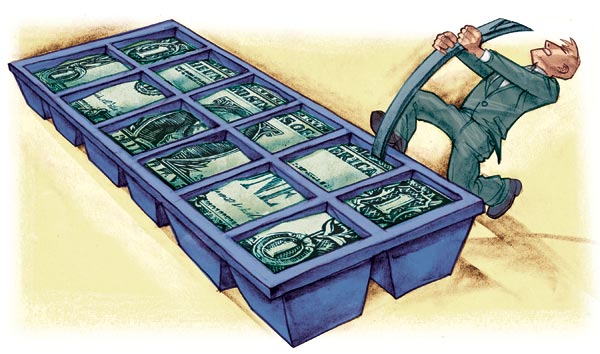
Success depends, to a large extent, on experimental methods: freezing the productive sector until the nightmare is over, and then waiting for the activity to revert as close as possible to where it was before.
Success depends, to a large extent, on experimental methods: freezing the productive sector until the nightmare is over, and then waiting for the activity to revert as close as possible to where it was before. (Photo internet reproduction)

The economy has entered a dark, self-inflicted tunnel, recalls Grégory Claeys, of the Bruegel think tank, with the greatest imaginable goal: to save lives. The US shifted in record time from full employment to a projected 20 percent unemployment and Goldman Sachs is expecting a double-digit contraction in Spain.

In uncharted waters and without a beacon from the past to light the way, this time, as economist Carmen Reinhart wrote, it is different.

And the treatment prescription should be different, too. In extraordinary circumstances such as these, it is now up to economic policy to play a very different role from the one it is used to: to try, by all means, to ensure that the productive base preserves its basic features without major interruptions, until business activity returns to the streets.

To subject the productive sector, in other words, to a kind of induced coma or deep freeze that keeps the vital signs as intact as possible, so that when everything passes, the way out of the crisis will be in the form of a V rather than an L.

Can an economy be frozen? “It is possible, yes, though very complex. And it depends on how long: if the total shutdown is extended, it will be catastrophic; if it is only a few weeks or months, we can avoid disaster… To do so, it’s necessary to prevent companies and jobs from disappearing,” says Reis.

There are virtually no historical precedents. Perhaps the Second World War, says the LSE professor without much certainty. Or, as Barke Eichengreen of Berkeley recalls, the one about the infamous Spanish flu: “But it was some cities, not a global freeze like this”.

As long as there is no consumption to encourage, says Sung Won Sohn, president of SS Economics and professor at Loyola Marymount University, the goal will remain something as simple to say and as difficult to achieve as avoiding a hecatomb in the form of an avalanche of bankruptcies and permanent layoffs.

And to ensure that the crippling wounds to the financial sector are as mild as possible: out of all the spotlights, the alarms have already gone off there, with the huge US mortgage market (12 times Spain’s GDP) experiencing its greatest turbulence since the 2008 crisis. “We are facing the first recession in history led by the service sector. If it lasts long and affects the solvency of banks, it could be even worse than the Great Depression”.

The casualty of labor and worse access to credit, for instance, greatly entangle the task of cryogenization in emerging countries.
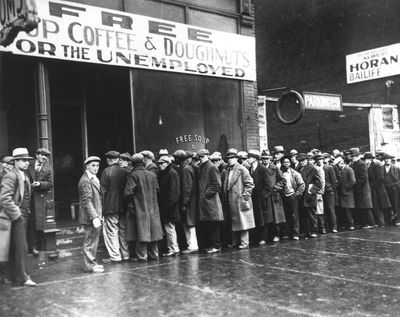
Nobody wants another Great Depression. (Photo internet reproduction)

Meanwhile, most European countries and the United States have already set to work, vetoing indefinite layoffs and gambling on temporary formulas in which the treasury covers a substantial part of salaries or dumping millions in liquidity for companies.

The events in March, however, have made some things clear. Public debt will hit the clouds and there will have to be cuts on the private sector, as Mario Draghi alerted this week in the Financial Times. “…part of the government loans [to businesses] will never be repaid,” Blinder said.

Later, when people return to work and consume, there will need to be more: “Consumption will need support, with a new round of incentives that, fortunately, developed economies can face due to such low interest rates,” Eichengreen said, no doubt arguing for the role of the state at times like these.

But the void has turned others into Keynesians: today no one denies its prime significance to prevent a total collapse. And they will need to do so afterwards too, by lending a hand in paying taxes and assuming their social responsibility.

Otherwise, concludes Ian Greer, from Cornell University, “once again governments will end up rescuing investors and passing on the costs to society through austerity measures”.

Exceptionality also leaves lessons learned. Central banks were much quicker to reflect this than in 2008.

“The role of states and central banks is encouraging, acting quickly and adopting emergency measures,” says El-Erian. The Fed and the ECB have been forceful: They’ve done their part. And the mistakes made, like Christine Lagarde’s in her first appearance – “we’re not here to reduce the spreads”- have been corrected “in two days and not in two years, as before,” Claeys notes.

Source: El Pais

Read More from The Rio Times

The Rio Times · Power Map
See who really holds power in Latin America
Click to open the Power Map

Rotate for Best Experience

This report is optimized for landscape viewing. Rotate your phone for the full experience.