Billions in Share Offerings, Low Interest Rates, Stimulate Brazil Real Estate Sector Growth
RIO DE JANEIRO, BRAZIL – The housing market may be close to a vigorous upturn. Since July, six construction companies and developers have raised R$3.8 billion (US$950 million) in new share offerings to speed up their residential and commercial projects. With the drop in interest rates – the SELIC reached an annual rate of five percent last week – and the greater interest of investors in the sector, it is expected that funding may double in the coming months, since other groups are preparing to enter the Stock Market.

The sector’s momentum is good news for the economy as a whole. “Traditionally, this sector anticipates the scenario of economic growth. The GDP is expected to rebound, growth should be less intense, but sustainable in the long term,” says Alessandro Farkuh, in charge of Bradesco BBI’s investment banking area, which coordinated much of the construction companies’ operations on the stock market.
With these resources, construction companies intend to open new construction sites, particularly in São Paulo. This is already reflected in other industrial sectors. “In recent weeks we have begun to feel greater demand for steel from the real estate sector,” said Gustavo Werneck, president of Gerdau. The same trend should apply to cement and other raw materials.
Anyone who travels around São Paulo realizes that tall cranes have returned as part of the landscape. Data from Secovi-SP, obtained by Estado newspaper, show that from January to September, 30,500 residential units were sold in the capital alone, 70 percent more than in the same period last year. “This is more than the 29,900 sold in all of 2018”, says Celso Petrucci, chief economist of Secovi-SP. In September alone, 4,055 properties were sold – the highest mark for the month and some 50 percent above the historical average.
The sector’s rebound, which uses intensive labor, could be a boost to an indicator that refuses to show significant improvement in recent years: unemployment. Data from the Brazilian Institute of Geography and Statistics (IBGE) last week showed that the rate remains at 11.8 percent in Brazil, where 12.5 million people are unemployed. The majority of the jobs generated are informal jobs.
Concentration in high-market works
Construction works, however, are still centered on medium and high-range residential and commercial buildings, says Ana Maria Castelo, an analyst at FGV/IBRE. “I don’t see a generalized boom like in 2007 when many companies turned to the stock market. The strongest rebound in construction will come with the upturn in infrastructure works.”
Several market sources have told Estado that the growth of the real estate sector is still limited to São Paulo, where the market has deviated from the rest of the country. With an eye on this opportunity, MPD Engenharia, a leader in high-end apartments in Alphaville, will invest up to R$2 billion in projects over the next three years. According to the company’s CEO, Mauro Dottori, between 70 and 80 percent of the resources will be directed to the São Paulo capital. “São Paulo has a greater dynamic and picks up earlier than other markets”.
In addition to the ensuing stock market offers, which are an important source of financing for construction companies, building owners have been besieged by banks’ real estate investment funds. To ensure a return to their shareholders, financial institutions are buying “mature” corporate buildings, which are already rented to companies.
Tishman Speyer, which develops residential and corporate buildings, sold the tower housing Banco do Brasil’s corporate headquarters in Brasília to one of these funds for R$1.2 billion. The company has already raised R$1 billion for additional investment in the Brazilian market. “In addition to the money raised, it is easier to get credit from banks to enable projects,” says Daniel Cherman, president of Tishman Speyer in Brazil.

Local investors gamble on the rebound of the construction sector
With interest rates at an all-time low, the search for both real estate and real estate funds tends to grow among investors of all sizes. The funding provided by large construction companies – such as Tecnisa, Eztec, Trisul, Cyrela Commercial Properties, Helbor, and LogCP – shows a new phenomenon in the country: the greater interest of local investors for these companies’ shares traded on the stock market.
“We witnessed a trend of local investors in this year’s funding in an area that previously attracted mostly foreigners. We also saw a greater flow of more specialized management companies in certain sectors, such as shopping centers and logistics. This shows an important level of maturity in the sector,” says Alessandro Farkuh of Bradesco BBI.
The increase in real estate demand began in high-end residential buildings but has already spread to other sectors. Warehouses near the metropolitan area of São Paulo have become the target of large retailers, which are expanding their distribution centers, said a source of a major developer. Offices are also being built in the few remaining open spaces in the Faria Lima region, São Paulo’s financial center, as well as near Marginal Pinheiros which is also expected to host new skyscrapers.
Corporate building supplies are expected to increase eightfold next year, according to JLL, a consulting firm that monitors the sector, reaching 200,000 square meters in new offers.
Vacancy
However, the consulting firm believes that the rebound is even more centered in São Paulo, where the vacancy rate in offices has already started to drop after a long period of hikes, reaching 22.3 percent in the third quarter of 2019. In Rio, however, this trend is still unclear – as 43 percent of corporate spaces are still empty.
According to Paulo Casoni, director of JLL, the trend for 2020 in São Paulo is for vacancy to drop, despite the supply of new offices. In some more popular neighborhoods, such as Avenida Faria Lima, the percentage of empty spaces is eight percent. This is leading companies to negotiate the occupation of buildings while still under construction. This is what Dupont did, in agreement with Tishman Speyer.
Against this backdrop, companies engaged in the sector are preparing for a recovery in construction work. Last week, Cyrela Commercial Properties (CCP), owned by entrepreneur Elie Horn, raised R$874 million to invest in high-end offices. BR Properties and JHSF contracted banks to raise funds. Seven other groups are taking the same path and should use the stock market to boost their capital for the growth period.
Lopes, the largest real estate company in Brazil, is also turning to the stock market to raise approximately R$150 million. The company will use part of these funds to speed up the digital transformation of its business. “We don’t want to reinvent the wheel. The process of buying and selling real estate will not stop being physical. But we can improve the platform for our 9,000 agents and for the clients”, says Matheus Fabricio, Lopes’ CEO. This year, the company has inaugurated Lopes Labs, which includes a team of 70 people to think about the future of the company.
Construction companies reduce construction time
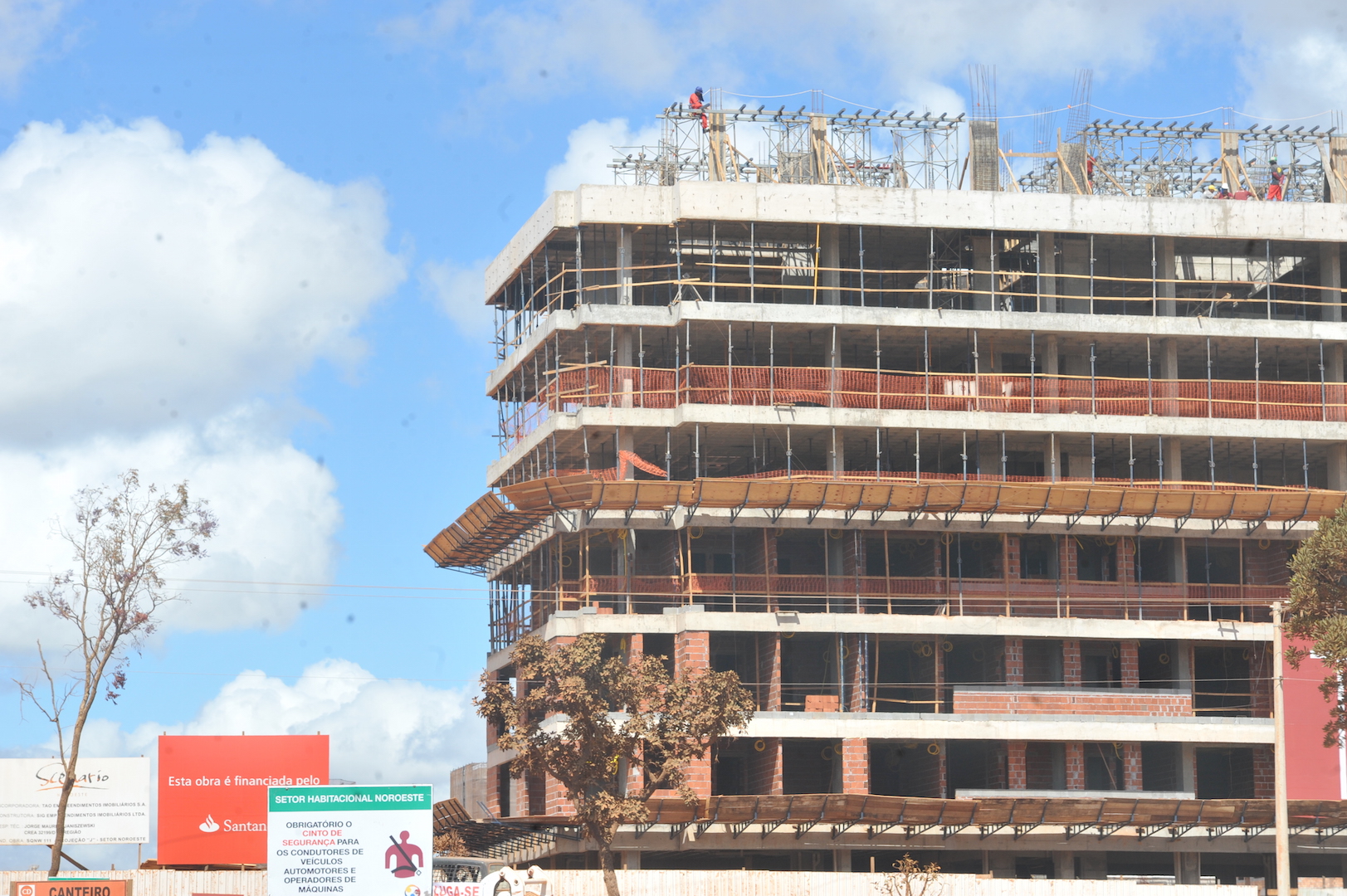
With the help of new technologies and increased credit to the industry, construction companies have been able to reduce the time it takes to erect buildings by up to eight months. The intention is to use the good moment in the sector to draw in investors, particularly those who have given up investing money in fixed income securities, due to their lower earnings.
The Central Bank’s indication that there should be a further reduction in interest rates later this year boosts demand for real estate and the sector’s rush to save time. Until 2014, deadlines ranged from 24 to 30 months. “Today, it’s closer to 16 or 18 months than it is to 24,” says Odair Senra, president of the Union of the Civil Construction Industry in São Paulo.
In his opinion, the greater offer of credit is allowing the completion of buildings in a shorter timeframe. With greater resources available, construction companies rely less on sales revenue and can speed up production. As a result, they complete developments earlier, settle their accounts with the lenders, collect the profits and go on to build another development.
“Banks wants this because they keep a secure debtor, who pledges the property as collateral,” says Senra. He notes that the risk of default for the bank is diluted, as there are several debtors, not only the construction company. The bank also gains potential clients (debtors) to sell other products.
Risk
Urbic construction company, owned by entrepreneur Marco Parizotto, for instance, has two developments with reduced execution time. “We thought that shortening the production cycle would reduce the risk for the developer and the client.”
But in practice, what is clear is that projects have changed to serve buyers who intend to have the property ready as soon as possible for leasing. One of the construction company’s projects in Ibirapuera (São Paulo) was launched in May and will be delivered in 13 months.
From the total term, nine months will be spent erecting the building, which will use metal structures technology to speed up construction.
“We have already sold 60 percent (of the apartments) and 30 percent of buyers are investors.” These apartments are in the R$900,000 range. Another development of small studio apartments, in Vila Mariana (São Paulo), is in the R$250,000 range and targets investors.

Term reduction
“We have searched for term reduction to reduce the undertaking’s costs and, thus, achieve higher profitability”, says Vladimir Alves da Silva, financial director of Tarjab construction company. He says that he has been able to reduce the construction time by three months. In a recent project of apartments in the range of R$350,000 launched in April, he says he realized that there is demand from investors who are not only individuals but also real estate funds. “There were buyers who paid in cash for smaller units,” he says, noting that this may be an indication of the investor’s desire for rental income.
Attentive to this demand, Frederico Altana, director-president of Altana construction company, says he is negotiating a partnership with a French company to reduce the construction timeframe of three projects starting in 2021. The lease will be managed by the company itself.
“The option of building real estate assets for income was enabled by lower interest rates, and this combines with the technology of building industrially and faster because, as a result, a faster return on capital can be achieved,” he says.
Trisul, which is publicly traded, has been reducing construction time since 2014, says Lucas Araújo, superintendent. He explains that competitors have now realized that shortening the production cycle is much better, because it ensures faster return, with revenue recognition. “All (competitors) are needing this to help in financial recovery.”
The downward trajectory of the economy’s basic rate (SELIC), which last week renewed a historical level of five percent a year, has led investors to view the purchase of property for lease as a more profitable business. In addition to rental income, they can pocket the appreciation of real estate assets, which still have outdated values.
Investment in real estate requires caution, say consultants
In recent months, conservative Investors have become interested in income from leases of properties purchased by individuals or with the acquisition of real estate fund shares.
Until recently, these conservative investors were applying their savings in fixed income. But with the drop in the basic interest rate, the SELIC, which guides these investments and now stands at five percent a year, the lowest mark in history, the scenario has changed. And these conservative investors need to look for other alternatives to make money.
According to Mauro Halfeld, investment manager, in the current setting, a low-risk fixed-income investment should yield approximately four percent a year after deducting the income tax (IR), depending on the rates charged by investment funds, brokers and banks. “Taking into account that inflation usually returns in Brazil, the appeal of fixed income is over,” says Halfeld.
On the other hand, diversified real estate funds should provide gains close to five percent a year above inflation, he estimates. And small residential properties rented should yield a real income of six percent per year. This yield does not take into account the valuation of the property itself, says investment manager Fabio Colombo. After three lean years, the prices of rents are still lagging behind, says the administrator.
Although the figures suggest that the income obtained with the direct lease of real estate and with real estate funds is higher than that provided by investments in fixed income, consultants say that investors should be mindful of some details.
In the case of real estate funds, Colombo points out that investors must take into account the share price. With the strong demand for real estate funds, the share value should rise, which may reduce returns. In addition, when investors buy a share of a real estate fund, they do not know exactly in which project their money is being invested. “In the long run, there are very large enterprises that may depreciate and this is a risk,” he cautions.
As for the purchase of property for direct lease, Colombo notes that the net income may vary, depending on how the income tax is paid. That is, as an individual or legal entity.
Source: O Estado de S. Paulo
More: Brazil news in English, every day from The Rio Times.
Live Market IntelligenceBrazil — Live Market Board
Rio Times · Live Market Intelligence
Brazil — Live Market Board
+2.63%
192,114.55
+2.63%
64,531.68
+1.10%
10,916.57
+0.08%
2,767,663
+0.32%
2,515.02
-0.59%
59,751.67
+0.18%
| Instrument | Last | Change | YoY | Prev. | High | Low | Volume |
|---|---|---|---|---|---|---|---|
| IBOV | 192,114.55 | +2.63% | +21.85% | 187,197.46 | 168,310 | 167,142 | — |
| USD/BRL | 5.16 | +0.01% | -5.13% | 5.16 | 5.18 | 5.14 | — |
| SELIC | 14.00% | — | — | — | — | — | |
| PETR4 | 41.64 | -0.05% | +35.19% | 41.66 | 41.97 | 41.15 | 41,499,400 |
| VALE3 | 72.97 | +0.83% | +30.75% | 72.37 | 73.54 | 72.66 | 17,658,000 |
| ITUB4 | 38.60 | -1.03% | +4.57% | 39.00 | 39.34 | 38.39 | 29,487,800 |
| BBDC4 | 16.85 | +0.36% | +3.50% | 16.79 | 16.90 | 16.67 | 19,416,900 |
| BBAS3 | 19.37 | +0.47% | +0.73% | 19.28 | 19.44 | 19.16 | 11,069,200 |
| B3SA3 | 14.26 | -0.21% | +12.73% | 14.29 | 14.47 | 14.11 | 33,037,800 |
| ABEV3 | 14.89 | -0.80% | +21.91% | 15.01 | 15.07 | 14.81 | 16,453,100 |
| WEGE3 | 47.59 | +0.49% | +29.99% | 47.36 | 48.08 | 47.36 | 3,364,600 |
| PRIO3 | 59.14 | -0.19% | +50.67% | 59.25 | 59.81 | 58.74 | 3,325,600 |
| SUZB3 | 41.33 | +2.35% | -23.55% | 40.38 | 41.48 | 40.35 | 3,914,900 |
| RENT3 | 34.68 | -0.09% | +0.84% | 34.71 | 34.96 | 34.35 | 7,979,100 |
| AZZA3 | 15.89 | -2.63% | -53.76% | 16.32 | 16.42 | 15.82 | 1,330,300 |
| CSNA3 | 4.30 | +0.47% | -42.65% | 4.28 | 4.41 | 4.26 | 10,076,100 |
| GGBR4 | 24.69 | +2.19% | +51.38% | 24.16 | 24.85 | 24.18 | 7,047,600 |
| ENEV3 | 24.21 | -1.38% | +70.49% | 24.55 | 24.64 | 23.99 | 9,297,000 |
This article was produced by The Rio Times’ automated newsroom system. How we use AI · Report an error · Editorial responsibility: Matthias Camenzind, Editor-in-Chief