Extended Carnaval 2020 Expected to Gather Close to Seven Million People in Rio
RIO DE JANEIRO, BRAZIL – The figures for Carnival 2020 reflect the extent and impact of the festival in Rio de Janeiro: around seven million people are expected, with 1.9 million tourists for the period.

In a survey released by the National Confederation of Trade in Goods, Services, and Tourism (CNC), tourism activities related to the festival this year are expected to reach their highest level since 2015.
Among the states, Rio de Janeiro leads the economic turnover, with approximately R$2.68 billion (US$670 million), outperforming São Paulo (R$1.94 billion) and Bahia (R$1.36 billion). In all, Brazil is expected to generate revenues of approximately R$8 billion from the festival, a real increase of one percent over last year.
Aiming to establish Rio de Janeiro as the Brazilian capital of entertainment and leisure, with events such as Carnaval, the Government of Rio de Janeiro created the Under-Secretariat for Major Events, linked to the Secretariat of the State House.
Marcel Balassiano, an FGV economist, recalls that Rio de Janeiro is characterized by the “pre-Carnaval” period in the city, which is as busy as during the festival itself.
“Of the three major events taking place in Rio de Janeiro, Carnaval has a greater impact than New Year’s Eve and Rock in Rio because of the number of days. If we consider the period that we refer to as “pre-carnaval”, it increases even further the activity of the production chain, which ranges from public transport to samba school rehearsals in the street blocks and on the streets, as well as the carnaval block parades. This year’s numbers are expected to exceed the previous year when the impact in tax revenue was R$79 million,” said the economist.
Occupation projected at 98 percent
Visitors to Rio will be able to enjoy Carnaval at 441 block parades until March 1st, when the festival officially ends in the city (see Rio’s full schedule for 2020 blocks). Data from the Rio de Janeiro’s Accommodation Union (Hotéis Rio) show that the average occupation of Rio’s hotels is around 82.5 percent. In 2019, the survey reported 78 percent, which represents an increase of 4.5 percentage points in confirmed bookings.
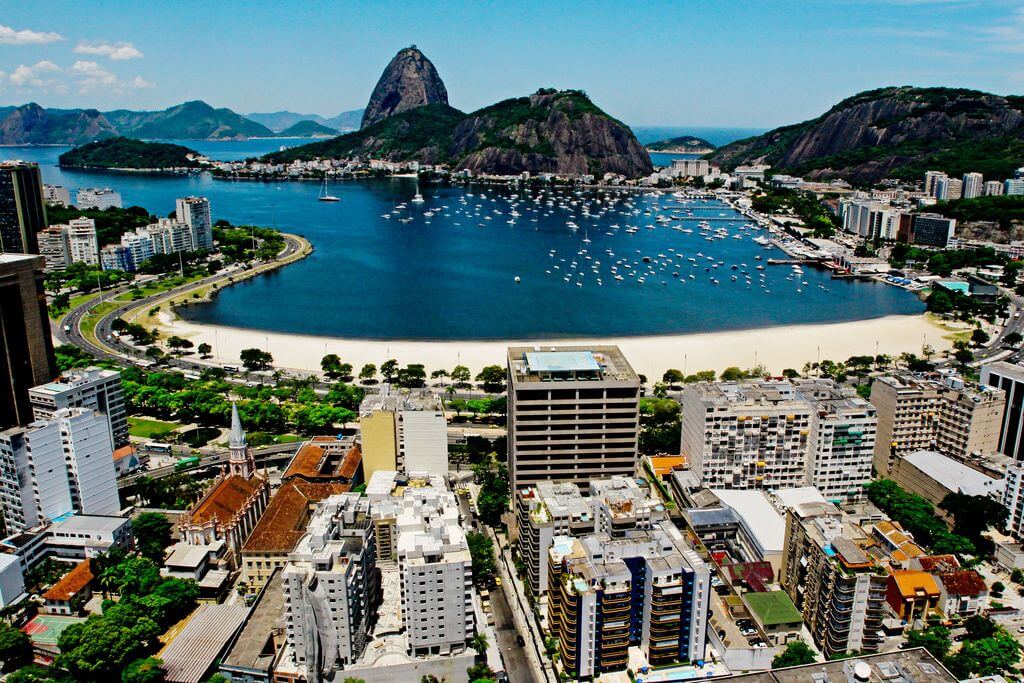
Flamengo and Botafogo are the most sought-after neighborhoods, with 89 percent of the rooms taken; followed by Barra da Tijuca/ São Conrado with 84 percent; Downtown with 83 percent; Leme/ Copacabana, 78 percent; and Ipanema/ Leblon, with 80 percent occupation.
Still, according to the survey, most tourists from Brazilian states come from São Paulo, followed by Minas Gerais, Espírito Santo, and the Federal District. In terms of foreigners, Argentinians lead the list, followed by Americans, Italians, and French.
“It is the major event in Rio de Janeiro and, as a result, the largest occupation, turnover, and number of foreign tourists in the city. We should reach 98 percent hotel capacity during the period,” projected Alfredo Lopes, president of SindHotéis Rio.
Temporary jobs
To meet the seasonal increase in demand, CNC estimates the hiring of 25,400 temporary workers between January and February this year in the country – 2.8 percent more than during the 2019 Carnival (24,700). With approximately 18,200 job openings, the catering services segment is expected to provide around 71 percent of the job opportunities.
Once the estimate is confirmed, the job openings offered by the activities that make up the survey would reach, in 2020, the largest contingent of temporary workers since 2014 (55.6 thousand jobs).
More: Brazil news in English, every day from The Rio Times.
This article was produced by The Rio Times’ automated newsroom system. How we use AI · Report an error · Editorial responsibility: Matthias Camenzind, Editor-in-Chief