Illegal constructions in Rio de Janeiro’s mangrove forests
RIO DE JANEIRO, BRAZIL – Rio de Janeiro’s West Zone neighborhood of Guaratiba is a rich and rarely visited mangrove ecosystem. The Guaratiba State Biological Reserve is over 3,000 hectares in size, about half of which comprises mangrove forests.
Mangroves are a coastal salt-water tropical forest that grows on swampy ground, usually underwater at high tide. The trees that grow in these areas have adapted to live in saltwater, which is usually fatal to trees. The habitat harbors many different species, particularly sea creatures and birds.

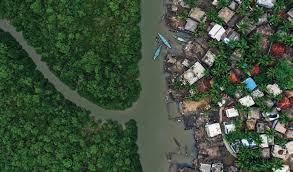
However, Guaratiba’s mangroves’ importance and their protected status have not prevented illegal construction in these areas. This part of Rio de Janeiro, along with many others, is controlled by militias.
These criminal gangs control structures in their territory, either by directly involving themselves in construction or giving permission to construct and take a cut. Nobody builds in these areas without gang permission. Trucks are often brought in at night-time to flatten and spread earth on the swampland to permit construction afterward.
Unfortunately, this problem is not new, as illegal construction has been in the area for at least 20 years. However, as the process continues unchecked, more and more of this precious habitat is destroyed.
In addition to this, higher population density, with inadequate sewage systems, means that raw waste flows directly into the mangrove, further damaging the intact portions that have so far resisted development.
It is not just wildlife that is at risk in this situation. Militia buildings are not regulated and can have engineering problems due to cutting corners in the building process. This was seen recently with the fatal collapses of residential apartment buildings in Rio das Pedras.
This issue is critical in Guaratiba as the waterlogged terrain is less stable and more prone to flooding than many other city areas.
This neighborhood has suffered from severe floods before, and with an increase in irregular constructions, the consequences of such events could be much worse. Moeover, the destruction of the forests increases the chances of more severe floods happening.
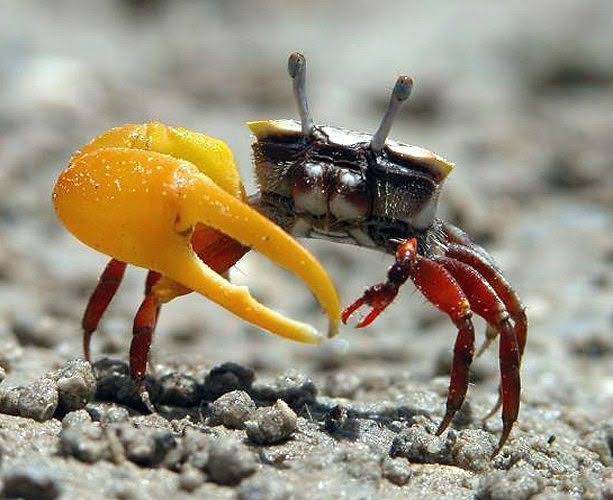
One of the most interesting animals in this mangrove is the fiddler crab, which has one normal-sized claw and one enormous one. These can often be seen in roadside areas of the swamp at low tide when they feed on the mud.
There are also birds, including the sebinho-do-mangue, pica-pau-anão, and night herons (socó-dorminhoco). The trees are all called mangrove trees but are not just one species, but several, all of which have evolved to endure salt-water conditions.
First created in 1974, in 2011 the area’s protected status was upgraded. There were promises to ensure greater protection and more and better-trained staff. There were also plans to replant in some degraded areas.
Though some replanting has been done, overall the increased protection has not kept this environment safe, highlighting the gap between legislation and the reality on the ground, an overwhelming problem in Rio de Janeiro state and Brazil as a whole.
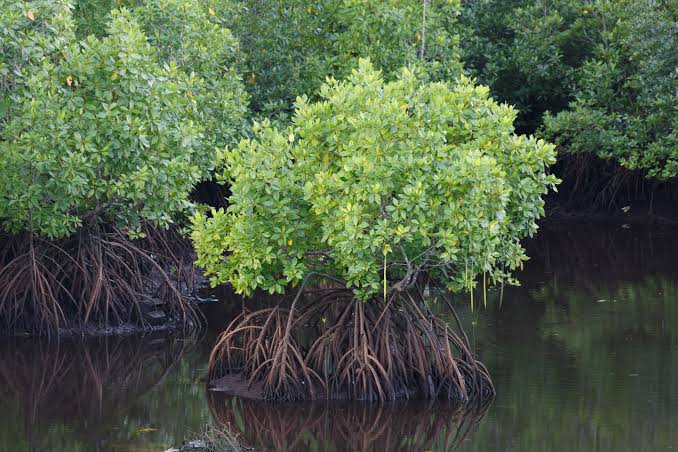
One of the simplest ways to see this unique habitat is the Estrada Burle Marx in Guaratiba.
Ultimately, without proper housing policies to give homes to Rio’s poor, there will always be a demand for marginal land in the city.
The defense of Guaratiba’s mangroves may be accomplished by strict enforcement of environmental laws. Still, to avoid these issues cropping up in other city areas, root problems such as urban planning, housing, organized crime, etc., and corruption must be tackled.
Editorial responsibility: Matthias Camenzind, Editor-in-Chief · Editorial standards · Report an error
Living in or visiting Rio de Janeiro? See this month's events and our Rio de Janeiro city guide with rents, safety and upcoming concerts.