In Rio, Residents More Likely to Obey Curfew Imposed by Criminals than Quarantine
SÃO PAULO, BRAZIL – Last Saturday Brazilian criminal organizations that control some of Rio de Janeiro’s most populous favela communities declared a curfew for residents due to the fear of the Covid-19 contamination. Some residents say that quarantine adherence is likely to decrease as time goes on, but curfew observance will continue.

“The quarantine measures in favela communities work very differently from the rest of the city,” says Karine Moraes, who lives in Vila Cruzeiro, one of the communities of the Penha Favela Complex in the Northern region of the city, tells The Rio Times.
According to Moraes, these overpopulated communities do not have good living quarters to stay indoors. The twenty-six-year-old advertising and marketing professional says it is very hot, there are many people without water and the internet doesn’t work well, if it works at all.
“It’s kind of maddening to be ‘stuck’ in this situation,” says Moraes.
The curfews were announced by militia and drug kingpins in some of Rio’s best-known favelas, such as Rocinha, Cantagalo, Cidade de Deus, and Vila Cruzeiro.
“From eight o’clock at night, I said eight o’clock at night: Anyone who is out walking around in the streets or messing around will receive a corrective,” said the message transmitted throughout the Cidade de Deus community by cars blaring sound systems. The community was the first in Rio de Janeiro to confirm a case of coronavirus.
“During the first days of government-imposed quarantine, and especially after the installation of the curfew, practically no one was seen on the street,” says Moraes.
And although she says that after a few days the quarantine started to be disregarded by some in the favela, the curfew rules continue strong, “Today, for example, there are already a lot of people drinking on their doorsteps, but I believe that by 8pm (time of start of curfew) the volume of people will be much, much lower,” she says.
According to Moraes, many will still follow the curfew impositions. “Here in my community the Comando Vermelho (Red Command) rules,” she tells us. The Comando Vermelho is known as one of the strongest criminal organizations in the city.
Favela residents say that almost all bars and establishments in these areas close their doors at night, fearing disobeying the orders of criminal organizations. All events, like the popular funk-music parties which can bring thousands of youths together in a single night, are prohibited in the communities.
When asked if community residents complained about the imposed curfew, Moraes says she hasn’t heard any protests.
“I didn’t see anyone complaining, not even whispers within small groups,” she says, noting that residents are worried about the possible widespread of the virus.
“There are many, many people (in the community) that are in the risk group. In my family for example, my father is diabetic, cardiac and hypertensive and my sister has bronchitis and asthma,” she says.
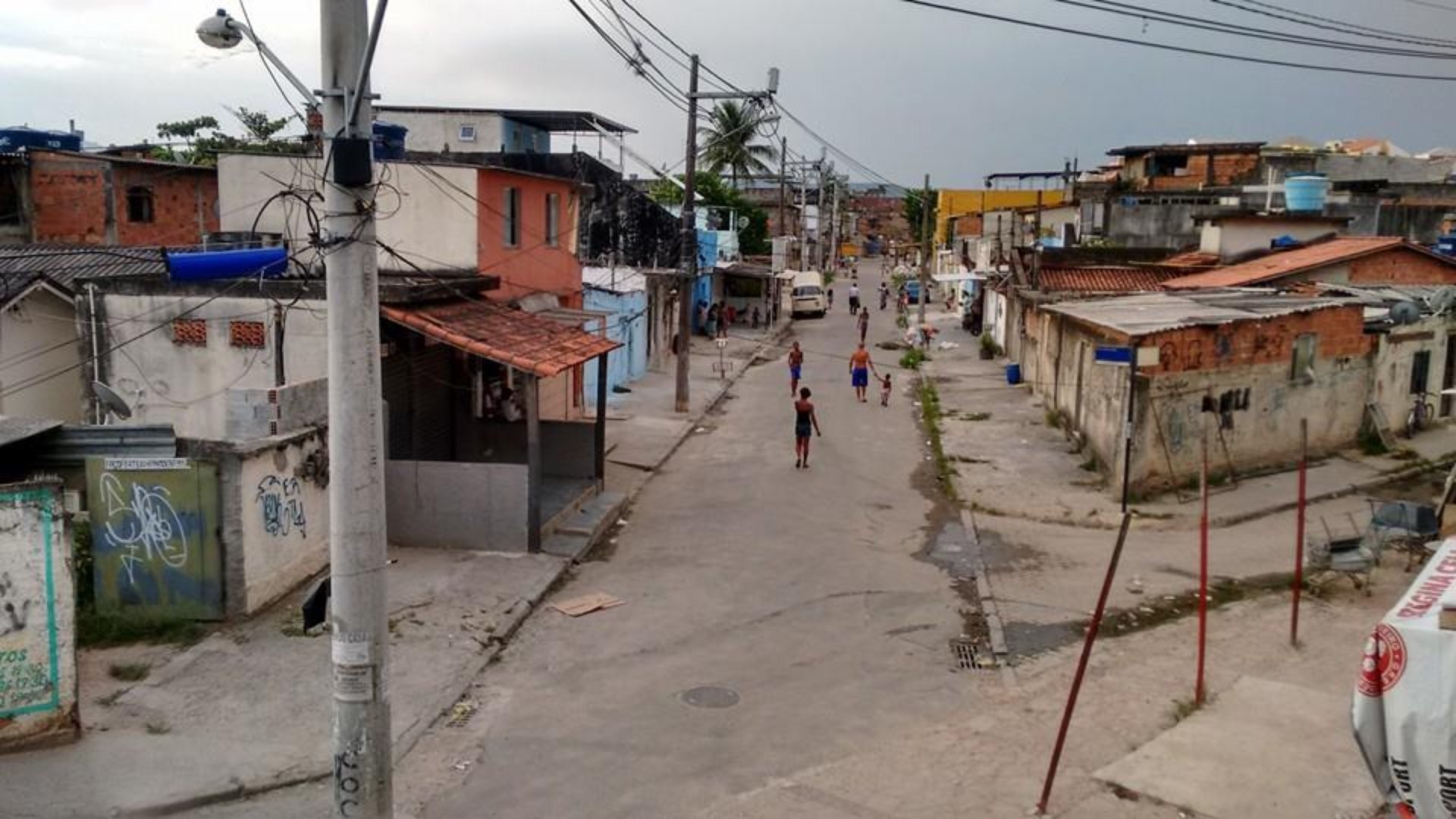
Although there has been no official confirmation of any contaminated of favela residents, Moraes says that it has been a difficult situation for all.
“I know several people who had direct contact with people confirmed (with Covid-19) and were not tested; they were sent home and that’s it,” she says.
“This week a community agent from the family clinic here died of respiratory failure,” she adds. According to Moraes the agent was buried on Friday without any formal cause of death, because she was not tested for Covid-19.
But despite the fear of contamination, after the statements made earlier this week by Brazil’s President and Rio de Janeiro’s mayor, most of her community’s residents chose to go back to work, says Moraes.
Brazil’s President, Jair Bolsonaro, went on national TV criticizing the decisions by many governors, including Rio de Janeiro’s Wilson Witzel, of announcing quarantine for most of the population of their states.
The mayor of Rio de Janeiro city, Marcelo Crivella, announced on Wednesday that convenience stores located in gas stations and construction depot stores could open on Friday (March 27th).
Nonetheless, the opening of establishments at night in the communities will depend on the so-called ‘parallel-power’, notes Moraes.
“This will depend on the heads of the communities, the ‘owners’ of the favelas,” concludes the community resident.
More: Brazil news in English, every day from The Rio Times.
Read More from The Rio Times