IBOV 171,031.73 ▲ 1.85% IPSA 11,338.38 ▲ 0.89% IPC MEX 65,729.18 ▲ 2.14% MERVAL 2,913,184 ▲ 1.30% COLCAP 2,459.23 ▲ 0.61% BVL PERÚ 58,698.13 ▲ 2.60% USD/BRL5.14▼ 0.05% USD/MXN16.89▼ 0.10% USD/CLP914.28▼ 0.08% USD/COP3,043▲ 0.15% USD/PEN3.35▼ 0.06% USD/ARS1,499▼ 0.03% USD/UYU40.20▲ 1.52% USD/PYG5,996▲ 1.39% USD/BOB11.43▲ 0.51% USD/DOP58.82▲ 0.19% USD/CRC450.05▲ 1.95% USD/GTQ7.62▲ 2.13% USD/HNL26.81▲ 1.55% USD/NIO36.62— 0.00% USD/VES782.70▼ 0.13% USD/PAB1.00— 0.00% USD/BZD2.00— 0.00% USD/JMD 157.28 — 0.00% USD/TTD6.71▲ 0.82% EUR/BRL6.00▼ 1.08% BRENT 88.88 ▼ 0.03% WTI 83.11 ▼ 0.11% IRON ORE 161.91 — — COPPER 6.61 ▲ 0.03% GOLD 4,461 ▲ 1.78% SILVER 65.59 ▲ 1.26% SOY 1,184 ▲ 3.20% CORN 480.50 ▲ 10.02% WHEAT 655.00 ▲ 3.93% COFFEE 317.25 ▼ 5.51% SUGAR 16.43 ▼ 1.79% ORANGE JUICE 138.55 ▼ 0.47% COTTON 85.03 ▲ 2.33% COCOA 5,719 ▲ 3.18% BEEF 223.60 ▼ 3.93% CATTLE 339.10 ▼ 3.16% LITHIUM 75.20 ▲ 1.47% PETR4 41.64 ▼ 0.05% VALE3 72.97 ▲ 0.83% ITUB4 38.60 ▼ 1.03% BBDC4 16.85 ▲ 0.36% ABEV3 14.89 ▼ 0.80% BBAS3 19.37 ▲ 0.47% B3SA3 14.26 ▼ 0.21% WEGE3 47.59 ▲ 0.49% PRIO3 59.14 ▼ 0.19% SUZB3 41.33 ▲ 2.35% RENT3 34.68 ▼ 0.09% AZZA3 15.89 ▼ 2.63% CSAN3 3.22 ▼ 1.83% RAIZ4 0.25 — 0.00% PCAR3 2.75 ▼ 0.36% GMAT3 3.65 ▼ 1.08% PSSA3 48.13 ▼ 0.54% CVCB3 1.33 ▼ 2.92% POSI3 3.36 ▲ 2.44% SLCE3 13.34 ▲ 0.30% NATU3 8.14 ▼ 0.73% IBOV 171,031.73 ▲ 1.85% IPSA 11,338.38 ▲ 0.89% IPC MEX 65,729.18 ▲ 2.14% MERVAL 2,913,184 ▲ 1.30% COLCAP 2,459.23 ▲ 0.61% BVL PERÚ 58,698.13 ▲ 2.60% USD/BRL 5.16 ▲ 0.01% USD/MXN 17.06 ▼ 0.24% USD/CLP 913.98 ▲ 0.04% USD/COP 3,140 ▲ 0.03% USD/PEN 3.36 ▼ 0.66% USD/ARS 1,493 ▲ 0.10% USD/UYU 40.27 ▲ 1.24% USD/PYG 5,939 ▲ 1.68% USD/BOB 11.64 ▼ 0.76% USD/DOP 58.34 ▲ 1.25% USD/CRC 445.92 ▲ 0.89% USD/GTQ 7.62 ▲ 2.21% USD/HNL 26.79 ▲ 1.57% USD/NIO 36.62 ▲ 0.69% USD/VES 762.44 ▼ 0.13% USD/PAB 1.00 — 0.00% USD/BZD 2.00 — 0.00% USD/JMD 157.28 — 0.00% USD/TTD 6.70 ▲ 0.61% EUR/BRL 5.95 ▲ 1.01% BRENT 88.88 ▼ 0.03% WTI 83.11 ▼ 0.11% IRON ORE 161.91 — — COPPER 6.61 ▲ 0.03% GOLD 4,461 ▲ 1.78% SILVER 65.59 ▲ 1.26% SOY 1,184 ▲ 3.20% CORN 480.50 ▲ 10.02% WHEAT 655.00 ▲ 3.93% COFFEE 317.25 ▼ 5.51% SUGAR 16.43 ▼ 1.79% ORANGE JUICE 138.55 ▼ 0.47% COTTON 85.03 ▲ 2.33% COCOA 5,719 ▲ 3.18% BEEF 223.60 ▼ 3.93% CATTLE 339.10 ▼ 3.16% LITHIUM 75.20 ▲ 1.47% PETR4 41.64 ▼ 0.05% VALE3 72.97 ▲ 0.83% ITUB4 38.60 ▼ 1.03% BBDC4 16.85 ▲ 0.36% ABEV3 14.89 ▼ 0.80% BBAS3 19.37 ▲ 0.47% B3SA3 14.26 ▼ 0.21% WEGE3 47.59 ▲ 0.49% PRIO3 59.14 ▼ 0.19% SUZB3 41.33 ▲ 2.35% RENT3 34.68 ▼ 0.09% AZZA3 15.89 ▼ 2.63% CSAN3 3.22 ▼ 1.83% RAIZ4 0.25 — 0.00% PCAR3 2.75 ▼ 0.36% GMAT3 3.65 ▼ 1.08% PSSA3 48.13 ▼ 0.54% CVCB3 1.33 ▼ 2.92% POSI3 3.36 ▲ 2.44% SLCE3 13.34 ▲ 0.30% NATU3 8.14 ▼ 0.73%
since 2009
Sunday, August 23, 2026

Invasion of the Two-Wheelers! Yet Another Challenge for Congested Brazilian Cities?

By · September 20, 2019 · 3 min read

Daily Brief

The morning intel from across Latin America. Free.

By subscribing you agree to our privacy policy. We never share your email.

RIO DE JANEIRO, BRAZIL – Suddenly, it seems, they are everywhere. Weaving against the flow of traffic; whizzing silently among unsuspecting pedestrians; occasionally clustered in day-glo streetside herds; or randomly abandoned, alone, in unexpected locales.

The streets – and sidewalks – of Brazil’s cities have been invaded. By scooters!

In fact, in what seems like just a few months, the streets of Brazil’s largest cities have been inundated with electric scooters. (Photo internet reproduction)
One-stop reference
Company Intelligence
Every listed company in Latin America — financials, ownership and structure for 1,450+ companies across 26 exchanges, in one place.
Browse the directory →
RT
Ask Rio Times
This story and the bigger picture.
Open the full Ask Rio Times →

For many of us, they are the stuff of childhood reminiscence, or perhaps just another irritating hipster affectation, but scooters are back – with a vengeance – and they have been electrified!

In fact, in what seems like just a few months, the streets of Brazil’s largest cities have been inundated with electric scooters.

And Brazil is not alone. US-based electric scooter (E-scooter) sharing companies (like Bird and Lime) have expanded aggressively into a range of traffic-congested Latin American cities followed, eventually, by local alternatives.

Grin, the first Latin American E-scooter start-up, launched in Mexico City in 2018 while Yellow and Scoo, both based in São Paulo, are now their two largest Brazilian competitors.
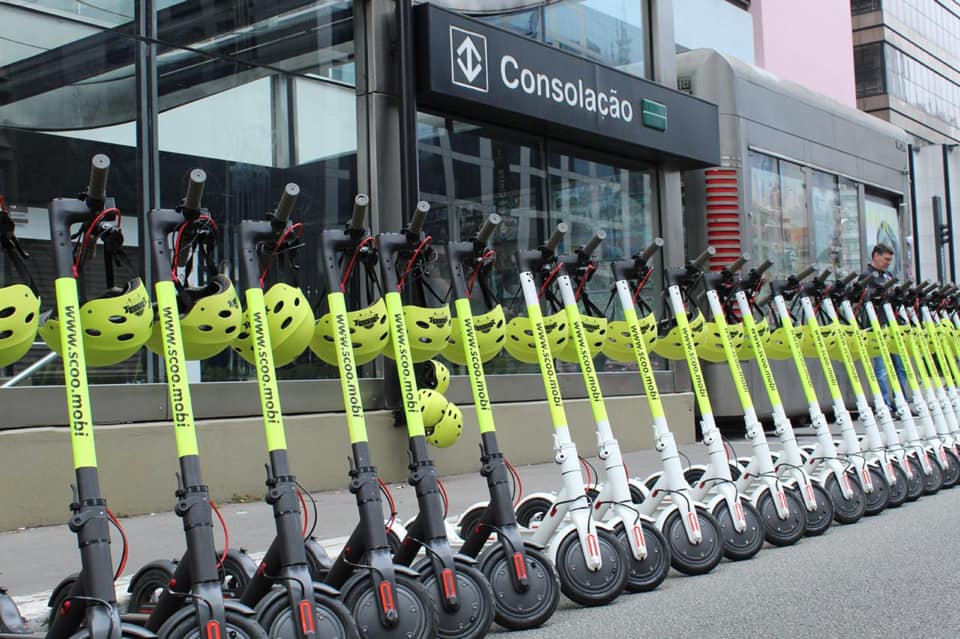
Joining Yellow and Ride, Scoo is another Brazilian electric scooter company founded by Marcelo Duarte, a São Paulo entrepreneur.
Joining Yellow and Ride, Scoo is a Brazilian electric scooter company founded by Marcelo Duarte, a São Paulo entrepreneur. (Photo internet reproduction)

At this point, the global E-scooter market is expected to reach US$28.56 (R$114) billion by 2025. Heralded as a novel and much-needed micro-mobility alternative, most E-scooter sharers operate an app-based model which allows users to unlock them by smartphone.

Being dockless means E-scooters (unlike rental bikes) can be abandoned at whim and without any obligation to search for parking spots. Importantly, electric battery power makes them environmentally friendly as their use doesn’t contribute to urban smog or global climate change (although these claims don’t necessarily apply to their fabrication).

So why are these zippy newcomers to the Latin American urban scene potentially controversial?
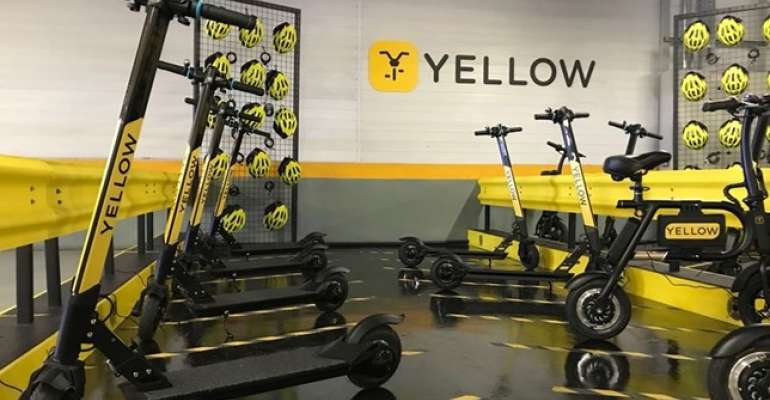
A few months after Y Combinator-backed Grin merged its electric scooter business with Brazil-based Ride, it’s now merging with Yellow, the bike-share startup based in Brazil that has also expressed its ambitions to get into electric scooters.
Shortly after selling their ride-sharing startup, 99, to Didi Chuxing for US$1 billion last year, the 99 founders launched Yellow, a bike- and scooter-sharing service.. (Photo internet reproductions)

In Brazil, as in countries throughout the world, genuine concerns surround the rapid proliferation of E-scooters in environments of relatively little – or even zero – regulation and, thus far, the total absence of any planning for their presence in already very congested cities.

Perhaps the most pressing issue is that of safety as escalating numbers of scooter users vie for space on over-crowded streets. Accidents with cars or motorcycles – and falls due to poorly maintained surfaces – are the most common causes of a growing list of E-scooter injuries ranging from sprains and bruises to facial and head trauma.

Such mishaps are compounded by the fact that E-scooter riders are typically not required to wear helmets. In fact, regulations concerning E-scooter use are still scarce and, where they do exist, poorly enforced.

São Paulo and Rio de Janeiro, for example, have only recently introduced basic regulation concerning rental E-scooters, and it remains unclear how these new rules will be policed.
Unlike many European cities which have at least adapted to and planned for high levels of (non-recreational) cycle use, Latin American cities simply aren’t physically equipped for the rapid growth of E-scooters as a commuting reality.
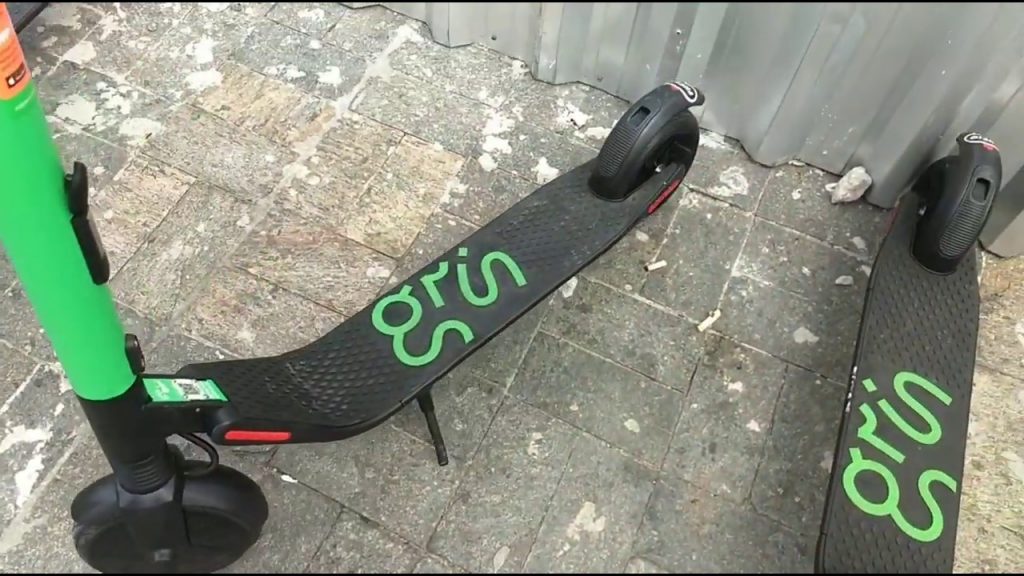
Grin, the first Latin American E-scooter start-up, launched in Mexico City in 2018 while Yellow and Scoo, both based in São Paulo, are now their two largest Brazilian competitors.
Grin, the first Latin American E-scooter start-up, launched in Mexico City in 2018 while Yellow and Scoo, both based in São Paulo, are now their two largest Brazilian competitors. (Photo internet reproduction)

Likewise, non-users are increasingly complaining about E-scooters being operated dangerously on crowded sidewalks and park paths or strewn, abandoned, across pavements and walkways creating real hazards for the elderly, blind, wheelchair users – and even the average (often screen-distracted) pedestrian.

Arguably, E-scooters represent a perfect example of creative technology outstripping both social norms and urban planning practice. As things stand, it seems unlikely that Latin America’s congested cities can accommodate a significant E-scooter presence without both conscious societal accommodation and a concerted physical retrofitting.

Given this reality, it is difficult – yet crucial – to discover whether E-scooters really offer a potentially vital contribution to a new green urbanism, as an ecologically sound solution for short-distance city commuting – or whether they are just another passing fad.

Read More from The Rio Times

The Rio Times · Power Map
See who really holds power in Latin America
Click to open the Power Map

Rotate for Best Experience

This report is optimized for landscape viewing. Rotate your phone for the full experience.