Kicking Footballs and Empowering Girls in the Favela: Project PlayLife
By Vince de Jong & Marijne Scherjon
RIO DE JANEIRO, BRAZIL – An important element in the culture of Brazil and its favelas is football. Favelas are known for their violence, gangs, and poverty, but also as a breeding ground for football (soccer) talent. Famous players, like Adriano and Ronaldo, developed their skills in the favela. Therefore, playing football is not only a means to have fun and forget about problems, but also to dream of a brighter future.
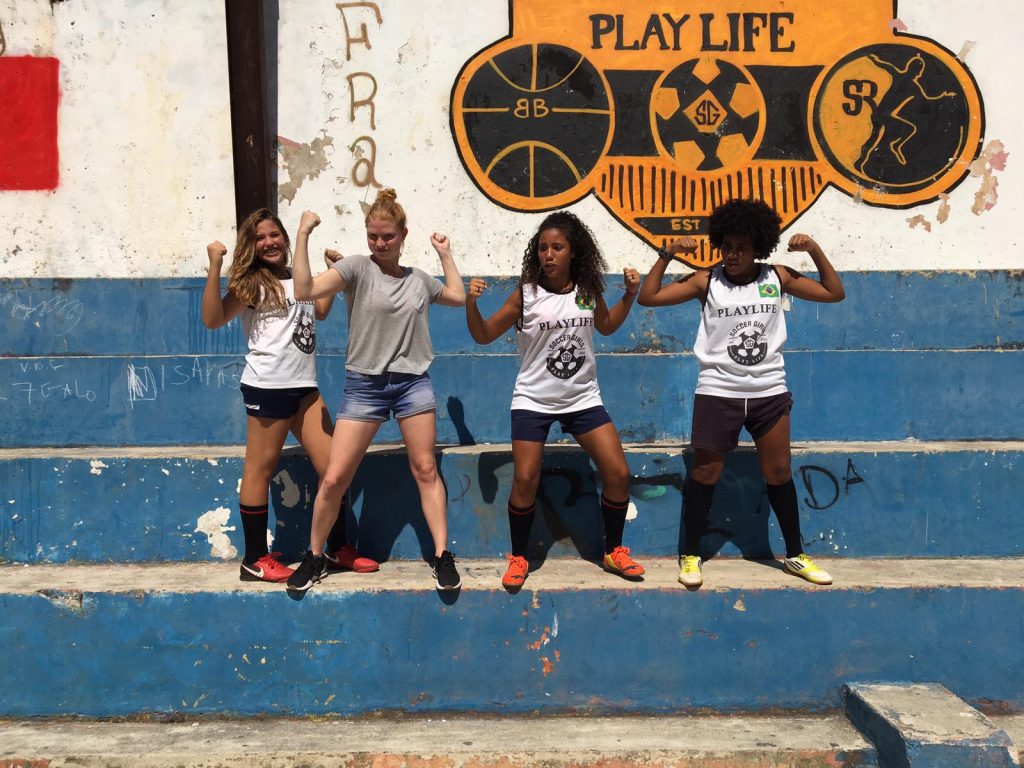
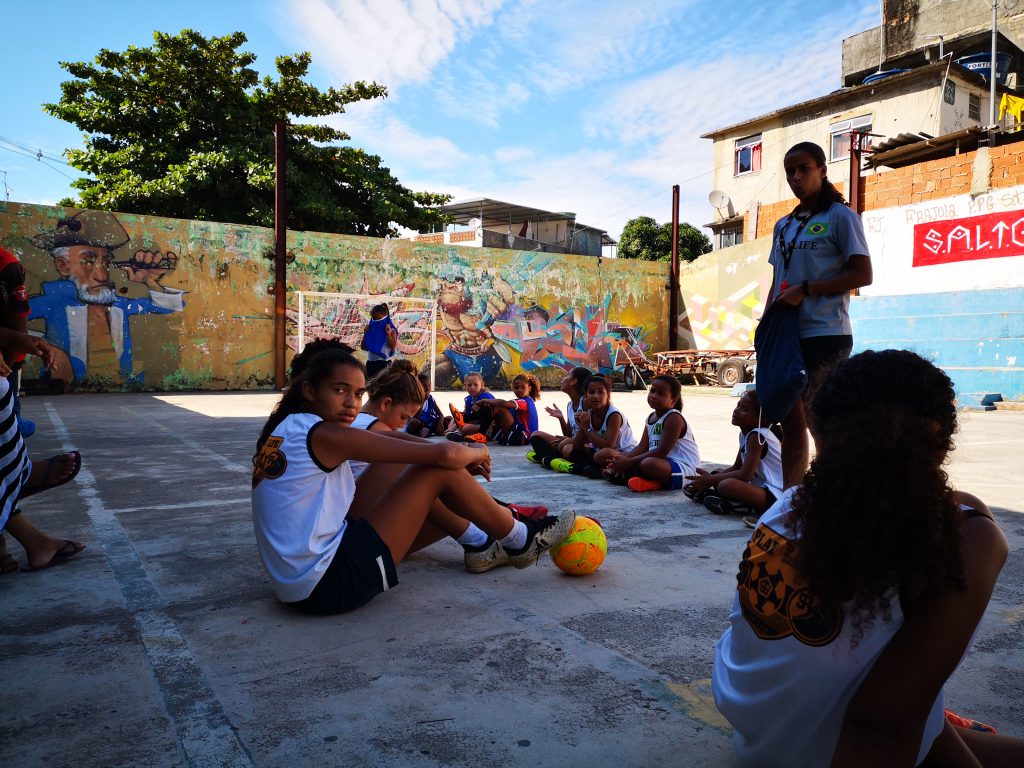
However, in a macho context like favelas, not everyone is allowed to play. There are negative stereotypes about women’s football. Women often get heckled, teased and dissed on the field. In Rio de Janeiro, we visit PlayLife: a favela project that addresses these issues and empowers girls by stimulating them to play.
Football in the favelas
During the urban migration in the 1970s, thousands of Brazilians left the countryside and moved to cities. Unable to find an affordable house, people clustered in informal settlements, illegally built on the steep city mountains. Nowadays, around 25% of Rio’s residents live in more than a thousand different favelas.
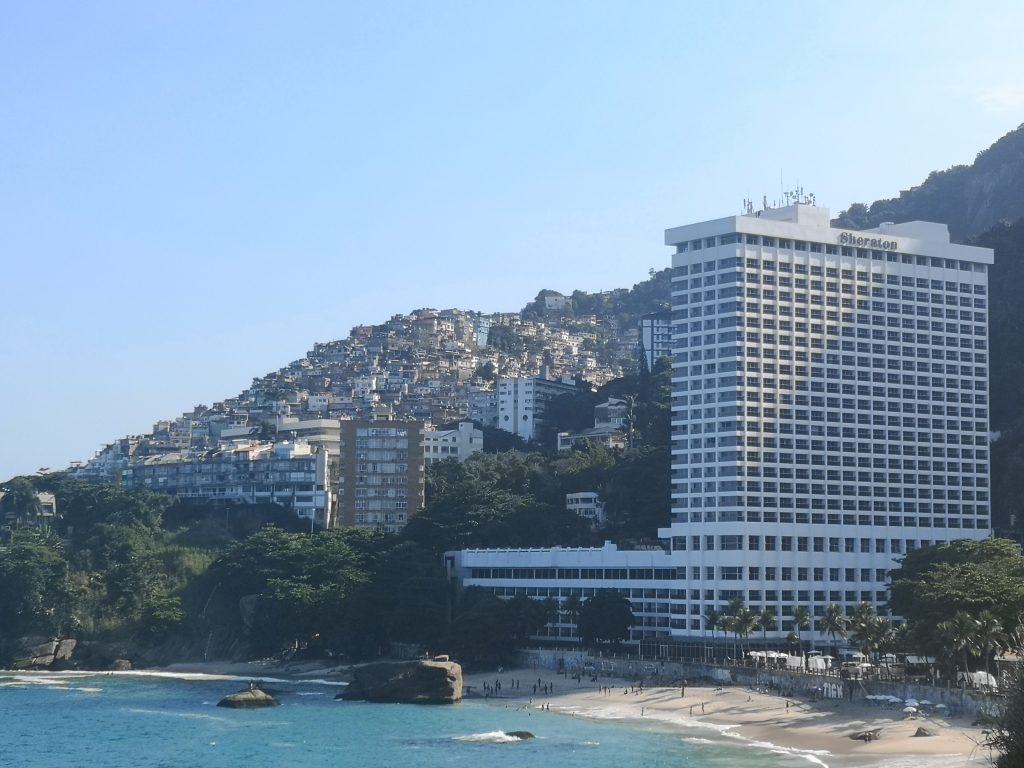
Growing up there is not easy; favelas can be hostile places. By playing football, ‘favelados’ are able to stop thinking about the ongoing problems. Also, it can create confidence, a sense of belonging and the positive role-models that youngsters in these environments so badly need. Female favela players should also benefit from this, especially since women’s football is on the rise globally.
However, within this trend, there is little support from Brazilian media, government and most families. There are close to zero playing fields available for women, and female teams are rare to find. Although more women are playing football than ever before, it’s still not accessible and the stereotypes remain: ‘football is for men, it’s not ladylike, girls just shouldn’t play’.
How two athletes found a way for girls to play
PlayLife, located in barrio favela Vidigal, is an example of a project that is fighting these stereotypes. It all started in 2012, when American athletes Shanna and Ky Adderley moved to Rio, and couldn’t find a women’s football team. The female teams Shanna visited had almost forty men playing and two women sitting on the bench.
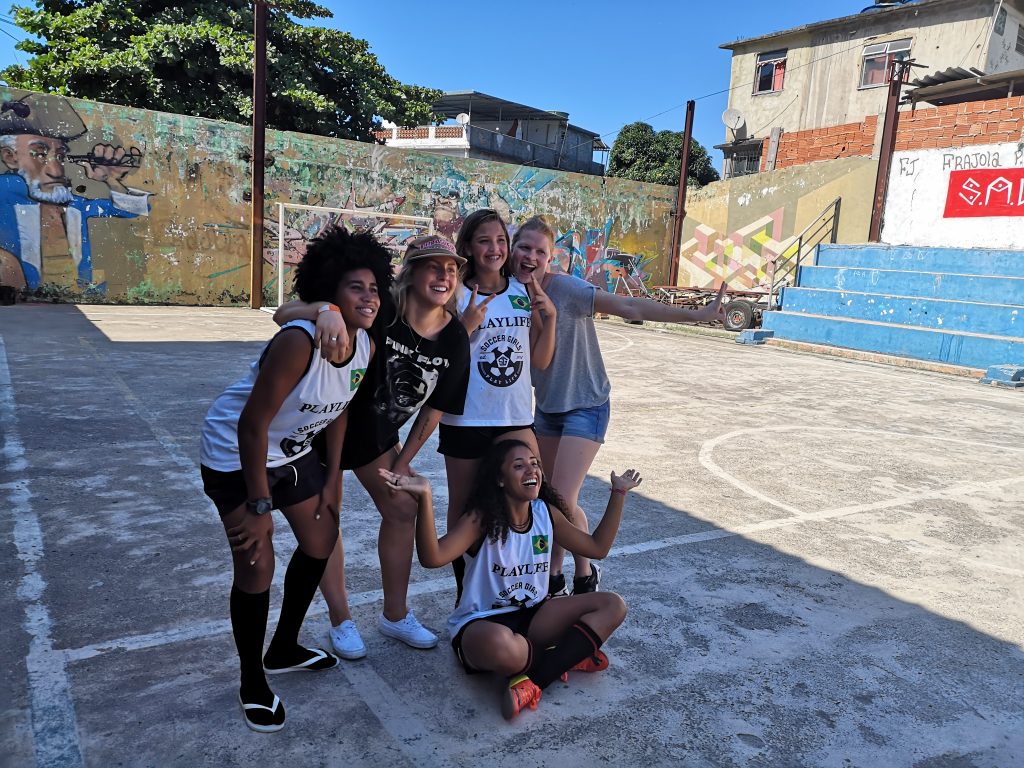
‘‘I quickly came to realize that in Brazil it was very much a men’s sport, there was no invitation to play and I felt like an outcast. There was no getting in, while I had played for many years with men in New York.”
Shanna decides to start her own football project by organizing weekly practices for girls. That was easier said than done. The first training, it seemed that no one was going to show up. After 1,5 hours, when Shanna was about to give up, all of a sudden four girls entered the field. One of these girls is Tamires Domingos, nowadays the head coordinator and driving force behind PlayLife.
The ambitions and achievements in the community
Every week, the community of Vidigal welcomes the project on their property. The goal of PlayLife is to empower children in situations with limited resources, by giving them opportunities in sport, language (English), and life skills. At this moment twenty-five girls, 8 to 18 years old, are involved in the project.
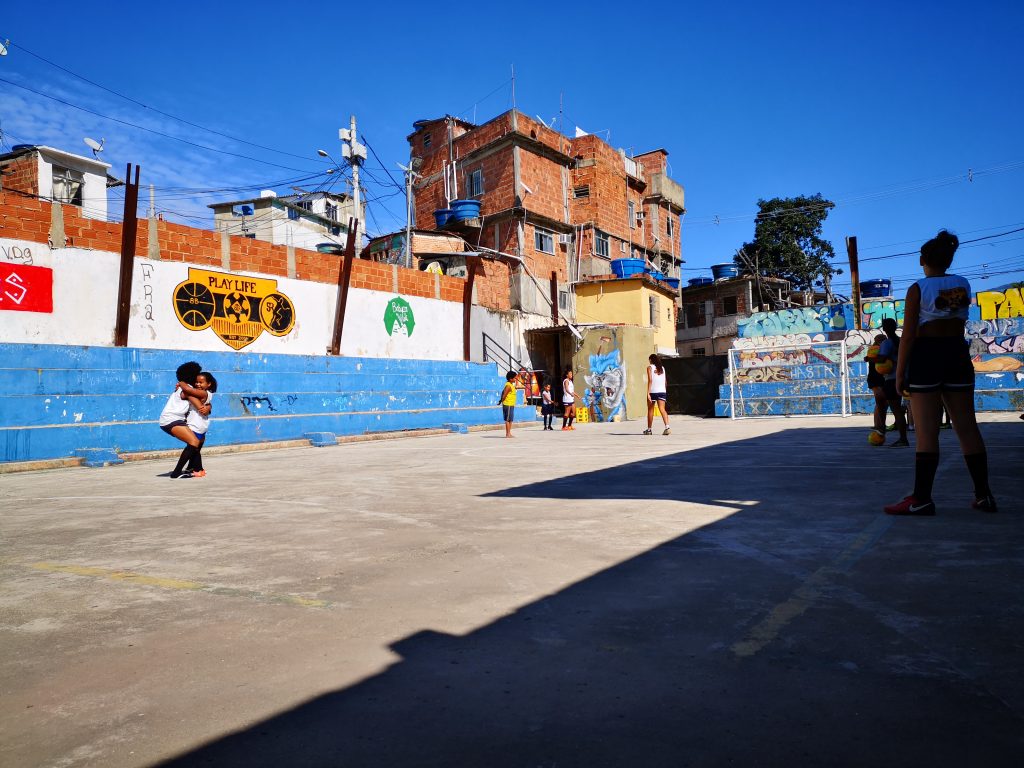
Tamires explains that the football field – located at the top of the favela – used to be a place where youngsters had no boundaries. Baile Funk parties until sunrise, lots of alcohol, drugs, and garbage everywhere. The project was able to change that.
Next to football, there are now even drum, boxing, and tennis lessons. The organization also aims to involve parents and community members. The fact that now even fathers come to play with their daughters, shows that positive change is possible.
“We have been able to impact the community with good and positive things, enabling children to stay active and play sports.”
Besides football, (international) volunteers teach the girls basic English and discuss future goals. Tamires explains that the project changed her way of thinking. She became more responsible and got motivated to go to university.
Another ambition of the project is to let girls experience life outside of the favela. Playing at the beach of Ipanema, training at the Sheraton hotel; some girls even had an international experience. An exchange to the U.S. and playing with the team of Manchester United in the U.K. became a reality for some.
The driving force behind PlayLife
Tamires Domingos (25) grew up in Vidigal, where she was already embarrassing boys with her football skills at a young age. When the project started, she was one of the first to join. After the first training, she immediately started convincing other girls to participate. In the morning she would knock on doors and pick-up young girls to go to practice.
Shanna Alderley’s ultimate dream was that one day, the project would continue with a Brazilian woman leading it. So, when she went back to the United States in 2016 and the 20-year-old Tamires offered to take over, her dream came true.
“Tamires always was a standout for her dedication. From the start, she was a mentor and inspiration for the other girls. Now she is a leader among her peers. I know that she works hard and that her activities will continue to result in a positive impact.”
Tamires now works as a physical education teacher and still coaches the girls from her community. While visiting the project in Vidigal, it becomes clear that she is a big role model for the other girls. She coaches, gives advice, and motivates the girls to get good grades. Tamires hopes that in the future PlayLife will extend to other places so that more girls will – like herself – be empowered by sports and education!
Do you want to learn more about PlayLife, or be a volunteer in the project? Get in contact with Community In Action or visit the website: http://www.playlife.org.
More: Brazil news in English, every day from The Rio Times.
This article was produced by The Rio Times’ automated AI newsroom. Editorial responsibility: Matthias Camenzind, Publisher and Editor-in-Chief. The Rio Times also runs Ask Rio Times, which answers from 100,000+ of our own articles, the daily Latin America Power Map, and prediction-market odds on elections and markets.. How we use AI · Report an error
Brazil runoff, Sunday, October 25: Brazil runoff start time and results schedule. Latest: Brazil runoff polls, Flávio 51%, Lula 49%.