IBOV 171,031.73 ▲ 1.85% IPSA 11,338.38 ▲ 0.89% IPC MEX 65,729.18 ▲ 2.14% MERVAL 2,913,184 ▲ 1.30% COLCAP 2,459.23 ▲ 0.61% BVL PERÚ 58,698.13 ▲ 2.60% USD/BRL5.14▼ 0.05% USD/MXN16.89▼ 0.12% USD/CLP914.28— 0.00% USD/COP3,043▲ 0.15% USD/PEN3.35▼ 0.01% USD/ARS1,499— 0.00% USD/UYU40.20▲ 1.52% USD/PYG5,996▲ 1.39% USD/BOB11.43▲ 0.51% USD/DOP58.50▼ 0.36% USD/CRC450.05▲ 1.95% USD/GTQ7.62▲ 2.13% USD/HNL26.81▲ 1.55% USD/NIO36.62— 0.00% USD/VES782.70▼ 0.13% USD/PAB1.00— 0.00% USD/BZD2.00— 0.00% USD/JMD 157.28 — 0.00% USD/TTD6.71▲ 0.82% EUR/BRL6.00▼ 1.05% BRENT 88.88 ▼ 0.03% WTI 83.11 ▼ 0.11% IRON ORE 161.91 — — COPPER 6.61 ▲ 0.03% GOLD 4,461 ▲ 1.78% SILVER 65.59 ▲ 1.26% SOY 1,184 ▲ 3.20% CORN 480.50 ▲ 10.02% WHEAT 655.00 ▲ 3.93% COFFEE 317.25 ▼ 5.51% SUGAR 16.43 ▼ 1.79% ORANGE JUICE 138.55 ▼ 0.47% COTTON 85.03 ▲ 2.33% COCOA 5,719 ▲ 3.18% BEEF 223.60 ▼ 3.93% CATTLE 339.10 ▼ 3.16% LITHIUM 75.20 ▲ 1.47% PETR4 41.64 ▼ 0.05% VALE3 72.97 ▲ 0.83% ITUB4 38.60 ▼ 1.03% BBDC4 16.85 ▲ 0.36% ABEV3 14.89 ▼ 0.80% BBAS3 19.37 ▲ 0.47% B3SA3 14.26 ▼ 0.21% WEGE3 47.59 ▲ 0.49% PRIO3 59.14 ▼ 0.19% SUZB3 41.33 ▲ 2.35% RENT3 34.68 ▼ 0.09% AZZA3 15.89 ▼ 2.63% CSAN3 3.22 ▼ 1.83% RAIZ4 0.25 — 0.00% PCAR3 2.75 ▼ 0.36% GMAT3 3.65 ▼ 1.08% PSSA3 48.13 ▼ 0.54% CVCB3 1.33 ▼ 2.92% POSI3 3.36 ▲ 2.44% SLCE3 13.34 ▲ 0.30% NATU3 8.14 ▼ 0.73% IBOV 171,031.73 ▲ 1.85% IPSA 11,338.38 ▲ 0.89% IPC MEX 65,729.18 ▲ 2.14% MERVAL 2,913,184 ▲ 1.30% COLCAP 2,459.23 ▲ 0.61% BVL PERÚ 58,698.13 ▲ 2.60% USD/BRL 5.16 ▲ 0.01% USD/MXN 17.06 ▼ 0.24% USD/CLP 913.98 ▲ 0.04% USD/COP 3,140 ▲ 0.03% USD/PEN 3.36 ▼ 0.66% USD/ARS 1,493 ▲ 0.10% USD/UYU 40.27 ▲ 1.24% USD/PYG 5,939 ▲ 1.68% USD/BOB 11.64 ▼ 0.76% USD/DOP 58.34 ▲ 1.25% USD/CRC 445.92 ▲ 0.89% USD/GTQ 7.62 ▲ 2.21% USD/HNL 26.79 ▲ 1.57% USD/NIO 36.62 ▲ 0.69% USD/VES 762.44 ▼ 0.13% USD/PAB 1.00 — 0.00% USD/BZD 2.00 — 0.00% USD/JMD 157.28 — 0.00% USD/TTD 6.70 ▲ 0.61% EUR/BRL 5.95 ▲ 1.01% BRENT 88.88 ▼ 0.03% WTI 83.11 ▼ 0.11% IRON ORE 161.91 — — COPPER 6.61 ▲ 0.03% GOLD 4,461 ▲ 1.78% SILVER 65.59 ▲ 1.26% SOY 1,184 ▲ 3.20% CORN 480.50 ▲ 10.02% WHEAT 655.00 ▲ 3.93% COFFEE 317.25 ▼ 5.51% SUGAR 16.43 ▼ 1.79% ORANGE JUICE 138.55 ▼ 0.47% COTTON 85.03 ▲ 2.33% COCOA 5,719 ▲ 3.18% BEEF 223.60 ▼ 3.93% CATTLE 339.10 ▼ 3.16% LITHIUM 75.20 ▲ 1.47% PETR4 41.64 ▼ 0.05% VALE3 72.97 ▲ 0.83% ITUB4 38.60 ▼ 1.03% BBDC4 16.85 ▲ 0.36% ABEV3 14.89 ▼ 0.80% BBAS3 19.37 ▲ 0.47% B3SA3 14.26 ▼ 0.21% WEGE3 47.59 ▲ 0.49% PRIO3 59.14 ▼ 0.19% SUZB3 41.33 ▲ 2.35% RENT3 34.68 ▼ 0.09% AZZA3 15.89 ▼ 2.63% CSAN3 3.22 ▼ 1.83% RAIZ4 0.25 — 0.00% PCAR3 2.75 ▼ 0.36% GMAT3 3.65 ▼ 1.08% PSSA3 48.13 ▼ 0.54% CVCB3 1.33 ▼ 2.92% POSI3 3.36 ▲ 2.44% SLCE3 13.34 ▲ 0.30% NATU3 8.14 ▼ 0.73%
since 2009
Sunday, August 23, 2026

Rio’s Population Continues to Suffer From Water Crisis

By · January 22, 2020 · 3 min read

Daily Brief

The morning intel from across Latin America. Free.

By subscribing you agree to our privacy policy. We never share your email.

By Alex McFarland, Contributing Reporter

RIO DE JANEIRO, BRAZIL – The residents of Rio de Janeiro have been suffering for over two weeks due to a water crisis affecting much of the population. In the beginning of January, social media sites began to be flooded with people complaining about the taste, strong smell, and oftentimes murky color of the water in many neighborhoods throughout the city of 6.7 million people.

Shortly after the social media posts began to appear online, people claimed to suffer from gastrointestinal problems as a result of drinking the water. Supermarkets throughout the city are now running low on supplies of bottled water after fears have set in.

CEDAE is the state-owned water company responsible for the treatment of much of Rio’s water supply, and the manager in charge of the Guandu treatment station was fired after the news made headlines.

The residents of Rio de Janeiro have been suffering for over two weeks due to a water crisis affecting much of the population.
The residents of Rio de Janeiro have been suffering for over two weeks due to a water crisis affecting much of the population. (Photo internet reproduction)
One-stop reference
Company Intelligence
Every listed company in Latin America — financials, ownership and structure for 1,450+ companies across 26 exchanges, in one place.
Browse the directory →
RT
Ask Rio Times
This story and the bigger picture.
Open the full Ask Rio Times →

During a press conference on January 15, CEDAE stated that the water did not pose any health risks to the population. With a lack of trust amongst the public for many of the city’s institutions and companies, some residents are suspicious. Little can be said to convince the population to consume water with a strong smell and taste that has been described as terra, or “earth.”

“The results show the presence of geosmin, in sufficient concentration to change the taste,” according to the company’s water quality control manager, Sérgio Marques. “There is no risk due to the taste of the water we are observing.”

Geosmin is found in soil, and the increased rain could have washed more of it into the water supply. However, geosmin is also found in algae that runs rampant in polluted rivers, three of which supply the Guandu treatment centre.

Isaac Volschan, a professor at Universidade Federal do Rio de Janeiro (UFRJ), believes that those polluted rivers are the cause. In his opinion, this represents a major environmental crisis in the state.
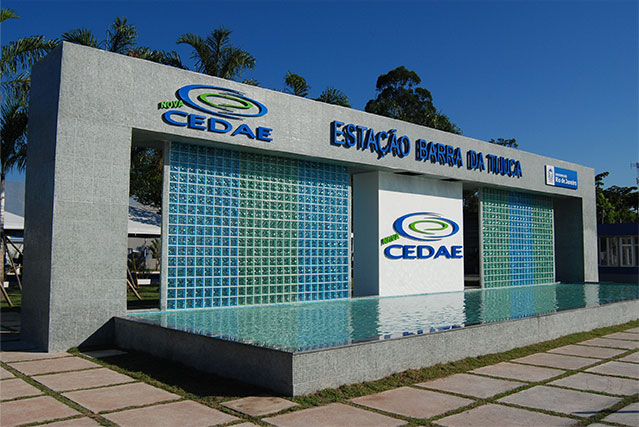
CEDAE is the water company responsible for the treatment of much of Rio’s water supply
CEDAE is the state-owned water company responsible for the treatment of much of Rio’s water supply. (Photo internet reproduction)

“The crisis that started in the Metropolitan Region of Rio de Janeiro this summer is an important and very serious indicator of the environmental conditions of the Guandu watershed, which is our source for serving a population of 9 million inhabitants,” he said. “We are talking without a doubt, about the biggest environmental problem in the state of RJ and one of the biggest in Brazil.”

According to the president of CEDAE, Hélio Cabral, the company began to use activated carbon this week to treat the water.

“In Guandu, next week, we certainly will have water coming out without geosmin,” he said.

This will not be a quick fix for the population due to the use of residential reservoirs that carry more than 6,000 liters of water. Those will not have the newly treated water until their current supplies, full of geosmin, run out.

Neighborhoods within the North Zone of the city are some of the hardest hit by the water crisis. It is in this area where many of the social media photos are showing dark colored water.

Sérgio Marques denied CEDAE had any responsibility for this specific problem of murky water.

Neighborhoods within the North Zone of the city are some of the hardest hit by the water crisis. It is in this area where many of the social media photos are showing dark colored water.
Neighborhoods within the North Zone of the city are some of the hardest hit by the water crisis. It is in this area where many of the social media photos are showing dark colored water. (Photo internet reproduction)

“We did not detect changes in color and fluidity. We received complaints from customers, and not even at the home of those who were complaining, at the entrance to the system, we could detect it,” he said.

The company is now under investigation to find out whether or not any employees can be held criminally responsible for the distribution of the water.

According to Rio’s governor Wilson Witzel, who often times is criticized for how he handles the city’s matters, published on social media that “the inconvenience that the population has been suffering is inadmissible.”

Read More from The Rio Times

The Rio Times · Power Map
See who really holds power in Latin America
Click to open the Power Map

Rotate for Best Experience

This report is optimized for landscape viewing. Rotate your phone for the full experience.