Rio’s Secret Underground Carnaval: “Bate-Bola” Groups
RIO DE JANEIRO, BRAZIL – Away from the limelight, media coverage and swarm of foreign tourists who descend on Rio de Janeiro during this time of year, a different sort of festival will take over the suburbs for four days starting Saturday, February 22nd. Dressed in satin gowns, the Bate-Bola groups, revered by thousands, are perceived by outsiders as the secret, underground Carnaval of the Cidade Maravilhosa (Marvelous City).
Although the ‘Bate-bolas’ are seen as an enigmatic and often violent celebration of Carnaval, many say that this is a distorted picture of the festivity.
“People have a totally wrong understanding of these groups. Many have children participating. They are a family affair, a tradition handed down from generation to generation,” says photographer Bruno Falcão, who has made a movie about the Bate-bola phenomenon after visiting and photographing various groups for the past nine years.

Falcão says that the violence is often exaggerated by TV and newspaper coverage. “Many of those in Zona Sul think that the groups are made of criminals and the media only covers the Bate-bolas when the celebration ends in violence. That is the only time these groups make it into the evening news,” he says.
The photographer says that most of the celebrations are peaceful. “A minority goes out to fight and commit crimes and that ends up staining the reputation of the majority,” explains Falcão.
Created in the poorer communities, away from the touristy areas of Rio de Janeiro, the Bate-bolas have their own tradition when it comes to Carnaval. Instead of the large floats and the Sambodromo parade venue to sashay down, groups march down narrow, deserted streets, dressed in satin, colorful clown costumes carrying parasols and flags and wearing scary, Halloween-like masks.
“They remind me of the old masked balls held in Europe, where the costumes were the highlight of the parade,” says Maria Queiroz, one of the few people living in Zona Sul interviewed by The Rio Times who had seen a performance of a Bate-bolas group.
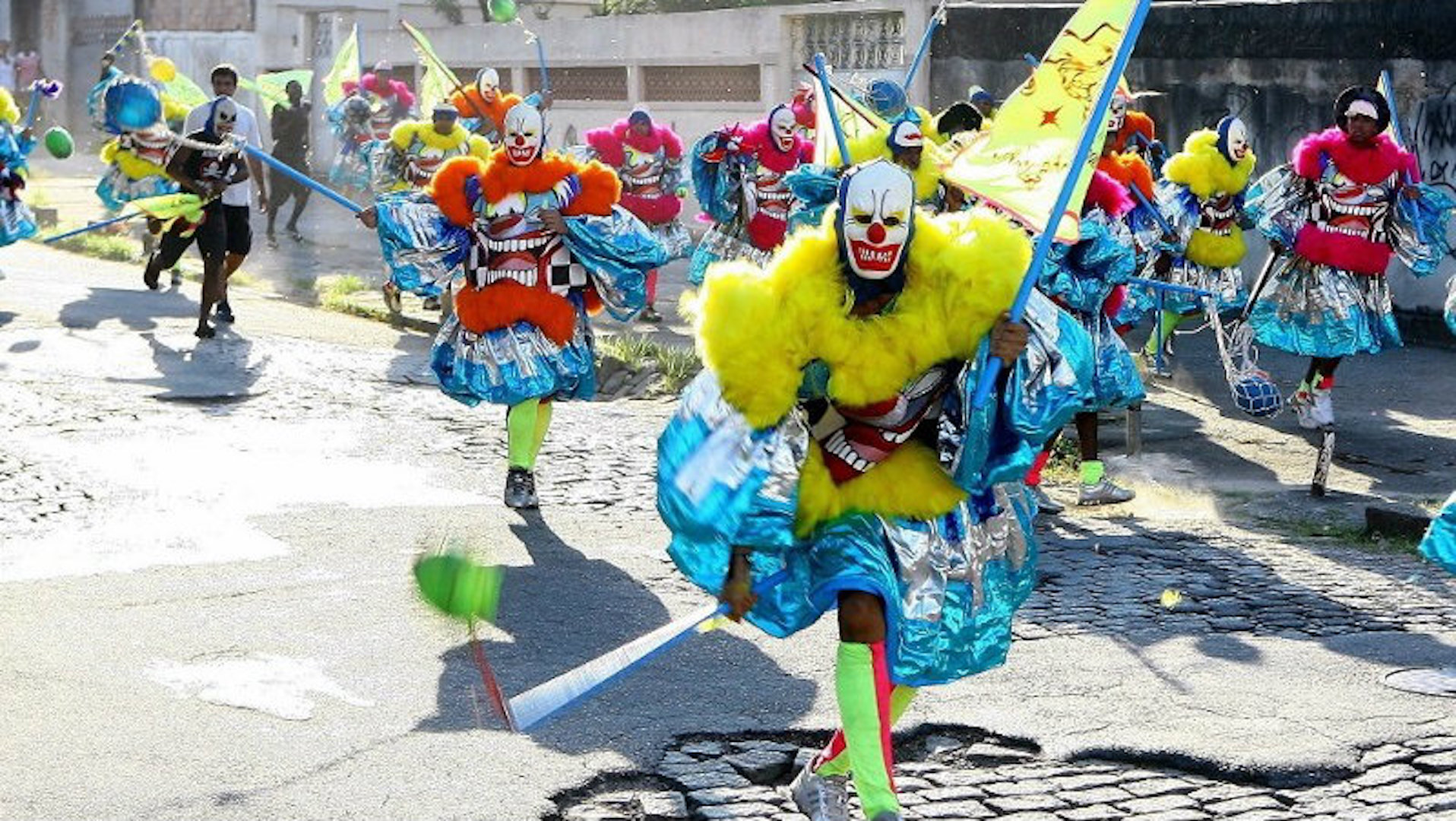
“Except here in Rio the masks are usually of angry and scary clowns,” adds the retired high school teacher.
Portuguese folk songs, which traditionally set the mood for the celebrations, have been replaced by popular funk music, and the groups, which started out with five to ten members, now number in the hundreds.
“There are many groups, with many member in each of them; some have hundreds of members,” says Falcão.
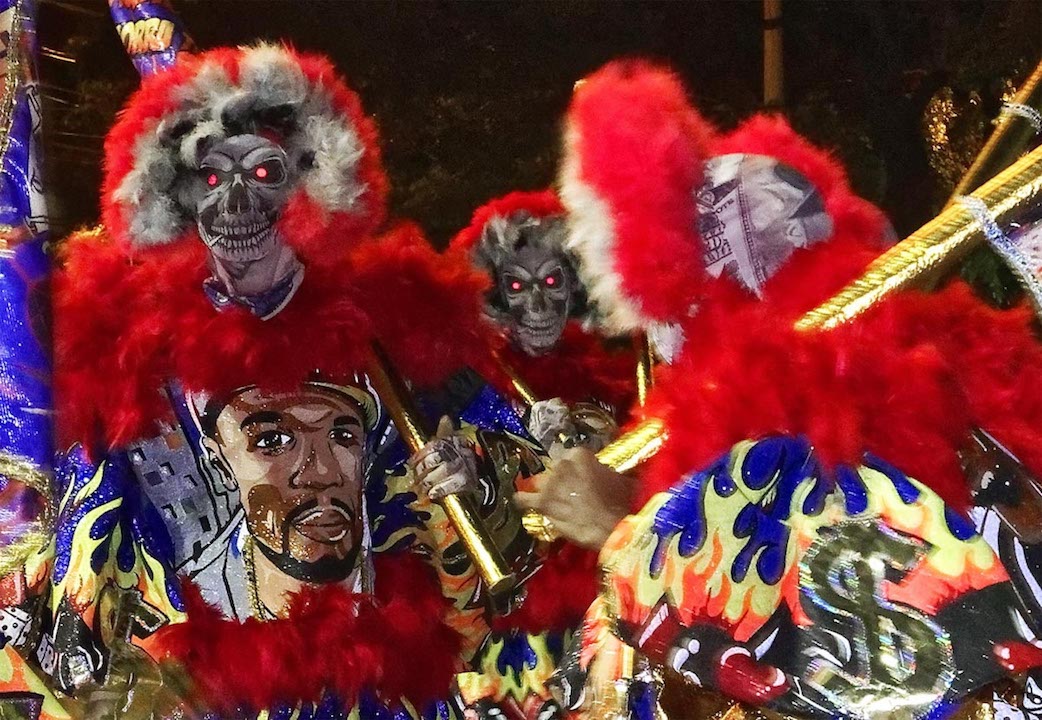
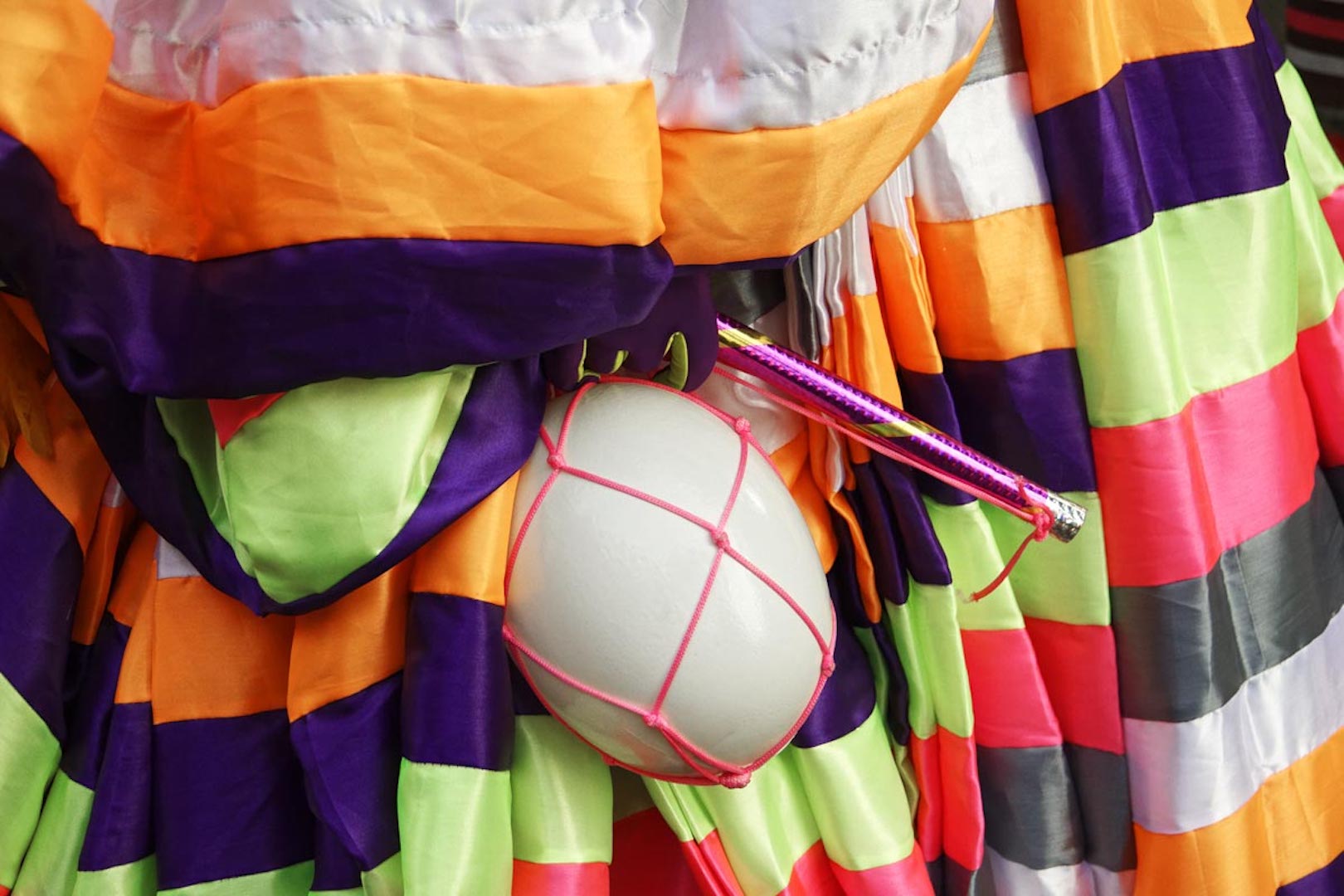
Dating back to the 1930s, the “Bate-bolas” received their name from the ‘ball’ members used to bounce on the ground, making loud noises. Back then the balls were made of bovine or swine bladders, filled with air and tied with a string. The group, dressed in outlandish-type clown suits with frightening masks, would march down neighborhood streets terrifying small children.
Today the balls are still one of the main components of the costume, but the smelly animal bladders have been replaced by heavy duty rubber balls or balloons. Some groups have also substituted the scary masks with more colorful, cheerful ones.
But despite being declared one of Rio’s cultural heritages in 2012, the Bate-bolas have gone large unnoticed by those living in the Zona Sul (Southern Zone) near the beaches and the Sugar Loaf Mountain.
“I was taken to see one of the Bate bolas years ago by a friend whose family lived in the suburbs, but many of my friends and relatives, who live here in Zona Sul, don’t know these sorts of groups even exist,” explains Queiroz.
According to Falcão the creation of Bate-bola groups moves thousands of Brazilian reais during the year and is an integral part of the economy in these communities. “The costumes are as elaborate as those worn by the members of the famous samba schools. A lot of money goes into making them,” explains the photographer.
“They save all year long to purchase material to make the costumes as attractive as possible, and present themselves to the public,” adds Falcão, stating that in the past few years some groups have even ventured down to the Zona Sul to show off their costumes to tourists and Carnival enthusiasts.
While it is hard to predict the number of people participating in this year’s Bate-Bola celebrations, it is estimated that there will be anywhere from 400 to 700 Bate-bola groups and thousands of party-goers celebrating this year’s Carnaval.
Editorial responsibility: Matthias Camenzind, Editor-in-Chief · Editorial standards · Report an error