Journalists Who Leak Don’t Commit Crime, Prosecutor Once Said
By Richard Mann
RIO DE JANEIRO, BRAZIL – The Intercept site released on Saturday, June 22nd, by newsletter, new excerpts of messages exchanged by the members of the Lava-Jato Task Force.
According to the vehicle, the release is a response to the attempted criminalization of journalism and the vehicle’s activities, which have been associated with groups of criminal hackers by supporters of the operation and by the Minister of Justice, Sérgio Moro, himself.

“Today, we decided to publish some unreleased excerpts from the #VazaJato archive in our newsletter to show how the task force’s prosecutors were emphasizing — in private chats with their colleagues — that journalists are entitled to publish materials obtained through illegal means, and that the publication of such material fortifies democracy,” cites the vehicle in a section of the newsletter.
It claims that Lava Jato prosecutor Deltan Dallagnol‘s task force coordinator was one of the major supporters of these publications. “Dallagnol’s esteem for freedom of the press is likely because Lava Jato has for years used leaked excerpts of plea bargains and other confidential materials in the investigation case files as a tool to squeeze politicians and businesspeople targeted by the task force.”
The website unveils a conversation held in November 2015 in a chat called PF-MPF Lava Jato 2. The prosecutors discussed measures to prevent leaks from the task force — “some leaks have been very damaging.”
Dallagnol was among those cautioning colleagues that using procedural power to investigate journalists who had published leaked material would not only be difficult but “virtually impossible,” because “a journalist who leaks is not committing a crime.”
The Intercept cited a decision by the Federal Regional Court of the 3rd Region to demonstrate that Dallagnol was right.
“A journalist who discloses excerpts from a confidential police investigation does not commit a crime.” The decision further states that “It is certainly not a question of wanting to punish the pen and the mouth that disclose, in the exercise of their noble profession, but rather the hand of those who owe it to preserve the confidentiality of information and yet use it for whittling down the authority of judicial decisions and constitutional guarantees.”
In other words, public officials who leak information that they are supposed to protect — policemen, prosecutors, judges — are those who commit crimes, not the journalists who publish them.
The vehicle also published excerpts from another conversation held in a Telegram chat between Dallagnol and the prosecutors, about a year ago.
The protection of one of the prosecutors who was being threatened with punitive measures for having published an article harshly criticizing the electoral courts was debated. At the time, Dallagnol and his team wrote and published a manifesto in defense of the virtues of freedom of expression.
Dallagnol wrote: “Public authorities are subject to criticism and have a smaller area of privacy than the citizen who is not a public person.” Such is the issue on which the Intercept focuses its criticism. Dallagnol’s argument is exactly right — even if to the prosecutor, it is no longer valid when the public authority in question is himself.
“Private citizens have the right to absolute privacy. However, those who hold power — such as judges, prosecutors, and ministers — “are subject to criticism and have a smaller privacy realm. This is a principle in which we firmly believe and which has been guiding our reporting since we started working on this file,” defends the vehicle.
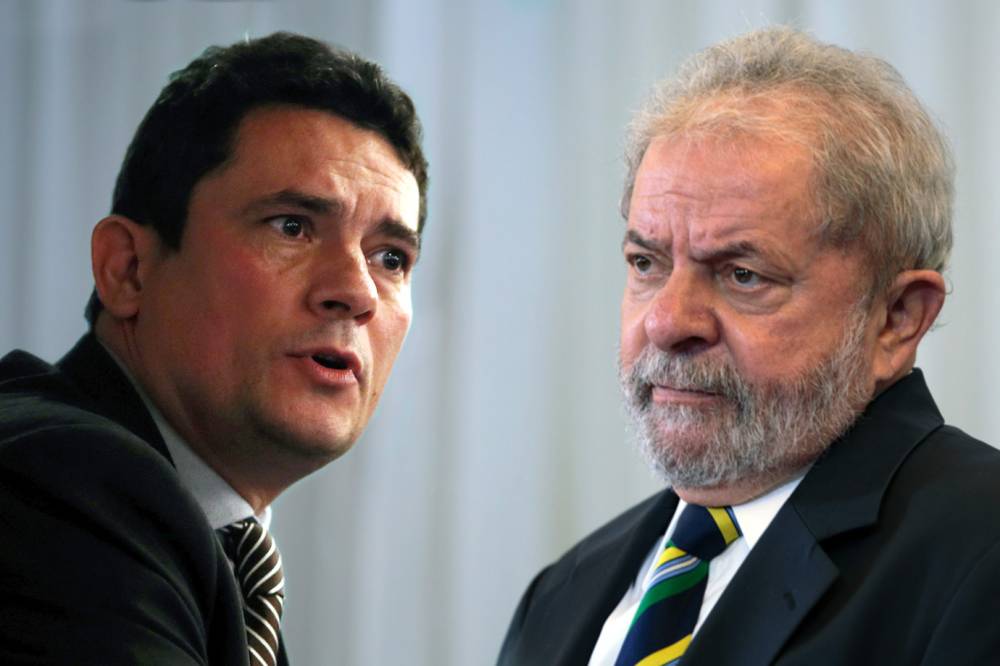
The site also mentions the case involving former president Lula in 2016. At the time, Dallagnol backed the decision of then Judge Sérgio Moro to publish Lula’s telephone recordings. “In defense of the judge, Dallagnol rightly argued that the authorities’ right to privacy does not override the public’s interest in learning what those in power do and say in private settings — when he was advocating for a judge who released an illegal wiretap, something far more serious than the actions of whistleblowers.”
The vehicle also states that, before the publication of reports involving the leaked messages between the members of the Lava-Jato team, other members shared Dallagnol’s enthusiasm for the leaked secret government documents exposing the authorities’ conduct.
“The prosecutors also expressed their admiration for whistleblowers, such as Daniel Ellsberg and Edward Snowden, who have released secret documents denouncing irregularities or corruption by the authorities.”
In another conversation published on the website, in January 2017, prosecutors regretted the fact that Brazil had lost points in the corruption perception ranking published by Transparency International, and expressed appreciation for Denmark, the leader of the classification.
After posting a link to the rankings in a Telegram chat called “BD”, prosecutor Monique Chequer (who is not part of Lava Jato in Curitiba) explained that the success in the fight against corruption in Denmark is due to the fact that the country — unlike Brazil — values and protects the sources which expose corruption (the whistleblowers).
The Intercept states that the media play a crucial role in Denmark’s integrity system and is often referred to as “the fourth power of the state”, with the task of supervising the other three, ensuring that they behave correctly.
“We agree with the principles defended. In private Telegram settings, by Dallagnol and his colleagues: journalists are not committing crimes by investigating and publishing reports based on illegally obtained information, but rather contributing to the strengthening of democratic institutions and culture. Those in power sacrifice their privacy in the name of transparency, and the action of whistleblowers (the illegal leak of information demonstrating corruption by authorities) is of vital importance to the proper operation of institutions. These are the principles guiding the work of the Intercept and our reports,” said the vehicle.
Further: “It does not matter what Dallagnol, Moro, and their colleagues say about it today. They’re just turning the table to defend their interests. This does not nullify or lessen the legitimacy of the core principles in which we believe — the very same principles that they now want to destroy.”
More: Brazil news in English, every day from The Rio Times.
This article was produced by The Rio Times’ automated newsroom system. How we use AI · Report an error · Editorial responsibility: Matthias Camenzind, Editor-in-Chief