The Financial Times Links Pope Francis to Alberto Fernández’s Triumph in Argentina
RIO DE JANEIRO, BRAZIL – An article published yesterday, August 17th, titled “Investors wonder which Fernández will govern Argentina” and signed by journalist Benedict Mander, begins with a description of a “decisive moment in the career of the man many expect to be the next president of Argentina”: a meeting of Alberto Fernández with the Pope, himself an Argentinian, early last year.

“Fernández’s meeting with the Pope was a key step in unifying the Peronist opposition hit by his humiliating defeat in the 2017 legislative elections and may have helped pave the way for his return to power,” says the journalist, a correspondent for the Financial Times in South America. In that sense, he quotes a “close advisor” to the presidential candidate of the Frente de Todos who told him: “The Pope encouraged Alberto’s reconciliation with Cristina.”
The note speaks of the fight and reconciliation between Alberto Fernández and his “popular but more radical” namesake, in reference to Cristina Fernández de Kirchner, of whom he was chief of staff until 2008 when they distanced themselves.
For the British newspaper, this alliance was the key that led to the result of last Sunday’s primaries, before which “investors abandoned Argentine assets for fear that the country was on the verge of a dangerous return to economic populism.”
After a week of political and economic uncertainty, which led to a sharp devaluation of the peso and generated a tremor in the markets, two risk rating agencies, Fitch and Standard & Poor’s, lowered the rating of Argentine debt.
“Those who know Fernández insist that fears of a return to Argentina’s economic isolation are exaggerated,” says the article, which cites as sources PJ leader (Justicialist Party), former ambassador and candidate friend Jorge Argüello; economist Guillermo Nielsen; and former vice president Julio Cobos.
The journalist affirms that the “unexpected triumph” of Kirchnerism was helped by an economy “in trouble,” but that “it could not have happened without Fernández’s success in unifying the populist Peronist party.”
“While Cristina Fernández controls the support of approximately one-third of the population, Alberto Fernández managed to win almost half the votes, suggesting that his centrist image helped conquer middle-class voters angry with the government’s failure to fix the economy,” the author of the article interprets.
“The biggest doubt about Fernández is whether, once in power, he would succumb to the whims of his powerful and ambitious vice president Cristina Fernández de Kirchner,” adds Mander toward the end of the article, which ends with a statement by the radical Julio Cobos against this idea.
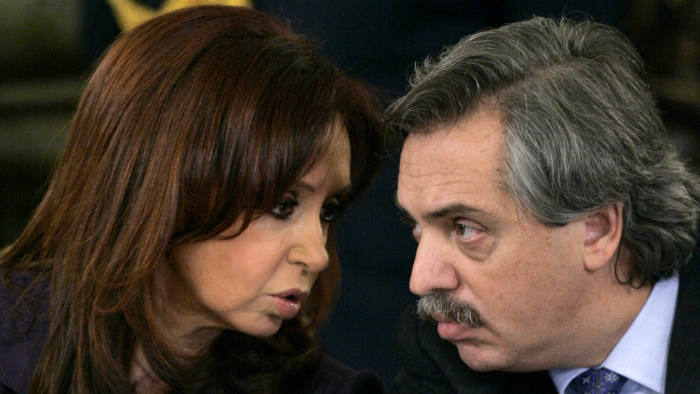
“Those who say that don’t know Alberto: he is a man of great personality and leadership ability. He’s a rational person, with common sense, I don’t think he’s going to do anything crazy,” said the official senator.
Throughout the article, the journalist also points out that the campaign towards the PASO (Primaries) was “light” in terms of proposals, that Fernández promised to pay Argentina’s debts and that he anticipated that he would seek to renegotiate the agreement with the IMF.
He also stresses that the candidate “remains an enigma” and presents a personal and political profile of the former chief of staff, in which he mentions his “passion for women and soccer,” his “amateur musician” side and even his dog, Dylan.
More: Latin America news in English, every day from The Rio Times.
Editorial responsibility: Matthias Camenzind, Editor-in-Chief · Editorial standards · Report an error