The “Chilean Miracle” Collides with Reality
RIO DE JANEIRO, BRAZIL – Eat the rich. Few graffiti are as eloquent about the time that a country is going through as the one that recently surfaced on the façade of a hotel in Santiago.

A direct message, in English -so that no one, either inside or outside Chile, could claim the language barrier- and with two clear targets: the wealthy classes of a nation that has been burning up in protests for three weeks, and the tourists and businessmen who visit the Chilean capital during one of its most troubled periods in many years.
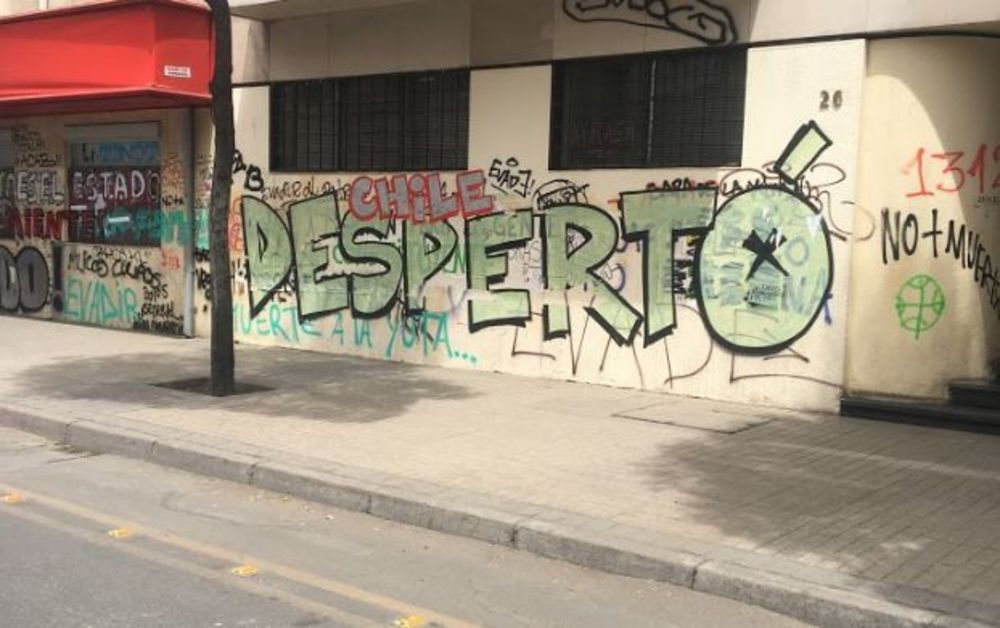
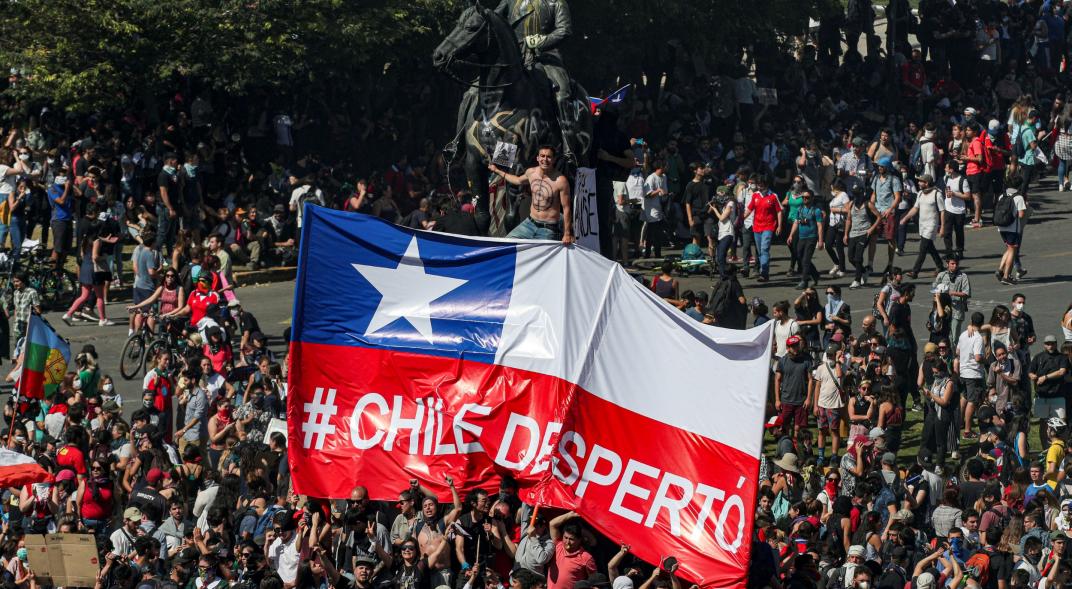
Chile wants social justice and wants it now, after decades of broken promises and, in the words of development economist Nora Lustig, “a model for privatizing public services that has left many people out”. The year 2019, as another of the many political graffiti growing on the city’s streets put it, will be remembered as the moment when “Chile woke up”.
The economic measures applied in the last four decades have resulted in a wave of praise from the main international organizations, enshrining Chile as the region’s “economic miracle” for its healthy rates of economic growth and for having obtained, in record time, one of the highest per capita incomes in Latin America – a position eternally in dispute with Panama.
But the Chilean case is paradigmatic of a maxim that should never be forgotten in the economy: that per capita income – which led a good number of economists to compare it to South Korea, perhaps the greatest contemporary success on a global scale, is insufficient to measure the true well-being and socioeconomic fragmentation of a territory.
The golden era of Chilean growth has rested on two pillars: copper – it is the largest global producer, a blessing from which, however, it has failed to successfully diversify – and an unwavering faith in the free market. It leads the Latin American rankings in ease of doing business, and the laissez-faire ideology of the Chicago School, which, as as claimed by Lisa North, emeritus professor of political science at York University (Toronto), found in Augusto Pinochet’s Chile a particularly fertile ground for its access to the region.
“The Chilean model was overvalued, particularly abroad: if the liberalizing process had been paired with greater economic competition, the resulting welfare would have been much greater. However, there was a high concentration here, so that wealth remained in few hands,” criticizes Gonzalo Martner, former ambassador and former president of the Socialist Party.
Far from OECD standards – “with which today’s Chile should be compared,” adds Lustig, a professor at Tulane University (New Orleans, USA) – but above other large American countries where inequality is rife, such as Mexico and the USA – income inequality has declined, but remains at “unacceptable” levels. This is compounded by an increasingly dissatisfied middle class (at least according to the data).
“With the liberal model and the State only as a subsidiary, intervening only when people have virtually nothing, there is a group that is neither poor nor rich, that has barely any access to public services,” notes Andras Uthoff, an independent consultant to public administrations. The distress emerges as soon as one walks down the street: employment, cost of living and education.
The case of Raquel Sotomayor, 30, and residents of Puerto Montt – more than 1,000 km south of Santiago – and her husband are paradigms of three sides of the Chilean social issue: employment, the cost of living and education. She graduated two years ago from a vocational training course as a social worker, has two small children, one and two years old, and is unable to find a job.
Her husband, Jonathan, 31, a physical education teacher, earns 420,000 Chilean pesos (a little less than R$2,200 or US$550) per month, compatible with the population average, which is approximately R$2,250, according to data collected by the Sol Foundation). In order to be able to study at a public university, he took out a bank loan with state backing, a common practice among Chilean students.
“Our little girl was born, we were late with a tuition payment, so the tuition fee doubled. Adding up the interest, it was impossible for us to pay,” says Sotomayor. His debt now exceeds 11 million pesos ( R$57,300) and grows by the day because of interest. In April of next year, it will be Raquel who will need to start paying for her educational financing, without even having a job.
The generalized increase in the price of life aggravates its precarious nature. In the absence of detailed statistics, the empirical method is valid: a walk through Santiago and another through Mexico City is enough to notice a significant disparity in some of the main basic products, with prices more similar to those of a European capital than those of a Latin American city. According to Mercer, Santiago is the third most expensive Latin American metropolis to live in, after Montevideo and San Juan (Puerto Rico).
Two years show the source of current employment and education issues: in 1979, Pinochet’s dictatorship – under the leadership of José Piñera, minister at the time and brother of today’s president – approved a complete reshaping of labor rules, with a drastic reduction in worker protections, union organizations, and collective negotiation; in 1980, the doors were opened to creating private non-profit universities, without greater demands on quality or price.
“Liberalization of the higher education market led to a huge increase in prices and a concentration of supply in the capital,” notes researcher Claudia Sanhueza. In 1990, on the eve of handing over power, Pinochet’s regime gave precedence to freedom of school education over the right of students to obtain it, allowing unrestricted access of private institutions into the administration of schools with public resources, with no guarantees as to quality. Education becomes a good business.
Retirement
Norma Ojeda is a retired teacher, aged 76, living in San Bernardo, in the south of the Chilean capital, with her sick husband. She worked continuously for 38 years in municipal education, and her last salary in 2005 was 680,000 pesos (R$3.450). When she received her first pension, she shed tears: it was less than a third of her working salary.
“But then I didn’t cry anymore: dignity above all else,” she concludes. Her reality is by no means an exception: from the conversion of the pension system to one of individual capitalization – in 1981, also the work of José Piñera – each person makes an individual economic effort and, at the end of their professional life, receives a pension according to the money they have amassed and the expertise of private administrators.
The outcome of the reform was a successive slump in the pensions payout, far from the levels pledged 40 years ago. Despite the reforms that have already been introduced into democracy, pensioners are still suffering the rigors of a radical shift in the system that is at the root of the discontent of large sections of society.
Health
In the protests started in October, posters depicting the poor quality of public health became commonplace. “For you, Mom… who was called for surgery when we were mourning you” was read on the card held up by a girl. A paradox for the country that founded the first national health system in Latin America in the 1950s.
However, a quarter of a century after its inception, the military regime dismantled it, decentralizing it into 27 independent services: it was “a blow to the institutional command line,” in the words of Álvaro Erazo, Michelle Bachelet’s first health minister.
In 1981, the final and double blow came: with the creation of preventive health institutions, which relieved the state of certain functions and operated under the precepts of free competition, and which, in practice, represented the privatization of social welfare; and with the transfer of primary care centers to the municipalities, dismembering the entire national health network. “It was a hard blow to an experience that had had great results in health care and that was admired by health professionals from all over the world,” says Erazo.
The executive director of the GIST Foundation, Piga Fernández, brought the discussion back to current affairs. “The inequality [in health] is tremendous: if you have the resources, private health and access to complementary insurance, you have no problem getting the medicines you need. But the picture is different for people in the public health system: if you have money, you live; if not, you die.”
Source: El País
More: Latin America news in English, every day from The Rio Times.
This article was produced by The Rio Times’ automated newsroom system. How we use AI · Report an error · Editorial responsibility: Matthias Camenzind, Editor-in-Chief