New Skyscrapers Take Over São Paulo’s Real Estate Boom
RIO DE JANEIRO, BRAZIL – The real estate market in São Paulo has never been stronger. Walking through the wealthiest city in Brazil, one cannot avoid construction sites that gave life to previously empty properties.
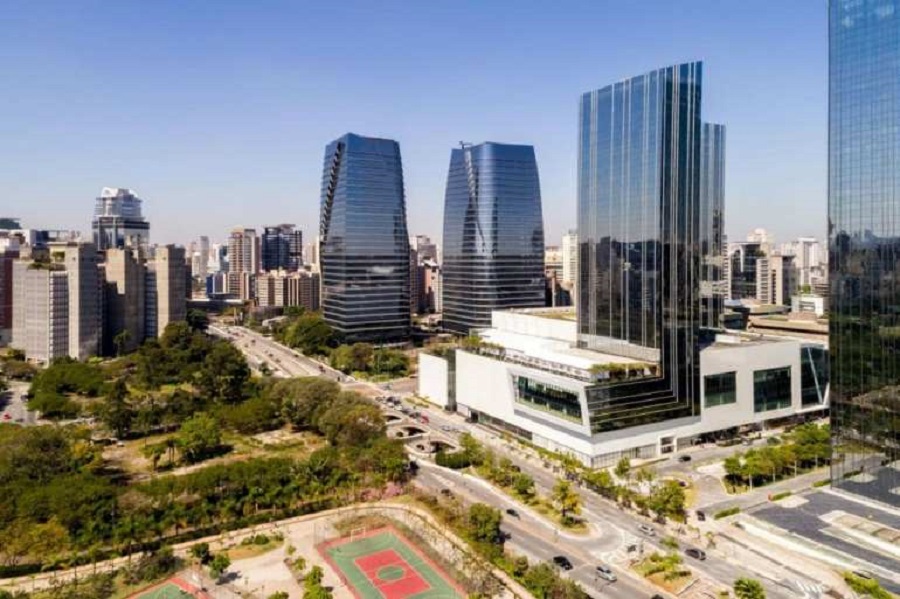
Five skyscrapers are being built on a single street in the Itaim Bibi, the city’s financial district. Newspapers are filled with announcements of new buildings intended for anyone with a fixed salary.

Not to mention the realtors. In some neighborhoods, they seem to be everywhere, waiting to address any passer-by who looks like a potential buyer.
They peek outside bakeries and wait at traffic lights, giving out leaflets with pictures of buildings covered in lush plants or stocked with all the services of a five-star hotel.
The market’s rebound comes from a combination of restrained demand after years of slow growth and low-interest rates.
Economists point to the construction boom as a sign of recovery: The sector’s pace of expansion in the third quarter was twice that of GDP growth. The leap occurs after 20 consecutive quarters of retraction in the sector.
More than 36,000 residential units began to be built – mostly apartments – in São Paulo in the first ten months of the year.
As a result, 2019 may record the highest number of new projects since at least 2004, according to SECOVI (real estate market union). Average prices increased two percent this year through November, to about R$9,000 (US$2.250) per square meter, according to the FipeZap index.
“2019 will be the best year” in terms of sales and new projects, said Emilio Kallas, vice president of SECOVI-SP and president of Kallas Incorporations and Constructions. “The effect of lower interest rates on the economy is being underestimated.”
The accelerated decline of the SELIC – the basic rate fell from 13.75 percent to 4.5 percent in just three years – boosted demand for real estate financing.
New loans for individuals totaled R$78.4 billion this year through October, a nine percent increase over the same period last year, and the trend is gaining traction. October was the best month since December 2016, according to data from the Central Bank.
The expansion now evident in São Paulo will soon be felt throughout Brazil, according to Eduardo Fischer, co-president of MRV Engineering and Holdings, the third-largest residential construction company in the world.
São Paulo is home to MRV’s largest development, with 7,300 apartments and 51 towers for the low-income segment, at an average price of R$230,000.
“São Paulo benefited because it is a stronger market and it is already growing”, said Fischer in an interview. “This will happen in other capitals and states in the next quarters and years”.
Although prices in other cities such as Manaus and Florianópolis are also rising with the sector’s rebound, they still show a decline elsewhere in the country, leaving average prices unchanged for the year, according to FipeZap.
The new towers range from low-income units to ultra-luxurious projects, with “zen rooms” and pet services.
Iconyc, which is described as being born “between New York and Ibirapuera” and sells four-bedroom apartments for about R$2 million, has shared game rooms for adults and children, as well as two swimming pools – one with a roof designed to conjure up the starry night sky.
The St. Leopold building offers up to nine parking spaces per apartment, a common privilege for the wealthiest in São Paulo. The apartments start at R$15 million, according to prices published online.
Just a few blocks from Faria Lima Avenue, the VN is part of a new trend of small studios emerging in São Paulo.
To escape the limits of the 22-square-meter apartments, owners can socialize in a penthouse garden or coffee shop on the ground floor, facilities that the construction company hopes will please the millennials.
The smallest unit costs approximately R$500,000, which is equivalent to R$23,000 per square meter. There are no more units available, according to Vitacon.
The market’s turnaround has attracted investors like Ed Kuczma of BlackRock, which manages US$1.9 billion in Latin American stock funds and is heavily into Brazilian construction companies.
“The sector is going through a unique moment, with low-interest rates and property prices below previous peak levels,” he said.

“The economy is heading toward an important turning point, where the private sector is the main source of growth,” Kuczma said. “Of all the investable economies in Latin America, Brazil seems to be the only one that can speed up GDP growth most rapidly in 2020.”
Source: Infomoney
More: Brazil news in English, every day from The Rio Times.
This article was produced by The Rio Times’ automated newsroom system. How we use AI · Report an error · Editorial responsibility: Matthias Camenzind, Editor-in-Chief
Living in or visiting São Paulo? See this month's events and our São Paulo city guide with rents, safety and upcoming concerts.