RIO DE JANEIRO, BRAZIL – Just 30 kilometers from Itaim Bibi, the financial heart and posh district of São Paulo, is the most polluted river in Brazil. The Tietê‘s water is gray. The fish do not survive. The smell is unbearable.
However, this is the water that can be seen from the kitchen window of Adriana Santos, 29, her husband and her three children, and that is used for bathing and cooking.

They are among the hundreds of families living in Chácara Três Meninas, an area of dirt roads, poorly kept houses, sick children and infestations of everything from snakes to insects and rats – the result of virtually no basic sanitation.
The Tietê and the ‘favelas’ on its shores are only a portrait of the country’s sanitation system, considered one of the worst in the world. The state infrastructure serves only half of the 200 million Brazilians, after decades of insufficient investment.
Approximately 33 million people have no access to drinking water, which harms the country’s health and prevents social and economic development.
But the situation may be about to change. Congress, with the support of Bolsonaro’s government, is attempting to change legislation to privatize the sector, a measure that could bring in US$200 billion in investments.
Companies like Brookfield Asset Management Inc., China Communications Construction Co., and Alberta Investment Management Corp. are ready to do that.
“There are 6,000 Olympic-size pools of raw sewage being dumped into rivers every day,” said Teresa Vernaglia, CEO of BRK Ambiental, Brookfield’s majority-owned sanitation company. “Every real invested in sanitation represents R$4 in health savings. It’s a win-win plan”.
The issue
Sanitation is the domain of two dozen state-owned companies, which perform the collection and sewage treatment works of 2,245 of the country’s 5,570 cities.
Many of these companies have limited investment budgets and their heavy payrolls translate into scarce resources to universalize sanitation, as well as to ensure the maintenance of the existing system.
Sanitation is a task for municipalities and regulated by dozens of different agencies, not at a centralized national level. This discourages private investors who need stable legal structures to make long-term investments.
The private investment represented only US$500 million of the US$2.75 billion invested in sanitation in 2018 and is found in only 325 cities. The low percentage of private sector involvement in sanitation is mainly due to legal insecurity.
“We invested very little and very badly,” said Diogo Mac Cord, Secretary of Development and Infrastructure of the Ministry of Economy. “It is impossible for the state model to universalize sewage and water treatment in Brazil.”
The solution
The legislation being discussed by Congress has broad support from the government’s economic and infrastructure teams, which have been working to reduce the size of the state.
With Latin America’s largest economy still slowly emerging from the worst recession in its history, private investment is critical to recovering growth.
“Passing this law will be crucial because it will boost economic activity and generate many jobs. There is demand and room for relevant investments in the sanitation sector,” said Henrique Meirelles, São Paulo’s Secretary of Finance and former Finance Minister.
One of the law’s major advances is ensuring greater competition. The municipalities will be required to hold bids to hire sewage collection and treatment companies. Currently, state-owned companies have an effective monopoly on contracts offered by municipalities.

The bill also establishes a level playing field for public and private companies and a strong, centralized regulatory body to prevent tax abuses and help balance prices, avoiding high costs for low-income communities.
In addition to encouraging privatizations and public-private partnerships, the new law should set targets for public enterprises, which if not met could lead to the loss of the right to operate.
The opportunity
Several investors are keeping an eye on this market because these infrastructure projects offer constant revenue flows from clients who pay their bills – just like Adriana and her family.
State-owned companies handling sanitation, if fully privatized, could be worth as much as US$35 billion, according to government estimates. This amount varies if state governments prefer to make public-private partnerships, concessions or IPOs.
Brookfield has plans to expand its investments, whether through acquisitions or concessions, said David Aiken, the company’s investment director. Although the legislation has not yet been passed, BRK will invest approximately R$1 billion per year over the next ten years, Aiken said.
“Nowhere in the developed world could you buy a water supply company and have anywhere near the growth potential you have in Brazil,” he said. “If people are looking for long-term inflation-protected exposure in Brazil, that’s a tremendous way.”
AIMCO, GIC
Other companies are doing the same. Alberta Investment Management bought a share of Iguá Sanitation last year with an eye on the domestic market.
On a trip to Brazil last November for the BRICS Summit, the president of China Communications Construction Co., Liu Qitao, announced interest in the clean-up of the Tietê waters, but to do so he wants a guarantee of political stability.
“The keyword is political stability because that alone guarantees the return that companies expect in making this investment.”
The Singapore sovereign fund, GIC, has made investments in Aegea, as has BRK Ambiental, one of the few private companies investing in sanitation in Brazil.
“The great transformation for private capital is to have goals”, says the CFO of Aegea Sanitation, Flavio Crivellari. He foresees an investment boom in this sector over the next five years. “Investing in sanitation is fast, cheap, profitable and stable.”
Adriana’s house
Back in Chácara Três Meninas, residents find ways around their sanitation difficulties.
Ademir de Oliveira, 65, 24 of them living in the community, owns a local grocery store. He built the plumbing of his home and store with the help of his neighbors. Joana dos Santos, 74, retired, takes a bath as early as possible every day because the scarce water runs out.
In Adriana’s house, the sewage system directly feeds the river. There are three pipes in the house: one connects the kitchen sink to Tietê; the other, a shower; and the third one dumps all the toilet waste into the river without any treatment.
Hopefully, private investments will solve situations like Adriana’s and have far-reaching social repercussions for some of the most impoverished in Brazil.
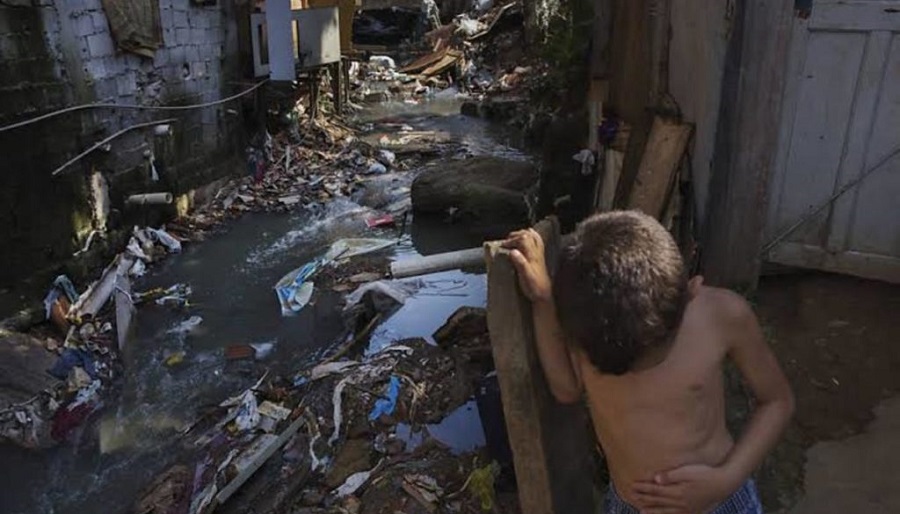
Studies have linked the Zika virus epidemic to inadequate sanitation. According to the World Health Organization, improved sanitation could prevent 6,000 children’s deaths each year in Brazil.
“The size of the opportunity before us is incredible,” Vernaglia said. “State companies are having financial difficulties in achieving the required level of investment in a country as sizeable as Brazil.”
Source: Infomoney
More: Brazil news in English, every day from The Rio Times.
This article was produced by The Rio Times’ automated newsroom system. How we use AI · Report an error · Editorial responsibility: Matthias Camenzind, Editor-in-Chief