Can the new Conservative Government in Brazil win the Drug war?

RIO DE JANEIRO, BRAZIL – As a war photographer, over the past 16 years I have covered many wars, which all pose their own challenges as well as similarities. In terms of differences, wars pose various levels of threats and dangers which could cut short your life if unlucky or not experienced enough to cover a specific conflict.
Hence, it is crucial here to differentiate between a regular war and unconventional conflicts like the drug wars that are dotting South and Central America. Covering a conventional war allowed me to gain a multitude of experiences, from surviving in a gun battle, to choosing a smart location to live within a city under attack or under siege.
These survival skills, which were acquired on the field, are not the same as the ones that need to be learned if covering a drug war.
Earlier this year I was looking for a new country that I have not been in before, a country which would be posing new challenges to my experiences and career. Brazil had been on my mind for some time, and with the arrival of the conservative Bolsonaro government, I felt that the time was right to check it out.
Brazil, however, is not an easy sell to editors, as South America is not often in the lead in the news cycle, especially now with the media obsession towards Trump and its potential impeachment.
Yet, with that in mind, I still wanted to cover the current drug war situation as I felt that the particularities of this war were worth the stretch. Personally, I wanted to find out why Brazil is a country of such contrast and contradictions.
Rio de Janeiro is a great example to try to understand that gap. Indeed, most tourists come to Rio for a good time, spending time in Copacabana, which is actually not that safe at all, or Ipanema and Leblon.
Rio’s Zona Sul (South Zone) is in no way a complete representation of the true reality of that city: if you drive 20 minutes north into various hardened favelas you will see a very different picture – one of violence, poverty and drug-ridden neighborhoods. Two worlds.
The drug war in Brazil has, like all drug wars, some similarities with its neighbors like Colombia and with Mexico, as drug and weapons running is usually done by well-organized drug organizations, who have long arms stretching internationally.
Though all drug wars are brutal in nature and unforgiving, the violence in Brazil is different than in Mexico. In Brazil, the violence is mostly straight killings, while in Mexico, the cartels are much more gruesome and creative when it comes to getting rid of their opponent.
Different countries, with different cultures of violence. Furthermore, the power of Mexican cartels, for instance, is so strong now that it can actually compete with the highly corrupt Mexican government, while in Brazil, like in Colombia, the governments are powerful and can pose a serious threat to the existence of the various powerful drug organizations dotting their respective countries.
In fact, some argue that if Mexico continues in this trend, it will one day resemble failed states like El Salvador or Honduras, which have governments so intertwined with the drug cartels that is it now hard to differentiate between the two.
Hence, Brazil still has a chance to clean and retake control of these lost favelas and smaller towns in the Northeast of the country, but for that it will need to clean house itself, if does not want to follow the Mexican path.
Unfortunately, much is to be done, as the North of the country is currently in a dangerous spiral of violence, typified by the city of Manaus, where gangland groups are fighting it out to take control of the region and its border crossing. Is violence against violence the answer to eradicate such group a pertinent option to win the drug war? Possibly, but it will therefore take quite a bit of sacrifice and house cleaning to do so.
Drug wars are in many ways more dangerous and certainly more tricky to understand and visualize than a hot war. A conventional conflict usually has a front lines with two enemies opposing each other. As a photographer, once you understand the layout of the land and its protagonists, it becomes easier to do your work as combat, though confusing, can be understood while it is happening all around you.
Covering a drug war is much more complicated. First, to be able to get the proper contacts who are going to introduce you to the right people, who in turn will allow you to integrate such a dark world to take photo, is very hard and time-consuming.

The drug war in Brazil is surely no exception as the key element in order to be able to provide a good photo essay is to establish the best contacts possible.
Contacts themselves need to be wee-connected and, most importantly, trustworthy: The latter is the most challenging as everyone can say they are well-connected. A good way to remedy such an uncertainty is to get the right fixer from the get-go.
A reliable way to do so is to talk to other journalists who have worked in the same area and get their own contact. Once that is established you have done a crucial part of the process; once on site you can comfortably start your work by getting closer to your subjects.
The other part that is difficult to accomplish is mingling within an urban and dangerous environment like a favela where danger is lurking at any moment ready to make its presence felt without any warnings.
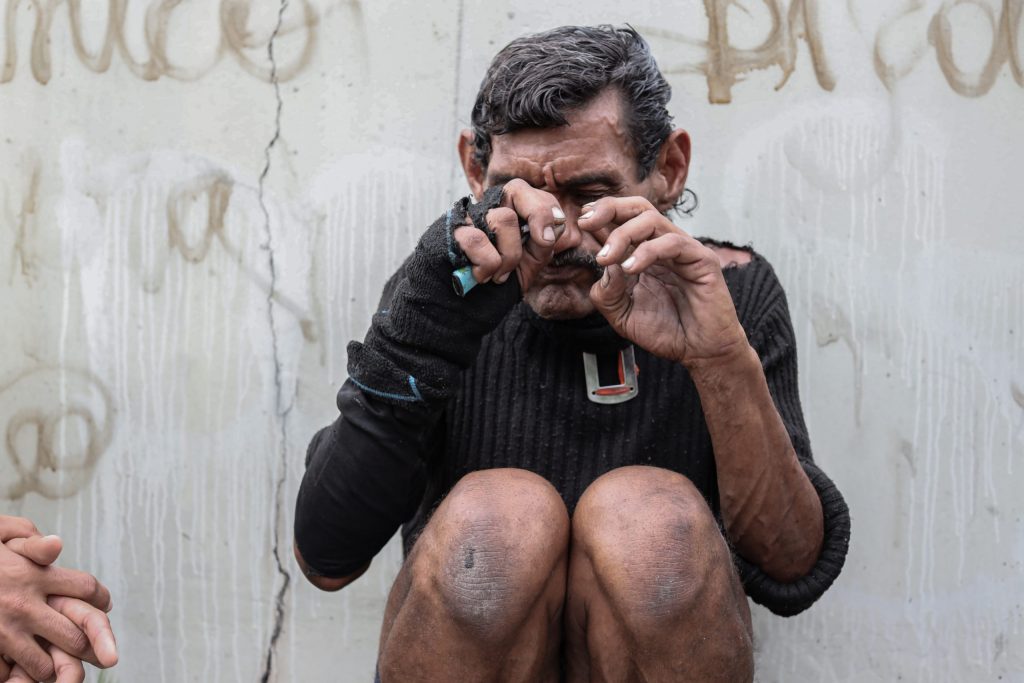
Hence, it is crucial to keep a low profile, listen to your fixer and keep close to him as well as not risk taking a photo if it is going to jeopardize your entire work: no photo is worth your life. One has to take calculating risks while assessing the situation.
Getting close to your subject is the next big challenge, as it takes quite some time to get the trust of these individuals; you need to show respect and humility without imposing judgment on their livelihood and lifestyles. You are there to report and take a little piece of local history and bring it back to the rest of the world.
It can take weeks or even months to be able to get deep enough in a completely different environment and get the photos that you, as a professional as well as an artist, need to take.
To be able to get the right access is not only crucial to the conclusion of your work but for the quality of the photos you are expecting to take. The trust that needs to be created between the subjects and the photographer is so important that after some time, once that is established, the subject will forget that you are here and you can therefore take the right kind of photos which will present the subject in the most natural light.
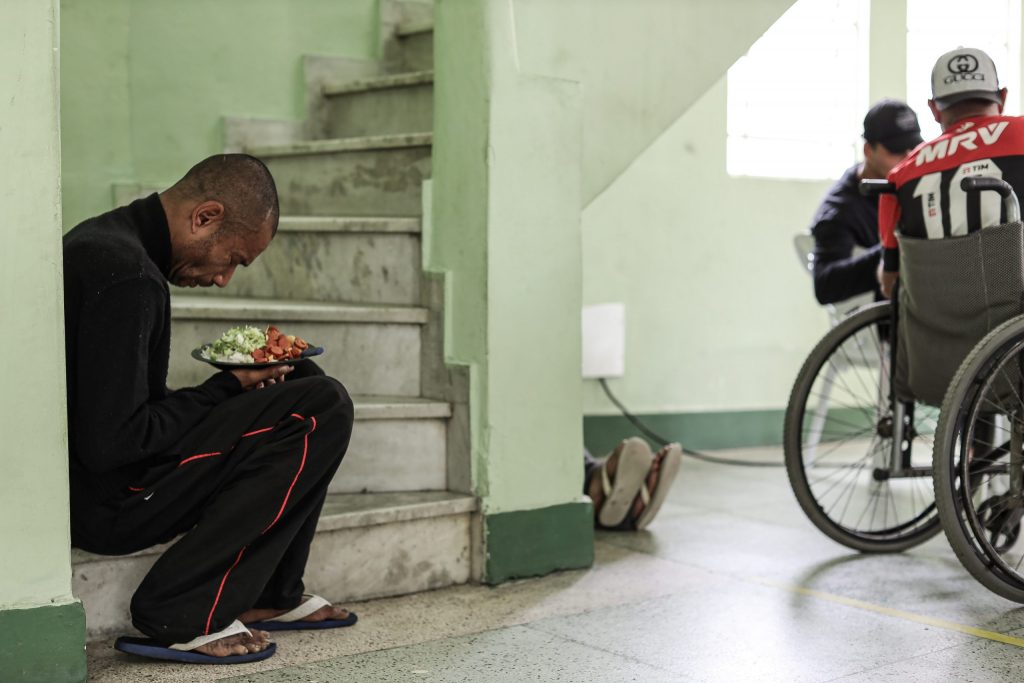
Indeed, as a photographer you re looking to get candid shots of your subjects while creating a photo essay.
To conclude, the work of a photojournalist is 80 percent getting ready for a story through precise organization and waiting, and 20 percent of actual shooting. Without that first 80% percent it is almost impossible to get the shots that you need to create your work.
That is especially true when covering such a challenging story as a drug war as the work put in before the actual first photo taken will show whether or not you will be successful in getting deep enough in that world that you have decided to report on.
Hence, patience is key, as it is usually it is flawed to show impatience to the surrounding people who are either trying to help you by opening the doors to get the access you wish to obtain for your work.
For the full picture, see our Brazil Tax Reform: Complete Guide.
More: Brazil news in English, every day from The Rio Times.
Editorial responsibility: Matthias Camenzind, Editor-in-Chief · Editorial standards · Report an error