Things You Should Know Before Starting up Your Startup: an Expert Guide
RIO DE JANEIRO, BRAZIL – The English term “startup” has gained visibility in Brazil with the emergence of several technology companies boasting of growth and transformation into large businesses.

In several cases, companies began as startups and gained global reach, leaving this designation behind, as is the case of large digital platforms such as Facebook, Google, and Uber.
The term designates companies with a strong technological foundation that innovate, whether in their business models or in the service they offer consumers.
Although the name is linked to technology, these companies operate in a wide range of fields, from agriculture to the financial market, including education and urban mobility. But to what extent are startups an alternative for people wanting to do business?
Agência Brasil spoke with experts and officials involved in the environment of these businesses to collect tips, recommendations, and advice.
Although they are an attractive alternative, startups also face several obstacles, and the paths to success and establishment in the market can be tortuous. According to the experts interviewed by the report, those contemplating going into this universe should do so devoid of naïvety or the belief that only a brilliant idea will be able to set a successful business in motion.
According to data from the Brazilian Startups Association (ABStartups), Brazil has more than 13,000 startups distributed over 588 cities, sixty percent of them in the Southeast. These are led by 10,100 entrepreneurs organized in 74 “communities”.
According to the Radiography survey of the Brazilian Ecosystem of Startups, prepared by ABStartups in partnership with Accenture consultancy, 42 percent of them are up to two years old and 69 percent do not exceed R$50,000 in revenue. Of this universe, 63 percent of these companies employ up to five people, and 49 percent only consist of partners. Of the total, 77 percent are focused on the corporate market.
Know what you want
Natália Bertussi, an innovation analyst with the Micro and Small Business Support Service (SEBRAE), points out that in the beginning, it is crucial to define which problem the individual or group intends to solve.

“Once this is known, one can think of the most appropriate solution to address the problem. It can be something related to some “pain” that it has experienced, an issue in its city, to an issue of a specific group in society, etc.”, she explains.
For the founder of the 100 Open Startups business accelerator, at this early stage the interested party should be able to answer three questions: “who am I, what do I know and whom do I know?”.
She emphasizes that more than a brilliant concept, it is fundamental for people to understand what kind of entrepreneur they are, what they can accomplish, and what network they can mobilize, from suppliers to consumers. From then on, he/she carries out the actions and recognizes the next challenges.
When devising a solution to an issue, the entrepreneur needs to think of it as a business, including its model, how to market the service or product, how and who will be paid in the network to be established and how to bear the costs of setting up and supporting the company.
The Federal Center for Technological Education of Rio de Janeiro (CEFET RJ) incubator coordinator, Marcelo Alencar, alerts that a common mistake is that these dimensions are not taken into account from the very outset.
Given the importance of marketing a good or a service, the business model dimension should be present from the very beginning. One of the factors that enhances this issue is the unawareness of entrepreneurs in the area of enterprise management.
“The first impact is exactly how I use my knowledge so that it becomes a business. The next challenge is precisely to sell. When it comes to marketing, young people simply don’t want to hear it. This obstacle extends throughout development. When they get to the end, when they have a product, they face difficulties in selling it”, he warns.
Rafael Vandrei, the general coordinator of innovation at the Ministry of Economy, points out that another concern at the time of market-shaping is the research on the market the entrepreneur intends to enter, and the startups already working in that market.
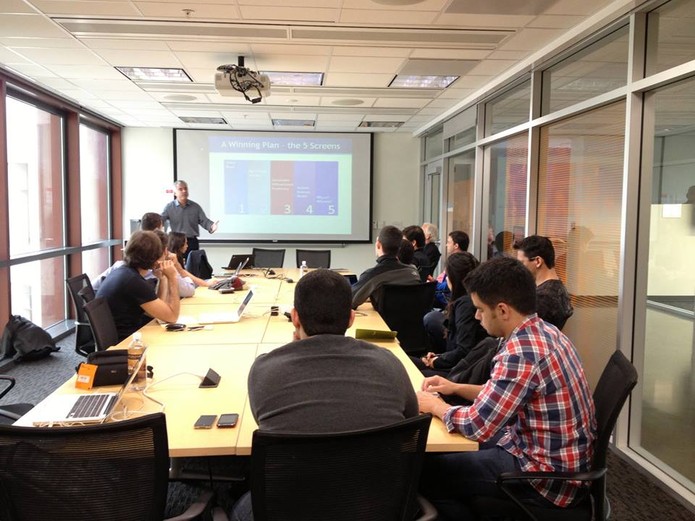
One of the ways is to look for the foundations already built on the Brazilian ecosystem, such as the ABStartups surveys.
“It is very important that people interested in getting started know their competitors. In the beginning, there are a high number of cases in which the person woke up with an idea and thinks that only he or she formulated this solution and will be successful. Research not only in Brazil but also abroad can save time so that he doesn’t invest if he has a competitor already working in the area”, recommends Vandrei.
Another essential part of the business shaping stage is to define the target audience, or the group of people, companies, institutions, and organizations potentially interested in the solution proposed by the entrepreneur. “You know to whom you will sell. Because you may have a good idea and direct your efforts to the wrong audience”, points out Marcelo Alencar.
(Source: Agência Brasil)
This article was produced by The Rio Times’ automated newsroom system. How we use AI · Report an error · Editorial responsibility: Matthias Camenzind, Editor-in-Chief
LatAm Markets: Live Signals → — real-time movers, turnover leaders and FX across Latin America.