Brazil’s Micro-Entrepreneur Program Completes Ten Years; 54 Percent in Tax Default
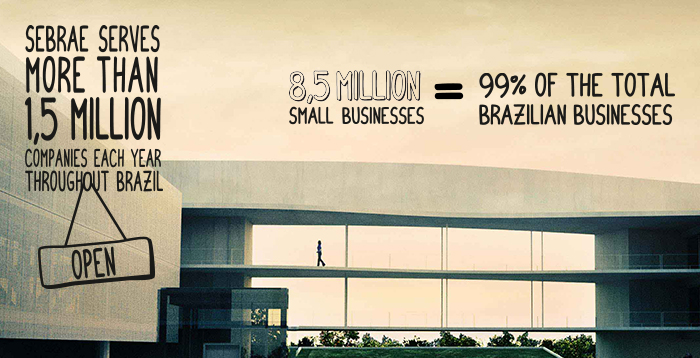
RIO DE JANEIRO, BRAZIL – The individual micro-entrepreneur (MEI) program completed its tenth year this month with 8.6 million small businesses registered, but with a long-standing problem: a high rate of default in paying taxes.
In May of this year, according to the latest available data, 54 percent of the micro-entrepreneurs were not in good standing with their tax obligations, according to the Federal Treasury.

MEI was created to encourage the low-cost incorporation of small businesses and self-employed workers such as salespeople, confectioners, manicurists, hairdressers, or electricians, among others. Businesses that invoice up to R$81,000 per year (or R$6,700 per month) and have at most one employee are eligible to join the program.
The registration of MEIs allows the microentrepreneur to have a CNPJ (National Corporate Taxpayer’s Registry), to issue invoices, to rent bank card machines, and to have access to loans (with cheaper interest rates).
In addition, their products or services may also be sold to the government, and they may access the expertise of the Brazilian Micro and Small Business Support Service (Sebrae).
To reduce default, the government has sought to “ease as much as possible” the issuing of payment forms, which can be made online (including through automatic debit), on the micro-entrepreneurs website, and also raise awareness among workers, according to the under-secretary for Development of Micro and Small Enterprises, Entrepreneurship and Crafts of the Ministry of Economy, José Ricardo da Veiga.
“Overall, the program has shown a default rate that has peaked at 70 percent [in the past]. However, it’s not cumulative default. It features “skipped” installments, people who are paying a little late,” said José Ricardo da Veiga in an interview with G1 news site.
He noted that entrepreneurs with debts in arrears might settle their bills through the current installment plan — whose rules are available on the Federal Treasury’s website. The minimum amount for each repayment installment is R$50,00.
Over the past five years, since the pre-recession period, the number of MEIs in the country has grown by more than 120 percent.
How does an MEI work?
Individual entrepreneurs with gross revenue that does not exceed R$81,000 per year can register their business as Individual Micro-Entrepreneur (MEI), Microempreendedor Individual in Portuguese. This allows an entrepreneur to establish a company and create a Brazilian Tax ID number. To register as an MEI, the entrepreneur must meet these conditions:
- Gross annual revenue does not exceed BRL 81,000.00;
- Owner cannot be a partner, administrator or owner of another business;
- Cannot have more than one employee;
- The type of business activitiy must be listed in an official MEI list;
- MEI law allows individual craftsmen, tailors, hairdressers, electricians, photographers, painters, carpenters, plumbers, and other professionals to register as an MEI, obtain a Tax ID number and pension coverage. The MEI can also do business with government entities, issue local tax invoices (Nota Fiscal) and request bank loans.
The big advantage of MEI is tax benefits. Different from other entities, an MEI does not need to pay several taxes to different tax authorities and file several tax forms. The MEI is not required to pay income tax, but is required to pay the following taxes every month:
- Social Security: 5% of the minimum salary;
- ISS: R$ 5.00 for service businesses;
- ICMS: R$ 1,00 for goods and manufacturing businesses.

- The tax payment is made electronically on a single tax form called DAS. The MEI must also file an annual tax return called DASN, showing its total revenue for the year.
For businesses that can be registered as an MEI, it is the only way to obtain benefits such as paying less tax, not filing income tax returns, no need for an accountant, no registration fees for setting up the legal entity, among other advantages.
More: Brazil news in English, every day from The Rio Times.
This article was produced by The Rio Times’ automated newsroom system. How we use AI · Report an error · Editorial responsibility: Matthias Camenzind, Editor-in-Chief
Brazil runoff, Sunday, October 25: Brazil runoff start time and results schedule. Latest: Brazil runoff polls, Flávio 51%, Lula 49%.