Economy Ministry Wants New Financial Transactions Tax, But Faces Heavy Opposition
RIO DE JANEIRO, BRAZIL – The government is including in its proposed tax reform that withdrawals and cash deposits be taxed at an initial rate of 0.4 percent. The collection is part of the concept of tax on payments, which is being compared to the former Provisional Contribution on Financial Transactions (CPMF).
For debit and credit payments, the initial rate studied is 0.2 percent (for each end of the transaction, payer and recipient).

Both rates tend to grow after they are established since the government’s goal is to use the new tax to gradually replace taxation on wages, considered by the economic team as harmful to job creation in the country.
Marcelo de Sousa Silva, Adjunct Special Secretary of the Federal Treasury, defended the proposal on Tuesday, September 10th, at the National Tax Forum (promoted by the tax auditors’ union in Brasília), emphasizing that the new tax would replace both payroll tax and the Tax on Financial Transactions (IOF).
“Year after year we are witnessing a percentage regression of formally employed individuals. And this cannot be left out of the tax reform, because the most significant impact [on employment] may be the tax exemption for payroll. Of all taxes in our legal system, payroll taxation is the most harmful to job creation,” he said.
Although the government rejected the similarity to the former CPMF, it eventually made the comparison itself by showing a graph with the relatively stable history of CPMF rates over the years in which it was in force, which would represent predictability for the contribution.
Silva stated that, with the replacement of payroll taxation by the new tax, social welfare would ultimately be funded by the population as a whole. “We are transferring the burden to society as a whole,” he said. He pointed out soon after that the reform will offer benefits such as broadening the range of exemptions and reimbursement of low-income taxes.
President Jair Bolsonaro had already told Folha this month that the recreation of a tax along the lines of the former CPMF should be conditional on compensation for the population. “I already told Guedes: to have a new CPMF, you have to have compensation for the people. If not, he will take a beating even from me”, said the president.
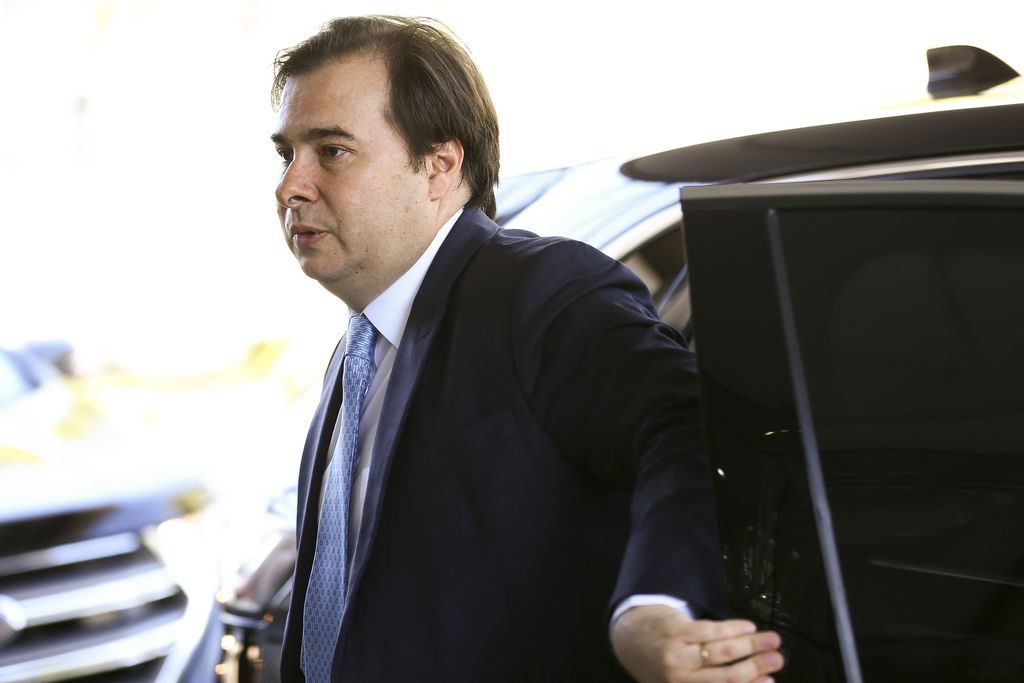
Chamber President, Rodrigo Maia (DEM-RJ), said on Tuesday, September 10th, that the matter is very difficult to implement in the Chamber and that he was waiting for the proposal to be formalized.
“The CPMF has little support among those who know the tax issue, I do not know if this is the best way to solve labor costs,” he said. “We understand the government’s concern. I think the purpose is right, but I don’t know if the formula is the best.”
The changes may be part of the tax reform proposal being prepared by the economic team and should be sent to Congress. The government’s plan is divided into three sections. One is the introduction of a tax on payments. Another is the combination of different federal taxes into a single tax on goods and services. And the third is the changes in income tax.
According to Silva, the proposals for income tax should be completed by the economic team later this week. Under the proposal, the Corporate Income Tax (IRPJ) would be reduced from 34 percent to something between 20 and 25 percent.
In the case of Personal Income Tax (IRPF), the government plans to increase the tax base (ie, the number of taxpayers) among the wealthiest. According to the secretary, this will be achieved through the taxation of dividends, the establishment of a limit on benefits for people with severe diseases, a reduction in deductions and a review of financial investments.
The government believes that the changes in income tax will correct a current problem when the curve of the so-called effective tax rate (the percentage in taxes effectively charged to the taxpayer) grows until a certain income bracket and then begins to decline among the wealthiest. “We must continue the curve until it reaches high incomes. Today [tax collection] is focused on the lowest income brackets,” he said.
The secretary further said that the tax merger should begin only with the combination of the Social Integration Program (PIS) and the Contribution for the Financing of Social Security (COFINS) taxes, which would become the Contribution on Goods and Services. The proposed rate will be 11 percent.
More: Brazil news in English, every day from The Rio Times.
This article was produced by The Rio Times’ automated newsroom system. How we use AI · Report an error · Editorial responsibility: Matthias Camenzind, Editor-in-Chief