BRAZIL · POLITICAL POWER
Key Facts
- —What it is Brazil is a federal presidential republic where the president is head of state, head of government and commander-in-chief.
- —Why it matters The October 4, 2026 general election will choose the president, 513 federal deputies, two-thirds of the Senate, 27 governors and state legislators.
- —The numbers
- —The catch No party controls Congress alone, so presidents govern through the centrão, a shifting bloc of centrist and conservative parties.
- —What it means for you Investors watch the Finance Ministry, Planning Ministry and Central Bank, whose Copom reduced the Selic rate to 14.00% per year on 5 August 2026.
Brazil politics in 2026 is a contest between President Luiz Inácio Lula da Silva and Senator Flávio Bolsonaro, with a runoff possible on October 25. Power is shared among the presidency, a fragmented Congress, an assertive Supreme Federal Court and influential state governors.
Brazil is Latin America’s largest democracy and economy, but its political system confuses many outsiders. This guide explains who actually holds power, how the branches interact and what the 2026 election means for foreigners, expats and investors.
The presidency: one office, three roles
Brazil’s president combines the roles of head of state, head of government and commander-in-chief of the armed forces. The president represents Brazil internationally, directs the federal administration through ministers, appoints and dismisses ministers, nominates Supreme Federal Court justices subject to Senate approval, and appoints the president and directors of the Central Bank.
Luiz Inácio Lula da Silva, commonly known as Lula, won the 2022 election and is seeking another term in the October 4, 2026 election. He won the 2022 election and is seeking another term in the October 4, 2026 election. Lula leads the Workers’ Party (Partido dos Trabalhadores, PT), but his government depends on a broad and ideologically mixed congressional coalition rather than on the PT alone.
Geraldo José Rodrigues Alckmin Filho is the vice president. He also serves as Minister of Development, Industry, Foreign Trade and Services. The vice president succeeds the president under the constitutional order of succession.
The main challenger
Flávio Bolsonaro, senator for Rio de Janeiro and the eldest son of former president Jair Bolsonaro, is a Bolsonaro-aligned presidential candidate in 2026. His candidacy represents the continuation of the Bolsonaro movement despite Jair Bolsonaro’s absence from the ballot.
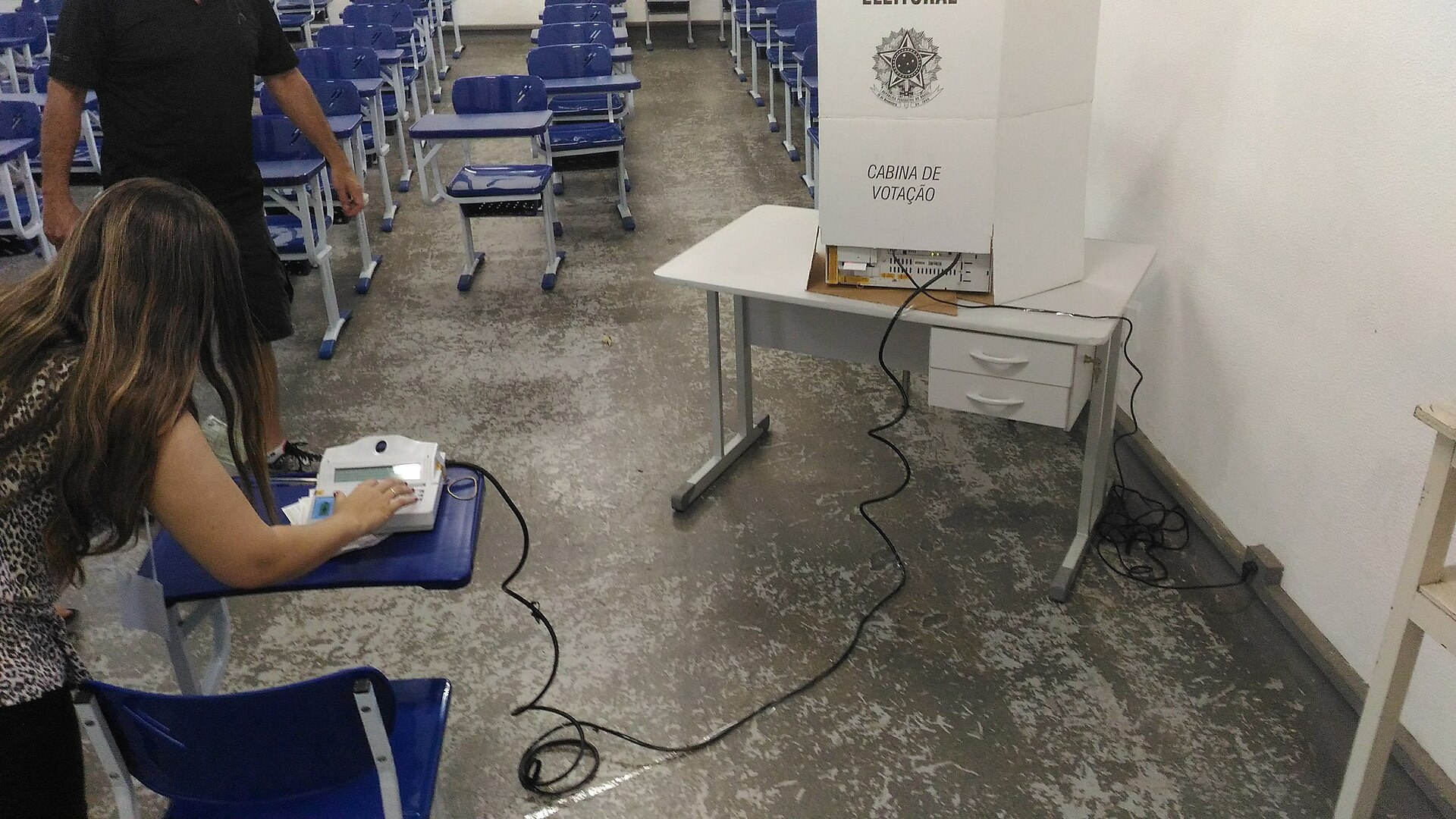
The October 4 election also determines the vice president, 513 federal deputies, two-thirds of the Senate, 27 governors and vice-governors, and state or Federal District legislators. A presidential or gubernatorial runoff is scheduled for October 25 where necessary.

The federal executive: ministers who matter
The economic team
Geraldo José Rodrigues Alckmin Filho is Minister of Development, Industry, Commerce and Services and vice president. The ministry is central to industrial policy, trade and investment policy.
On 5 August 2026, the Copom reduced the Selic rate to 14.00% per year.
Justice, foreign policy and defence

Congress: coalition politics, not single-party rule
Brazil has a bicameral Congress. The Chamber of Deputies has 513 members and the Federal Senate has 81 members. Two-thirds of the Senate seats are contested in the 2026 election. The president’s party does not normally control Congress on its own.
Government survival depends on negotiated support from the centrão, a shifting bloc of centrist and conservative parties whose support is exchanged for committee control, budget influence, amendments, ministerial access and policy concessions. The most important congressional offices are the presidents of the Chamber and Senate, because they control the legislative calendar, determine which bills reach a vote and may influence impeachment procedures.
The main parties and blocs relevant to national power include the PT (Workers’ Party), Lula’s party and the core of the governing left; the PL (Liberal Party), the principal Bolsonaro-aligned party; the MDB (Brazilian Democratic Movement), a large centrist party with strong regional networks; the PSD (Social Democratic Party), a major centrist party with governors, senators and congressional bargaining power; União Brasil, a large centre-right party; Progressistas (PP), a conservative, pragmatic party traditionally associated with the centrão; and Republicanos, a conservative party with links to evangelical and right-of-centre constituencies.
Brazil’s coalition structure means that party labels alone do not determine voting behaviour. Governors, congressional committee leaders, regional interests and control of the federal budget are often as important as formal ideological alignment.
The courts: the STF as a political power centre
The Supreme Federal Court (Supremo Tribunal Federal, STF) is Brazil’s constitutional court and one of the country’s most consequential political institutions. It reviews the constitutionality of laws, adjudicates disputes among branches of government and hears cases involving high-ranking officials.
Other justices include Gilmar Mendes, Cármen Lúcia, Dias Toffoli, Luiz Fux, Alexandre de Moraes, Nunes Marques, André Mendonça and Cristiano Zanin.
The STF has become central to disputes involving election rules and political disinformation, the Bolsonaro movement and investigations into attacks on democratic institutions, executive decrees and congressional legislation, indigenous rights and environmental policy, public security and police operations, and the division of authority between federal and state governments.
The Superior Electoral Court (TSE) is also crucial during election periods. It administers and adjudicates Brazil’s elections, although its presiding justice is normally an STF justice.
The armed forces and security institutions
The president is commander-in-chief, while the civilian Defense Ministry manages political and administrative oversight. The military remains influential because of its institutional size, public reputation, role in border protection and Amazon operations, and historic involvement in national politics.
Since the 2022 election, the key political issue has been whether the armed forces would support or resist attempts to challenge the electoral result. The institutional tendency of the chain of command has been to preserve formal constitutional authority, but military attitudes remain important to investors assessing political stability.
The main federal security institutions are the Federal Police (Polícia Federal), which investigates federal crimes, corruption, organized crime and crimes involving federal institutions; the Federal Highway Police (Polícia Rodoviária Federal), responsible for policing federal highways; and the National Public Security Force (Força Nacional de Segurança Pública), a federal rapid-response force that supports state governments during crises.
Governors and rising figures
Brazil’s 27 governors are among the most powerful political actors in the country. They control state police forces, manage large budgets and often serve as launching pads for presidential campaigns. The October 4, 2026 election will choose all 27 governors and vice-governors, with runoffs on October 25 where no candidate wins an outright majority.
Governors matter to national politics because they can deliver or withhold support for presidential coalitions. They also influence infrastructure projects, public security and tax policy within their states. For foreign investors, a governor’s attitude toward a project can be as important as the federal government’s position.
Rising figures in Brazil politics include Flávio Bolsonaro, who has consolidated the Bolsonaro movement’s leadership despite his father’s absence from the ballot. Other figures will emerge from the October election, particularly among governors and senators who win competitive races.
The numbers that matter
Brazil had an estimated population of 214.2 million on 1 July 2026, according to the Brazilian Institute of Geography and Statistics (IBGE).
| Indicator | Latest value | Period |
|---|---|---|
| Population | 214.2 million | 1 July 2026, IBGE |
| IPCA inflation | 4.44% over 12 months | July 2026, IBGE |
| Unemployment | 5.4% | Q2 2026, IBGE |
| Selic policy rate | 14.00% per year | 5 August 2026, Central Bank |
What this means for foreigners and investors
Foreigners living in or investing in Brazil should understand that political power is more diffuse than in many presidential systems. A president cannot simply impose policy; he or she must negotiate with Congress, respond to court rulings and manage relationships with governors.
The Selic rate of 14.00% per year, set on 5 August 2026, reflects the Central Bank’s inflation-fighting stance.
The October 2026 election creates uncertainty, but Brazil’s institutions have shown resilience. The STF has acted as a check on executive power, and the electoral system has administered competitive elections. Foreigners should monitor the election results and the post-election transition, which will shape policy for the next four years.
What to watch
The immediate event is the October 4, 2026 general election, with a runoff on October 25 if no presidential candidate wins an outright majority. The election will determine the president, vice president, 513 federal deputies, two-thirds of the Senate, 27 governors and state legislators.
After the election, watch the post-election transition and the beginning of new federal and state terms. The exact inauguration dates should be confirmed from official sources. IBGE will release Q3 2026 GDP data on 2 December 2026 and Q4 2026 data on 2 March 2027.
For foreigners, the key question is whether the next government maintains macroeconomic stability, respects Central Bank autonomy and preserves the institutional checks that have made Brazil a functioning democracy despite deep polarisation.
Related reading: Who Runs Brazil Economy, Key Players in 2026; Brazil Election Explained Before Sunday’s Vote; Itaipú Dam Explained, the Brazil-Paraguay Power Deal.
Frequently Asked Questions
Who is the president of Brazil in 2026?
Luiz Inácio Lula da Silva won the 2022 election and is seeking another term in the October 4, 2026 election.
Who is running against Lula in 2026?
Flávio Bolsonaro, senator for Rio de Janeiro and the eldest son of former president Jair Bolsonaro, is a Bolsonaro-aligned presidential candidate in 2026.
When is Brazil’s 2026 election?
The general election is on October 4, 2026. A presidential or gubernatorial runoff is scheduled for October 25 where necessary.
How does Brazil’s Congress work?
Brazil has a bicameral Congress with a 513-member Chamber of Deputies and an 81-member Federal Senate. No party controls Congress alone, so presidents govern through the centrão, a shifting bloc of centrist and conservative parties.
What is the role of Brazil’s Supreme Federal Court?
The STF reviews the constitutionality of laws, adjudicates disputes among branches of government and hears cases involving high-ranking officials. It has become central to disputes involving election rules, political disinformation and the division of authority between federal and state governments.
What is Brazil’s interest rate in 2026?
On 5 August 2026, the Copom reduced the Selic rate to 14.00% per year.
How many people live in Brazil?
Brazil had an estimated population of 214.2 million on 1 July 2026, according to IBGE.
Sources: gov.br, gov.br, portal.stf.jus.br, pt.euronews.com, stf.jus.br, gov.br. Retrieved 4 October 2026.
This article was produced by The Rio Times’ automated newsroom system. How we use AI · Report an error · Editorial responsibility: Matthias Camenzind, Editor-in-Chief