Brazil’s Dangerous Dependence: Lula Turns Nation into China’s Strategic Hub
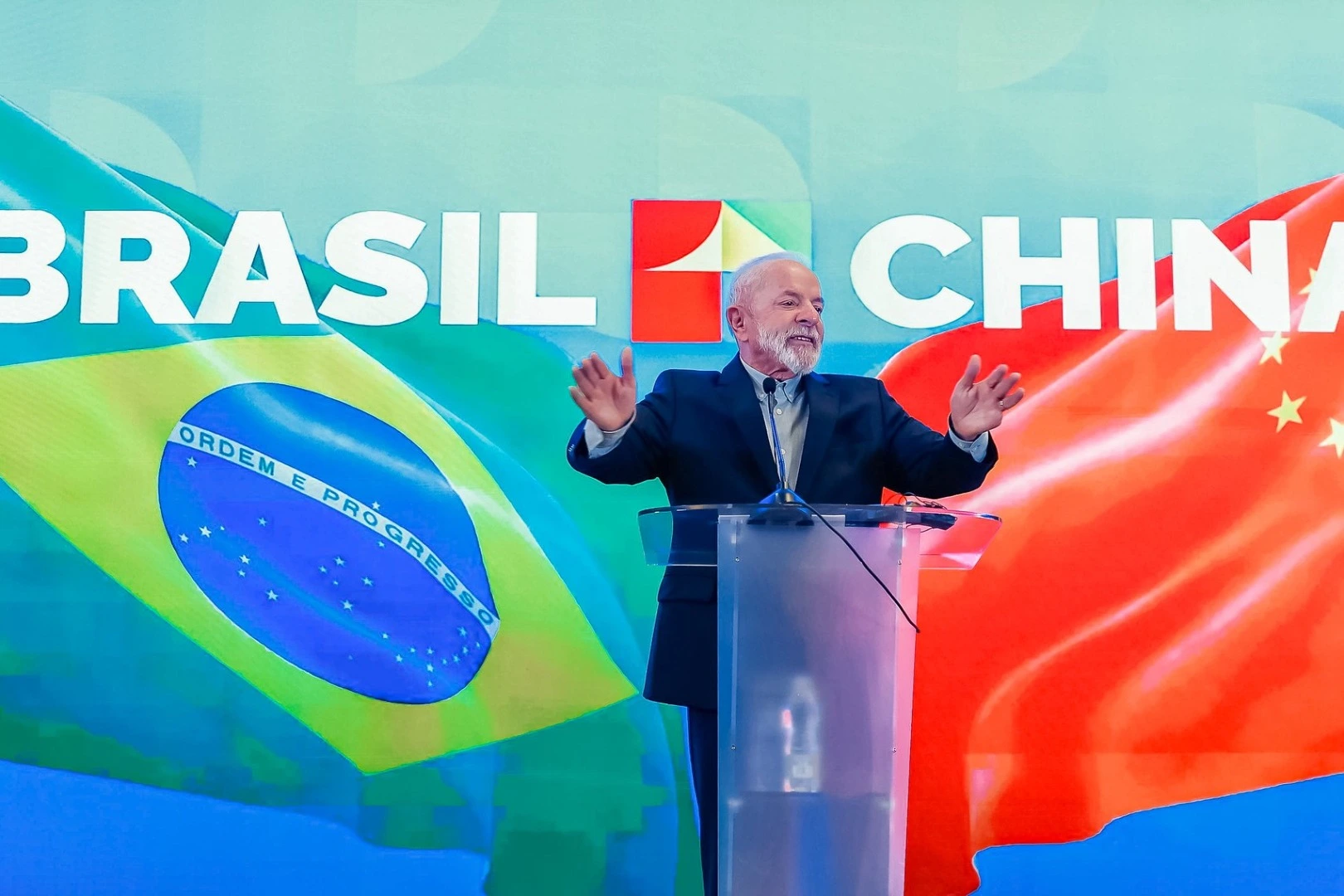
(Analysis) China’s presence in Brazil now extends far beyond electric vehicles. In recent years, Chinese companies and state-backed investors have rapidly expanded their footprint across Brazil’s most strategic sectors—energy, mining, infrastructure, agriculture, and technology.
This deepening relationship has made Brazil China’s showcase in the Americas, raising questions about economic sovereignty and long-term dependence.
A Surge of Chinese Investment
Official figures show that Chinese direct investment in Brazil reached $45.3 billion in 2023, a 22% increase from the previous year.
Bilateral trade hit $188.2 billion in 2024, with China buying 30% of all Brazilian exports—three times more than the United States, Brazil’s next largest customer.
In May 2025, Brazil secured another R$27 billion (about $4.7 billion) in new Chinese investments, with a focus on infrastructure, technology, and agribusiness.
Infrastructure and Energy
Chinese state-owned enterprises have invested more than R$280 billion in Brazilian infrastructure, focusing on electricity transmission, renewable energy, ports, and railways.
State Grid, China’s largest utility, is the main investor in Brazil’s electrical infrastructure, planning to invest another R$150 billion by 2028.
Chinese firms also control major hydroelectric plants, wind farms, and are building new railways and the country’s first underwater tunnel.
Mining and Strategic Resources
Chinese companies now control significant stakes in Brazil’s mining sector. In 2024, China’s Nonferrous Trade Corporation acquired the Pitinga Mine, Brazil’s largest tin deposit, and Baiyin Nonferrous Group bought the Serrote copper and gold mine.
About 70% of Brazil’s iron ore exports go to China. BYD, a leading Chinese EV maker, secured mining rights for over 852 hectares in Brazil’s “Lithium Valley,” ensuring supply for its battery plants and EV factories.
China’s influence extends to niobium, a rare mineral critical for advanced manufacturing. By 2020, Chinese entities controlled 26% of Brazil’s niobium production, and their share continues to grow.
Agriculture and Food
Chinese companies have acquired vast tracts of Brazilian farmland and built massive agribusiness operations.
Since 2008, Chongqing Grain Group has owned 200,000 hectares in Bahia for soybean and oil production, while other Chinese firms have invested in grain processing and bioenergy.
China is now the top buyer of Brazilian soybeans, beef, and poultry, and recently opened its market to more Brazilian agricultural products.
Technology and Consumer Markets
Chinese tech giants are moving in as well. Meituan, a food delivery platform, plans to invest $1 billion to expand in Brazil, aiming to compete with local players.
Mixue, the world’s largest fast-food chain, is building a supply chain and factory in Brazil.
The Risks of Growing Dependence
Brazil’s government welcomes Chinese investment for the jobs and development it brings. BYD’s new auto complex in Bahia, for example, promises up to 20,000 jobs.
Yet, much of the advanced technology and value-added production remain under Chinese control. Many jobs are in assembly and logistics, while higher-value activities and key decisions stay in China.
Critics warn that Brazil’s growing reliance on Chinese capital and markets makes it vulnerable to political and economic leverage from Beijing.
Chinese companies, especially state-owned ones, follow Communist Party directives and could use their control over critical infrastructure and resources to influence Brazilian policy or extract concessions.
Trade patterns reinforce this imbalance: Brazil mostly exports raw materials to China, while importing higher-value manufactured goods.
This dynamic risks accelerating Brazil’s deindustrialization and undermining its economic complexity.
Geopolitical Stakes
While the United States and Europe impose tariffs to limit Chinese influence, Brazil’s open-door policy has made it a regional hub for Chinese investment.
China’s deepening control over Brazil’s resources, infrastructure, and supply chains strengthens its strategic position in Latin America—America’s traditional sphere of influence.
Conclusion
China’s expansion in Brazil is no longer just about electric cars. It is a story of strategic acquisitions, deepening economic ties, and growing dependence on a single foreign power.
The scale and scope of Chinese involvement—from lithium mines to ports, from farmland to power grids—justify the title: Lula’s Brazil has become China’s CCP poster boy.
The challenge for Brazil is to reap the benefits of investment without surrendering control of its future.
More: Brazil news in English, every day from The Rio Times.
Live Market IntelligenceBrazil — Live Market Board
Rio Times · Live Market Intelligence
Brazil — Live Market Board
-0.86%
206,495.23
-0.86%
69,258.58
+0.36%
10,935.13
+0.08%
3,017,221
—
2,544.93
+0.46%
59,870.67
-0.18%
| Instrument | Last | Change | YoY | Prev. | High | Low | Volume |
|---|---|---|---|---|---|---|---|
| IBOV | 206,495.23 | -0.86% | +21.85% | 208,295.98 | 168,310 | 167,142 | — |
| USD/BRL | 5.16 | +0.01% | -5.13% | 5.16 | 5.18 | 5.14 | — |
| SELIC | 14.00% | — | — | — | — | — | |
| PETR4 | 41.64 | -0.05% | +35.19% | 41.66 | 41.97 | 41.15 | 41,499,400 |
| VALE3 | 72.97 | +0.83% | +30.75% | 72.37 | 73.54 | 72.66 | 17,658,000 |
| ITUB4 | 38.60 | -1.03% | +4.57% | 39.00 | 39.34 | 38.39 | 29,487,800 |
| BBDC4 | 16.85 | +0.36% | +3.50% | 16.79 | 16.90 | 16.67 | 19,416,900 |
| BBAS3 | 19.37 | +0.47% | +0.73% | 19.28 | 19.44 | 19.16 | 11,069,200 |
| B3SA3 | 14.26 | -0.21% | +12.73% | 14.29 | 14.47 | 14.11 | 33,037,800 |
| ABEV3 | 14.89 | -0.80% | +21.91% | 15.01 | 15.07 | 14.81 | 16,453,100 |
| WEGE3 | 47.59 | +0.49% | +29.99% | 47.36 | 48.08 | 47.36 | 3,364,600 |
| PRIO3 | 59.14 | -0.19% | +50.67% | 59.25 | 59.81 | 58.74 | 3,325,600 |
| SUZB3 | 41.33 | +2.35% | -23.55% | 40.38 | 41.48 | 40.35 | 3,914,900 |
| RENT3 | 34.68 | -0.09% | +0.84% | 34.71 | 34.96 | 34.35 | 7,979,100 |
| AZZA3 | 15.89 | -2.63% | -53.76% | 16.32 | 16.42 | 15.82 | 1,330,300 |
| CSNA3 | 4.30 | +0.47% | -42.65% | 4.28 | 4.41 | 4.26 | 10,076,100 |
| GGBR4 | 24.69 | +2.19% | +51.38% | 24.16 | 24.85 | 24.18 | 7,047,600 |
| ENEV3 | 24.21 | -1.38% | +70.49% | 24.55 | 24.64 | 23.99 | 9,297,000 |
This article was produced by The Rio Times’ automated newsroom system. How we use AI · Report an error · Editorial responsibility: Matthias Camenzind, Editor-in-Chief