Citi BB Seguridade Sell Rating Sees Up to 55 Percent Downside
BRAZIL · BUSINESS
Key Facts
—The call: The Citi BB Seguridade sell rating is new: the US bank cut Brazil’s largest insurance holding from neutral to sell and trimmed its price target from 36 to 35 reais (US$6.86).
—The scenarios: Citi’s bull case values the stock at 45 reais (US$8.82), barely 6% above the market; its bear case — no renewal of the Banco do Brasil distribution contracts — points to 19 reais (US$3.73), a 55% collapse.
—The reason: The agreements giving BB Seguridade exclusive access to Banco do Brasil’s branch network run to 2033, and Citi believes the market underestimates the concessions a renewal will demand.
—The math: To get to 35 reais (US$6.86), Citi applies a 60% discount to the perpetuity value of BB Corretora and 10% to Brasilseg and Brasilprev; the stock trades at 9.5 times 2027 earnings versus a historical average of 8.2.
—The market: BBSE3 fell 3.4% on Wednesday to 40.91 reais (US$8.02) as the note circulated, before steadying near 41.3 reais (US$8.10) on Thursday.
Citi has turned seller on Brazil’s dividend darling. The Citi BB Seguridade sell call rests on a blunt piece of arithmetic: even if everything goes right in the renegotiation of the Banco do Brasil contracts, the stock offers almost no upside — and if things go wrong, it could lose more than half its value.

Three scenarios, one uncomfortable asymmetry
The report, signed by analysts Gustavo Schroden, Arnon Shirazi and Brian Flores, lays out three paths. In the base case, BB Seguridade’s main distribution agreements are renewed, but on terms less favorable than today’s — worth 35 reais (US$6.86) per share, about 17% below the reference price of roughly 42.16 reais (US$8.27) used in the report.
In the bull case, the contracts roll over intact, with no advance payments and no change in the economics of access to the Banco do Brasil network. That preserves the full value of BB Corretora, Brasilseg and Brasilprev and yields 45 reais (US$8.82) — 29% above the base-case target but only about 6% above the market price. Citi considers this outcome unlikely.
The bear case is the one that will travel. If no contract is renewed, BB Seguridade enters a gradual wind-down after the current agreements expire, its value reduced to the cash flows generated until then, the runoff of the Brasilseg, Brasilprev and BB Corretora portfolios, and the eventual liquidation of the holding. Estimated value: 19 reais (US$3.73) per share, 45% below the base-case target and 55% below the reference price. “The market is underestimating the probability that future contract renewals will involve relevant economic concessions,” the bank wrote.
The 2033 contract at the heart of the model
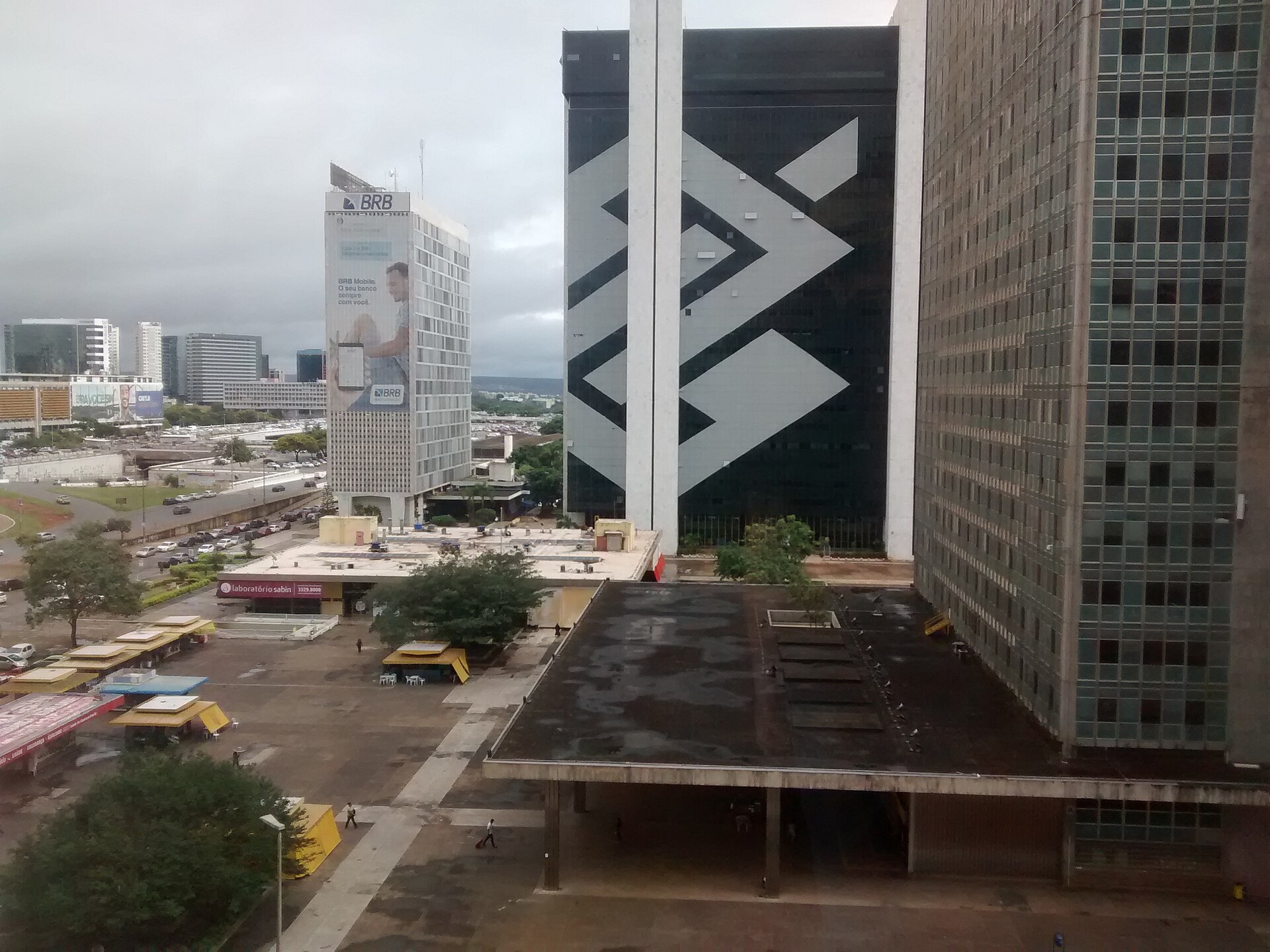
BB Seguridade’s business model rests on a single pillar: exclusivity inside Banco do Brasil. Since 2013, a 20-year agreement has guaranteed BB Corretora the exclusive sale of the group’s insurance, pension and capitalization products through the state bank’s vast branch network, while a parallel contract reimburses the bank for the use of its structure and staff. Banco do Brasil, in turn, owns about two-thirds of BB Seguridade.
Those agreements expire in 2033 — far enough away to feel abstract, close enough to shape valuation today. JPMorgan, which cut the stock to the equivalent of sell back in November 2025, expects renegotiation to begin only in 2027, after the presidential election, and raised its own perpetuity discount from 33% to 50% to reflect non-renewal risk. The fear is rational: a state-controlled parent facing fiscal pressure has every incentive to demand a bigger share of the economics at renewal, transferring value from minority shareholders to the bank.
Citi is not alone — but the bulls are fewer
The downgrade makes Citi at least the fourth house with a sell-equivalent rating on the stock. JPMorgan targets 34 reais (US$6.67), Itaú BBA cut to underperform in April with a 32 reais (US$6.27) target while projecting a 6% profit decline in 2026, and Safra slapped a double downgrade on the shares in January, from buy to sell, albeit with a 39 reais (US$7.65) target. On the other side, HSBC remains the outlier bull at 46 reais (US$9.02). The average target across analysts tracked by Yahoo Finance sits near 37.33 reais (US$7.32), below the current price.
A dividend machine facing a rate turn
The bearish calls collide with a genuine cash machine. BB Seguridade earned a record 9.1 billion reais (US$1.8 billion) in 2025 and returned 96.7% of it to shareholders, including an 8.7 billion reais (US$1.7 billion) mega-dividend approved in December. It approved another 3.85 billion reais (US$755 million) for the first half of 2026, and second-quarter profit of 2.41 billion reais (US$473 million) came with a hefty distribution, as The Rio Times reported in August. The trailing dividend yield near 11% is why the stock, worth about 80 billion reais (US$15.7 billion), remains a retail favorite.
But that engine is rate-sensitive. High Selic rates inflate the financial results that have padded recent profits; JPMorgan estimates each 100-point cut shaves about 100 million reais (US$20 million) off annual earnings. With the Selic at 14% and cuts expected once the cycle turns, the guidance the company itself issued for 2026 — shrinking operating results and roughly flat-to-lower premiums at Brasilseg — is already priced as a year of decline. Citi’s point is that the multiple is not: at 9.5 times 2027 earnings, the stock trades above its own 8.2-times historical average.
Citi BB Seguridade sell call: what to watch next
Three markers matter from here. First, any signal from Banco do Brasil about its intentions for 2033 — even informal ones, which have previously moved the stock. Second, the third-quarter results due in early November, where premium trends at Brasilseg and net flows at Brasilprev will test the low end of guidance. Third, the October election and the Selic path: a credible easing cycle would squeeze financial income, while a fiscal shift that relieves pressure on the state bank would ease the concession risk that sits at the core of Citi’s thesis.
Frequently asked questions
What did Citi do with BB Seguridade?
Citi cut BB Seguridade (BBSE3) from neutral to sell and lowered its price target from 36 to 35 reais (US$6.86), arguing that contract-renewal risk with Banco do Brasil outweighs the stock’s upside.
Where does the 55% downside figure come from?
It is Citi’s bear case: if the Banco do Brasil distribution contracts are not renewed, BB Seguridade would wind down gradually and be worth an estimated 19 reais (US$3.73) per share, 55% below the report’s reference price.
What is the contract that worries analysts?
A 2013 agreement, valid for 20 years, gives BB Corretora exclusive rights to sell the group’s insurance and pension products inside Banco do Brasil branches. It expires in 2033 and renegotiation is expected to start around 2027.
Do other banks agree with Citi?
Largely. JPMorgan (34 reais), Itaú BBA (32 reais) and Safra (39 reais) also rate the stock a sell, while HSBC is the main bull at 46 reais (US$9.02). The average analyst target is about 37.33 reais (US$7.32).
What about the dividends?
They are real but rate-sensitive: BB Seguridade paid out 96.7% of its record 9.1 billion reais (US$1.8 billion) 2025 profit, and yields about 11% — but lower Selic rates and weaker premiums are expected to shrink earnings from 2026.
Sources: Money Times; TradeMap; InfoMoney; Valor Investe; Yahoo Finance. Currency conversions use market rates on September 10, 2026: about 5.10 reais per US dollar (Yahoo Finance).
Connected Coverage
Follow developments across the region on our Latin America hub.
This article was produced by The Rio Times’ automated newsroom system. How we use AI · Report an error
LatAm Markets: Live Signals → — real-time movers, turnover leaders and FX across Latin America.
Read More from The Rio Times