Cost of Living in Cancun 2026 — Monthly Budgets, Rent by Zone and Utility Bills
GUIDES · MEXICO
Key Facts
- —What it is a resort city on Mexico’s Caribbean coast where inland living is affordable and beachfront living is not.
- —Who it’s for remote workers paid in dollars, retirees, and families who value direct international flights.
- —What it costs about US$1,300 a month for a single person inland, and roughly US$4,100 for a family of four.
- —Why it matters a stronger peso in 2026 raises your dollar costs even when local prices stay flat.
- —The catch summer air conditioning can push you onto Mexico’s unsubsidised high-use electricity tariff.
The cost of living in Cancun runs from about US$1,300 a month inland to over US$4,000 for a beachside family.
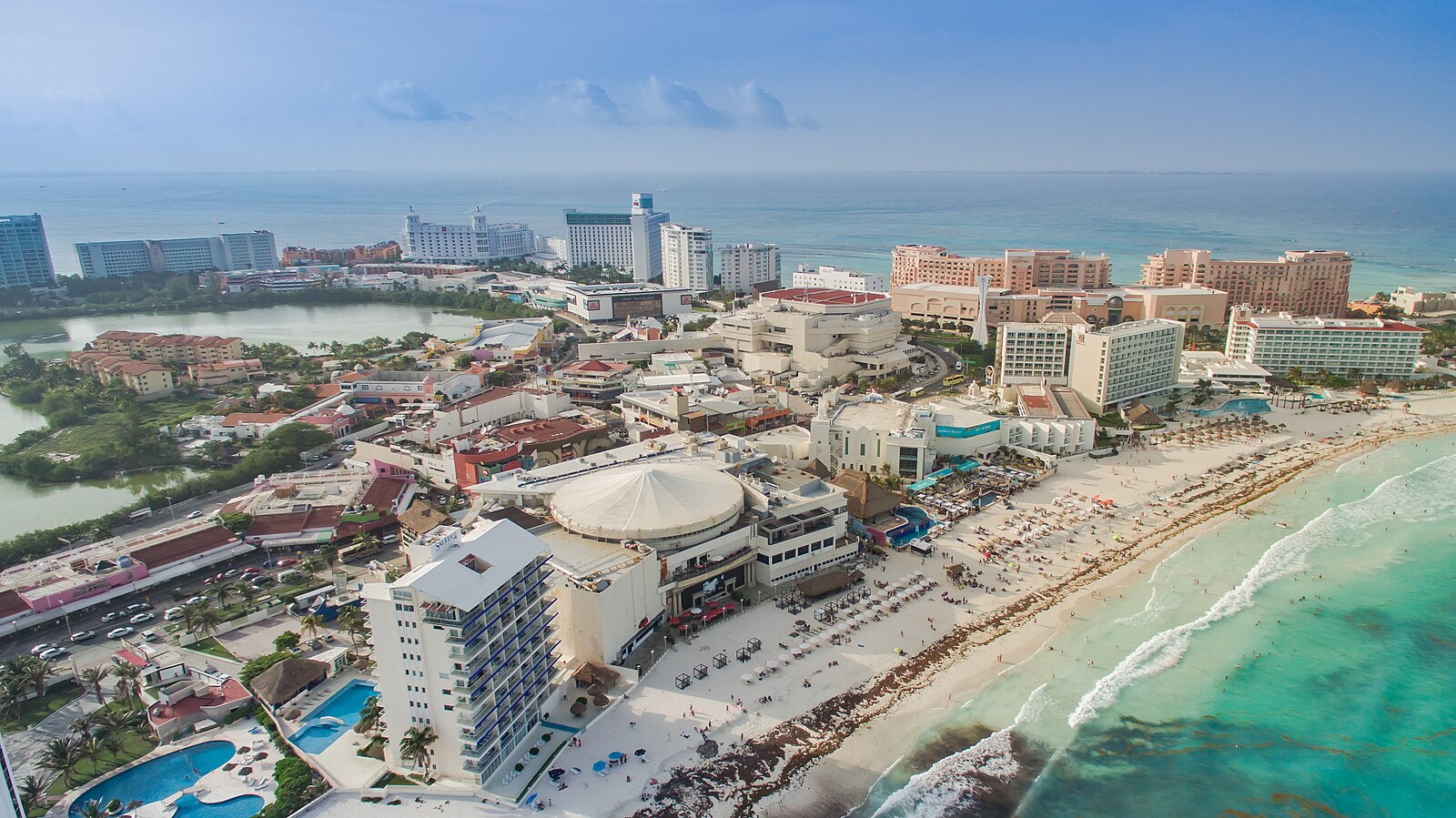
The cost of living in Cancun in 2026 is far below United States levels, but not cheap for a dollar earner. Mexico’s peso has strengthened to about 17.23 pesos to the dollar, and that quietly raises every bill a foreigner pays.
Cost of living in Cancun 2026 — what the numbers say
The clearest public benchmark for the cost of living in Cancun is the crowdsourced Numbeo dataset. Its Cancun page was last updated on 24 August 2026.
That page puts a one-bedroom flat outside the centre at 8,272 pesos (about US$480) a month. Non-rent living costs for one person come to 14,269 pesos (about US$828).
Added together, the cost of living in Cancun for a single person inland is roughly 22,500 pesos (about US$1,310) a month. A one-bedroom in the centre lifts that to about 26,200 pesos (US$1,520).
A couple sharing that inland flat, on the same per-person figures, comes to about 36,800 pesos (US$2,137). Numbeo publishes no couple estimate, so this is simple arithmetic on its own numbers.
A family of four in a three-bedroom flat outside the centre works out near 70,200 pesos (about US$4,075). All of this rests on 196 entries from 18 contributors, so treat it as a guide.
Why foreigners choose Cancun, and what the choice costs
Cancun International Airport is the reason many foreigners pick this city over cheaper inland towns. Its operator reported 19.28 million passengers in the first eight months of 2026.
That traffic was down 5.7 percent on the same period of 2025. International passengers fell 6.1 percent, which matters for the rental market as well as for the airlines.
The resort economy supplies furnished flats, English-speaking services and short leases. Those conveniences are priced in, and they are priced highest within walking distance of the sea.
Remote workers paid in dollars are the third group. Their advantage rests entirely on the exchange rate, which is the one variable none of them controls.
The peso mechanism, and why it decides your budget
Almost every price behind the cost of living in Cancun is set in Mexican pesos. Your dollar cost is the peso price divided by the exchange rate on the day you pay.
On 21 September 2026 the peso traded at about 17.23 pesos to the dollar, the basis for every conversion here. A firmer peso raises your dollar bill even when the local price never changes.
The central bank held its policy rate at 6.50 percent on 6 August 2026, after two cuts earlier in the year. Annual inflation ran near 3.3 percent in early August 2026.
Forecasters quoted in Mexican media expected the peso near 17.30 to the dollar at the end of 2026. Forecasts are not facts, so keep a currency buffer inside your budget.
Rent by zone, from the Supermanzanas to the Zona Hotelera
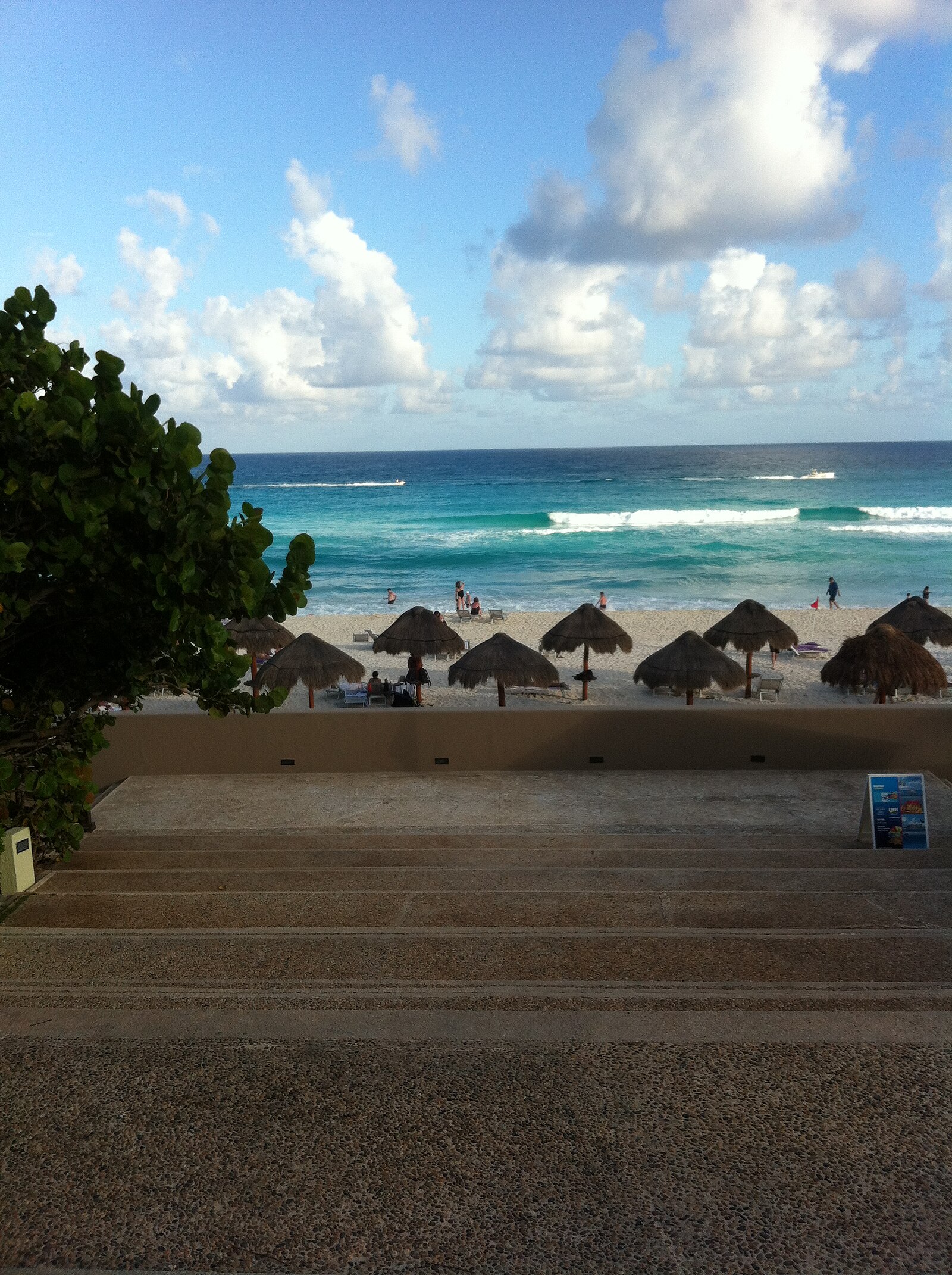
Rent is the largest single item in the cost of living in Cancun. The residential heart is the Supermanzanas, the numbered blocks that locals call SM zones.
A 2026 rental guide puts one-bedroom flats in the economical Supermanzanas at 6,500–9,500 pesos (about US$377–551). Middle tiers such as Centro and Avenida Huayacán run 8,000–15,000 pesos (about US$464–871).
The Zona Hotelera, Isla Dorada and Puerto Cancun form the premium tier. The same guide quotes 15,000–50,000 pesos (about US$871–2,902) for one- and two-bedroom units.
Puerto Juárez, north of the centre, has risen with waterfront demand and sits between those tiers. Expect a one-month deposit, a tenancy guarantee and a credit check.
A legal guarantee policy typically costs 30–50 percent of one month’s rent each year. Budget it as a real moving cost, alongside the deposit and the first month.
Electricity and air conditioning, the bill that decides everything
Electricity is where the cost of living in Cancun surprises new arrivals. Quintana Roo sits on the state electricity utility’s 1C household tariff, a hot-climate band with a large summer allowance.
The subsidy holds while a household’s rolling twelve-month average stays under the limit. Above it, the account moves to the unsubsidised high-consumption tariff, known in Mexico as DAC.
For the 1C band that threshold is about 850 kilowatt-hours a month. Published reference prices put the DAC unit rate several times the basic subsidised one.
Numbeo puts basic utilities for an 85-square-metre flat at 3,063 pesos (about US$178) a month. Ask any landlord for the last twelve months of bills before you sign.
Water, internet and the smaller fixed costs
Water in Cancun comes from a private concession, under tariffs set in state law and regulated by the state water commission. Bills rise in steps as consumption climbs.
Under the April 2026 schedule, a household using up to ten cubic metres a month paid about 204 pesos (US$12) before tax. Heavy users pay sharply more per cubic metre.
Home internet is cheap by North American standards. Numbeo puts a 60-megabit connection at about 698 pesos (US$40) a month, and fibre is widely available inland.
Water and internet together came to roughly 900 pesos (about US$52) a month at those rates. A mobile plan and any building maintenance fee are extra.
Food: mercados and loncherías against the imported aisle
Food is where the cost of living in Cancun stays genuinely low, if you shop locally. Mercados and loncherías, the local markets and small eateries, serve set lunches well below restaurant prices.
Numbeo puts a meal at an inexpensive restaurant at 200 pesos (about US$12). A mid-range dinner for two comes in around 1,000 pesos (about US$58).
The imported aisle is where budgets break. Cheese, cereal, branded snacks and wine carry a clear premium over Mexican equivalents in the same supermarket.
A practical test is to price the same weekly basket twice. Buy it once at a local market and once at a premium supermarket, then compare the totals.
Transport: buses, colectivos, the ADO and the airport question
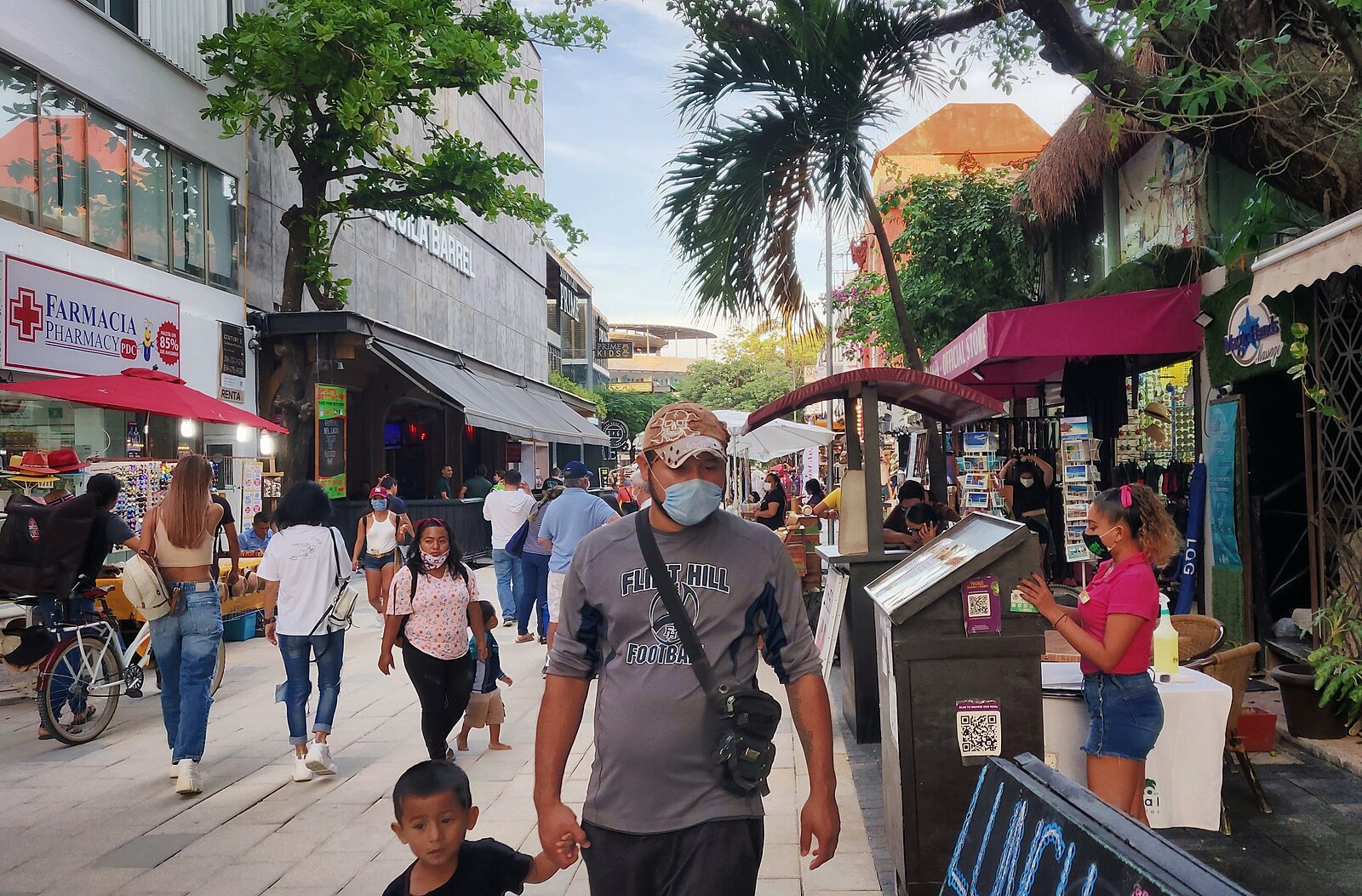
Transport barely moves the cost of living in Cancun, with one exception at the airport. City buses cost 10 pesos inside town and 12 pesos in the Hotel Zone (about US$0.58–0.70).
Numbeo puts a monthly transport budget at about 522 pesos (US$30). Colectivos, the shared vans on fixed routes, run about 55 pesos (US$3.20) to Playa del Carmen.
A car is optional in the central Supermanzanas and useful in the newer suburbs. Parking, insurance and fuel make it the most expensive way to get around.
The ADO coach is the intercity workhorse and the practical way out of the airport. Its airport-to-downtown service costs around 140 pesos (about US$8).
Authorised airport taxis to the Hotel Zone are widely quoted near US$45, several times the coach fare. A court suspension in October 2025 allowed ride-hailing at Mexico’s airports, though drivers report continued pressure at Cancun.
Healthcare, insurance and schools for families
Healthcare is the part of the cost of living in Cancun that foreigners most often misjudge. Private clinics are the default, and consultation fees sit far below United States levels.
Legal residents may enrol in the public social security institute’s voluntary family health insurance. Its annual quotas took effect on 1 March 2026 and rise with age.
The published quota is 9,300 pesos (about US$540) for ages up to nineteen and 14,350 pesos (about US$833) in the forties. For ages 60–69 it is 20,600 pesos (about US$1,196).
Private international cover costs more and is not published centrally, so premiums must be quoted case by case. The same is true of school fees, which most Cancun international schools do not publish.
Plan for tuition as a monthly charge plus a separate annual enrolment fee. Ask each school in writing for the full schedule before you choose a neighbourhood.
Safety, tourist taxes and pressure on long-term rents
Safety in Cancun is a neighbourhood question, not a city one. The United States travel advisory places Quintana Roo at its second of four levels, exercise increased caution.
That advisory recommends extra care after dark in Cancun, Playa del Carmen and Tulum. Mexico’s national public security secretariat publishes monthly crime counts by municipality, and that is the primary source to check.
Foreign visitors pay a Quintana Roo state charge, Visitax, once per trip. The official portal explains the obligation but does not state the amount on its public pages, so confirm it at payment.
Foreigners arriving by air also pay the federal non-resident fee, 983 pesos (about US$57) in 2026. The draft 2027 budget proposes 1,334.80 pesos (about US$77), a rise of 35.8 percent, not yet approved.
These charges fall on visitors rather than residents, but they shape the tourism economy that sets local rents. Short-term rental demand keeps beachfront rents high, while softer 2026 passenger numbers ease that pressure a little.
Hurricane season, and how Cancun compares with Mérida and Playa del Carmen
The Atlantic hurricane season runs from 1 June to 30 November. That shapes building choice, insurance terms and the rhythm of the rental year on this coast.
Check wind and flood cover before signing, and ask about the building’s evacuation and water-intrusion rules. Newer towers, higher floors and storm-rated glazing cost more for a reason.
Comparisons with Mérida are often overstated. On Numbeo’s figures Mérida is about 4.6 percent cheaper than Cancun including rent, and central one-bedroom rents differ by roughly two percent.
Playa del Carmen is the dearer option, not the cheaper one. Its central one-bedroom rents average 18,463 pesos (about US$1,072) against 11,920 pesos (about US$692) in Cancun.
What this means for a life is a trade-off, not a verdict. The cost of living in Cancun buys an international airport and a coastline, and you pay for both in rent and electricity.
Connected Coverage
Three Cheap Mexican Beach Towns as Cancún Prices Climb
Cancún Airport Warning: Avoid Overpaying the Visitax Tourist Tax
Frequently Asked Questions
Frequently Asked Questions
How much does a single expat need each month in Cancun in 2026?
On Numbeo’s August 2026 figures, a one-bedroom outside the centre plus non-rent costs comes to about 22,500 pesos (US$1,310). A central one-bedroom raises that to roughly 26,200 pesos (US$1,520). Both totals move with the peso, and the dataset is small.
Why does a strong peso make Cancun more expensive for me?
Your income is in dollars while your bills are in pesos. When the peso strengthens, each dollar buys fewer pesos, so the same local price costs you more. In September 2026 the peso traded near 17.23 to the dollar, and forecasters quoted in Mexican media expected about 17.30 at year-end.
What is the biggest hidden cost in a Cancun budget?
Electricity for air conditioning. Quintana Roo households sit on the 1C tariff, whose subsidy ends once a twelve-month average passes roughly 850 kilowatt-hours a month. Above that the unsubsidised high-consumption tariff applies and bills rise steeply. Ask for the last twelve months of bills before signing a lease.
Is Merida really much cheaper than Cancun?
Less than its reputation suggests. Numbeo puts Mérida about 4.6 percent below Cancun including rent, with central one-bedroom rents within about two percent of each other. Mérida’s advantage shows up in daily costs rather than in headline rent.
Do foreign residents pay Cancun’s tourist taxes?
Those charges fall on visitors rather than on legal residents. Foreign air arrivals pay the federal non-resident fee, 983 pesos (about US$57) in 2026, and Quintana Roo charges its own Visitax per trip. A proposed rise in the non-resident fee to 1,334.80 pesos (about US$77) sat in the draft 2027 budget in September 2026 and was not approved.
Sources: Figures come from the Mexican social security institute, the central bank, the Quintana Roo Visitax portal, Mexico’s public security data service, the United States travel advisory for Mexico, the Cancun airport operator, the local water concession, the electricity utility’s tariff pages, Numbeo’s Cancun dataset and Mexican rental and trade reports.
- imss.gob.mx
- banxico.org.mx
- visitax.gob.mx
- gob.mx
- travel.state.gov
- app.cfe.mx
- www2.aguakan.com
- asur.com.mx
This article was produced by The Rio Times’ automated newsroom system. How we use AI · Report an error
Read More from The Rio Times