What Is Going On Between Cuba and the United States?

CUBA · UNITED STATES · EXPLAINER
Updated 7 times · Latest: 28 October 2026
Washington is squeezing Cuba’s oil supplies, sanctioning its president and pursuing murder charges against its former leader, while also flying in aid through the Catholic Church; this guide explains in plain English what is happening and what could come next.
Cuba-US tensions reached the United Nations this week, when Cuba’s foreign minister called US Ambassador Mike Waltz a liar on Tuesday 27 October and Waltz said in a US television interview, reported on Wednesday 28 October, that Washington is expelling a Cuban diplomat. On Monday 26 October Secretary of State Marco Rubio had said Cuba needs a “very drastic change” and Treasury’s proposed curbs on US technology investment tied to Cuba appeared in the Federal Register. Washington has already squeezed the island’s oil supplies, sanctioned President Miguel Díaz-Canel and pursued murder charges against former leader Raúl Castro over a 1996 shootdown, and Havana says it rejects every threat.
For Americans the stakes are close to home, from Florida’s large Cuban community to new limits on travel and the risk of a clash in the Florida Straits. Prediction markets still treat force as unlikely, pricing a US strike on Cuban soil by 31 December at 9.5% on Wednesday 28 October at 7:51 a.m. ET.
Key Facts
- —The squeeze Since January Washington has choked fuel imports and sanctioned its president; Treasury’s tech-investment curbs were published 26 October.
- —The charges Raúl Castro, 95, faces federal and Florida charges over the 1996 downing of two planes.
- —Force No attack yet; on 26 October Secretary of State Rubio said Cuba needs a “very drastic change”.
- —Travel Tourism stays banned for Americans, and group “people-to-people” tours ended on 30 September.
- —At the UN Waltz says a Cuban diplomat must leave within 24 hours; the UN embargo vote is due 28 October.
- —Prediction markets US strike on Cuban soil by 31 December: 9.5% (Polymarket, 28 October, 8:31 a.m. ET)
- —Power Index Cuba ranks 14th of 14 in The Rio Times Latin America Power Index, with 22.5 points (October 2026 edition).
In Plain English
- The embargo: the US ban on most trade with Cuba, in place since the early 1960s; Havana calls it “the blockade”.
- Treasury sanctions office (OFAC): the US agency that blacklists people and firms and licenses travel to and trade with Cuba.
- GAESA: the business group run by Cuba’s armed forces, a main target of US sanctions.
- Brothers to the Rescue: a Miami exile group whose two small planes Cuban fighter jets shot down in 1996, killing four men.
- Cáritas Cuba: the Catholic Church’s charity on the island, which hands out US-funded aid instead of the Cuban state.
- Prediction markets: platforms where traders bet real money on events; prices work as probabilities, not polls.
The Short Answer
The United States is using economic pressure, criminal cases and the threat of force to push Cuba’s communist government towards change. Trump told the UN General Assembly in September that the government “will fall”, according to CBS News, while saying Secretary of State Marco Rubio was “deep into negotiations” with Havana.
Díaz-Canel accuses Washington of “aggression” and “economic warfare”, and he has said he will not resign. Cuba’s ambassador to the UN said in April that the fate of detainees on the island is not on the negotiating table.
Nobody knows how the standoff ends, and the realistic paths range from a negotiated deal to a long squeeze, a sudden fall of the government in Havana or a US strike. Prediction markets give each dramatic outcome, a deal, the fall of the government or a strike, roughly a one-in-ten chance before the end of the year, which suggests traders expect the squeeze to drag on into 2027.
The People to Know
- Miguel Díaz-Canel: Cuba’s president and Communist Party leader, put under US sanctions in June 2026.
- Raúl Castro: Fidel Castro’s younger brother, 95, who led Cuba until 2018 and its Communist Party until 2021.
- Marco Rubio: the US Secretary of State, a Cuban American from Miami.
- Bruno Rodríguez: Cuba’s foreign minister and the government’s main voice abroad.
- James Uthmeier: Florida’s attorney general, who obtained the state arrest warrant for Castro.
Latest Developments
Mike Waltz, the US ambassador to the United Nations, said in a US television interview, reported on Wednesday 28 October, that Washington is expelling a Cuban diplomat he accuses of shoving a US official at the General Assembly, and that Secretary of State Marco Rubio signed the order. He said the diplomat must leave within 24 hours; when we checked, we found no State Department statement and Cuba’s foreign ministry had not commented, as our report explains.
The expulsion follows a shouting match on Tuesday 27 October, when Cuban Foreign Minister Bruno Rodríguez called Waltz a liar during the embargo debate and Assembly president Khalilur Rahman briefly suspended the session; the shoving is Waltz’s allegation, not confirmed independently. Waltz had urged the 193 member states to reject Cuba’s yearly resolution, saying “There is no blockade”; see our report on the clash.
The resolution against the US embargo is not binding, because only Congress can lift the embargo, but it measures how many governments still side with Havana. Last year it passed by 165 votes to 7 with 12 abstentions, and this year’s vote follows the 27–28 October debate; see our report on the vote.
The US immigration agency USCIS opened a fee-free route for migrants who entered through the CBP One border app, including Cubans, to ask for certain adverse decisions to be reopened, USCIS said on 26 October. Covered decisions date from 1 April 2025 to 21 April 2026 and follow a federal court order in the class action Sileiri Doe against Homeland Security; see our explainer.
Cuba’s state-run air navigation company, Empresa Cubana de Navegación Aérea (ECNA), has ten official notices to pilots in force declaring Jet A-1 fuel unavailable at Havana, Varadero and eight other airports until 04:00 UTC on 1 November. The notices replaced an earlier series that was due to expire on 1 October, and airlines may still fly if aircraft arrive with enough fuel for the return leg or make technical stops abroad; see our report on the jet fuel shortage.
Secretary of State Marco Rubio told reporters on a press call on Monday 26 October that Cuba needs a “very drastic change”, days after urging Cubans to work with the CIA. He gave no detail on what the change should involve, and no official transcript of the call was found, so the wording rests on a Spanish-language report; our report on his remarks has the detail.
The US Treasury announced a proposal on Thursday 22 October that the Federal Register, the US government’s official journal, published on Monday 26 October; it would make American investors report or stop certain technology deals tied to Cuba. The draft treats Cuba as a “country of concern” under the Comprehensive Outbound Investment National Security Act (COINS Act), excuses deals of up to US$50,000 in 12 months from reporting only, and is open for public comment until 7 December; see our report on the proposal.
A fault on the Cueto-Renté line, a 220-kilovolt power line linking the town of Cueto to the Renté power plant near Santiago de Cuba, cut the provinces of Santiago de Cuba and Guantánamo off the national grid at 1:14 p.m. local time on Sunday 25 October. Unión Eléctrica (UNE), Cuba’s state power company, said it had activated restoration protocols but gave no time for full recovery, and about 1.4 million people live in the two provinces.
The shock hit a grid already short of power. UNE had forecast 1,120 megawatts (MW) of supply against 2,850 MW of demand at the evening peak, a gap of about 1,730 MW, and one large US nuclear reactor makes roughly 1,000 MW; see our report on the grid failure.
Cuba’s Ministry of Energy and Mines and Ministry of Labor and Social Security announced on Saturday 24 October that the island will keep summer time, with clocks one hour ahead of standard time, until 7 November 2027, skipping the usual clock change in November. The ministries estimate this avoids 126 megawatts (MW) of extra blackouts at the evening peak, 76 MW from less lighting and 50 MW from solar panels.
When the United States sets its clocks back on Sunday 1 November, Havana will stay one hour ahead of Miami, New York and Washington until Sunday 14 March 2027. Schools and workplaces will start 30 minutes later over the same period, a sign of how deep the fuel shortage has become, as our report explains.
President Donald Trump told a rally in Fort Myers, Florida, on Friday 23 October that US warships returning from the Iran war would pass Cuba, with one stopping “about 50 yards off the coast.” He said he would then send Secretary of State Marco Rubio “in to finish up the deal”, according to PBS NewsHour. Our report on the remarks has the detail.
Cuban President Miguel Díaz-Canel wrote on X that Washington “does not renounce its ambitions of domination”, and Foreign Minister Bruno Rodríguez said Cuba rejects every threat, according to the Cuban news site Periódico Cubano. No deployment had been announced by Saturday 24 October.
Rubio then posted on X that “now is the time” for Cubans seeking change to act “through a discrete [sic] partnership with the CIA.” The agency followed with a Spanish-language video on how to make contact, and Cuba’s deputy foreign minister mocked the offer, as our report explains.
The remarks came days before the US midterm elections on 3 November, in a state with a large Cuban-American electorate. The UN General Assembly debates its yearly resolution against the US embargo on 27 and 28 October.
A US federal appeals court ruled on Wednesday 21 October that ICE cannot restart a six-month presumption of reasonable detention each time it re-arrests a person with a final removal order. The 10th Circuit decision, in the case of the Iranian-born Kaveh Abedi, binds federal courts in six states and not Florida, and Periódico Cubano reported it could help Cubans with deportation orders (our explainer).
The US immigration agency USCIS ended a weekend and holiday grace period for some paper filings received from Friday 23 October (Policy Alert PA-2026-15). A deadline tied to an eligibility event, such as an applicant’s 21st birthday, no longer moves to the next business day, while deadlines counted in days keep the old treatment; see our report.
A US aid flight landed at Varadero airport in Matanzas province on Thursday 22 October with 700 kits of food, hygiene items, water-purification tablets and rechargeable lamps, according to Cuban news site 14ymedio. It was the second US flight to Matanzas, and the Catholic Church’s charity Cáritas Cuba, not the state, will hand out the kits. Read our report on the second aid flight.
The flights belong to a US$100 million aid offer that Secretary of State Marco Rubio made in May, with US$60 million of it running through Catholic Relief Services and Cáritas Cuba. The first Matanzas load, on 14 October, reached 700 families, according to 14ymedio.
Leaving is just as hard as staying. Cubans made up almost half of the roughly 70,500 refugee claims filed in Mexico in 2025, more than any other nationality, according to the UN refugee agency UNHCR, as Mexico becomes a holding area for people who cannot reach the United States. Our migration report has the detail.
How the Squeeze Began
The turning point came on Saturday 3 January 2026, when US forces captured Venezuela’s leader Nicolás Maduro, a long-standing ally of Havana. A day later Rubio said Cuba’s government was “in a lot of trouble”, and on 11 January Trump urged Havana to make a deal “before it is too late”.
On 27 January Mexico’s President Claudia Sheinbaum said the state oil company Pemex had at least temporarily stopped shipments to Cuba, calling it a sovereign decision. Two days later Trump signed Executive Order 14380, which declared a national emergency over Cuba and allowed tariffs on goods from any country that sends oil to the island.
Trump ended the tariff threat on 20 February with Executive Order 14389, but the national emergency stayed in force and US agents have kept stopping Cuba-bound fuel. Cuba received its first fuel delivery in three months only on 31 March, when a sanctioned Russian tanker docked on the island.
The interceptions continue. On 7 October Homeland Security Investigations in Miami said it had seized more than 600,000 gallons of biodiesel, worth about US$2.8 million, bound for the Cuban state firm ENETEC.
2026 in Eight Dates
- 3 January: US forces capture Venezuela’s Nicolás Maduro, an ally of Havana.
- 29 January: Trump declares a national emergency over Cuba and threatens its oil suppliers with tariffs.
- 13 March: Díaz-Canel confirms talks with Washington.
- 1 May: a new executive order opens Cuba’s economy and foreign banks to US sanctions.
- 20 May: the US unseals murder charges against Raúl Castro.
- 4 June: the Treasury sanctions Díaz-Canel and his wife.
- 30 September: new Treasury rules end group “people-to-people” trips and the general permission for professional meetings.
- 19 October: Florida obtains a state arrest warrant for Raúl Castro.
Sanctions Aimed at Cuba’s Leaders and Money
The second front is financial. On 1 May Trump signed Executive Order 14404, which lets Washington punish anyone operating in Cuba’s energy, defence, mining, financial or security sectors and threatens foreign banks that handle “significant” transactions for blacklisted Cubans.
The Treasury has used it again and again. It added the new order’s tag to the existing listing of GAESA, the business group run by the armed forces, on 7 May, sanctioned Díaz-Canel, his wife Lis Cuesta and the armed forces ministry on 4 June, and blacklisted the tourism ministry on 13 July.
On 3 September it targeted the state bank Banco Exterior de Cuba and the fuel trader Comercial Cupet, and on 15 October, alongside a separate set of Iran-related sanctions, it blacklisted the Havana bank BICSA. A rule that took effect on 30 September also banned indirect payments to firms on the State Department’s Cuba Restricted List and ended “U-turn” transfers that let US banks process Cuba-linked payments between foreign parties.
Together the measures aim to cut Cuba’s state and military companies off from US dollars and from their foreign partners. Our explainer on who backs Havana and who presses it covers how Russia, China and Mexico have responded.
Why Raúl Castro Faces Murder Charges
On Saturday 24 February 1996 Cuban fighter jets shot down two small civilian planes flown by Brothers to the Rescue, a Miami exile group, killing four men. Three of them were US citizens, and the US Justice Department says the jets fired on the planes outside Cuban territory.
On 20 May 2026 the Justice Department unsealed an indictment in Miami charging Castro, then Cuba’s armed forces minister, and five others with conspiracy to kill US nationals, four counts of murder and two counts of destroying aircraft. “This passage of time does not erase murder,” said Jason Reding Quiñones, the US attorney for southern Florida.

Florida added its own case on Monday 19 October, when Attorney General James Uthmeier announced a state arrest warrant charging Castro with conspiracy to commit first-degree murder. Uthmeier conceded that the 95-year-old is “probably not looking to march himself into Miami”, but said travel to a country with a US extradition agreement could lead to his arrest.
Havana rejects the charges. Díaz-Canel called the Florida warrant a “pathetic Miami circus” with an electoral motive, and Foreign Minister Bruno Rodríguez called it another “sterile manoeuvre” by anti-Cuban politicians in South Florida.
Havana’s allies have taken its side. Russia and Iran condemned the warrant on Tuesday 20 October, and on Wednesday 21 October China’s foreign ministry called Castro a venerated revolutionary leader and urged Washington to stop its blockade and other pressure on Cuba.
The statements carry no legal weight in Florida, as our report on China’s rejection of the Castro warrant explains. No court date has been announced.
Castro has not appeared in any US court and, like every defendant, is presumed innocent unless proven guilty. Our profile of who runs Cuba covers his role today and the Raúl Castro arrest warrant in more detail.
Will the US Attack Cuba?
No US strike or invasion has happened, and no order has been reported. CBS News reported on 25 September that the Army Reserve was checking which police, medical and engineering units it could hand to Southern Command, which runs US forces in Latin America and the Caribbean, within four months.
US officials told CBS the request was part of continued planning aimed at Cuba, and an earlier CBS report in July said planners had examined options including an air assault by the 101st Airborne Division. Officials stressed that no decision had been made, and CBS found no sign that any unit had received deployment orders.
Trump’s own words have swung both ways. In March he said “Taking Cuba in some form, yeah” and “Cuba’s going to be next”, but in late September he said he did not think the military would be needed.
“Cuba and us will make a deal.” President Donald Trump, September 2026
Lawmakers have not stopped him. On 28 April Senate Republicans rejected a Democratic war powers resolution aimed at ending the energy blockade unless Congress approved it, and Díaz-Canel has vowed that Cuba will fight back against any attack.
Talks, Offers and Prisoners
Washington and Havana have kept talking even as the pressure grew. Díaz-Canel confirmed on 13 March that the two governments had held talks, and on 10 April a State Department delegation in Havana met Raúl Guillermo Rodríguez Castro, a grandson of Raúl Castro who has met US officials several times this year.
CIA Director John Ratcliffe visited Havana on 14 May, and US officials said in May that they had offered tens of millions of dollars in humanitarian aid and two years of free Starlink internet access for Cubans. Cuba announced on 2 April that it would pardon 2,010 prisoners as a humanitarian gesture, although its UN ambassador later said the fate of detainees was not up for negotiation.
No deal has emerged. Polymarket traders gave a US-Cuba economic deal by 31 December an 11.5% chance on 24 October, unchanged since 21 October.
What the Squeeze Means Inside Cuba
The squeeze is felt most in homes and hospitals. UN News reported in May that blackouts lasted as long as 20 hours in some areas and that more than 100,000 patients, including 11,000 children, were waiting for delayed operations.
In June the UN human rights office said infant mortality had doubled to 9.9 deaths per 1,000 births and that essential medicines were at about 30% of normal supply. UN rights chief Volker Türk said “children are dying because doctors lack access to essential medical supplies and medicines”.
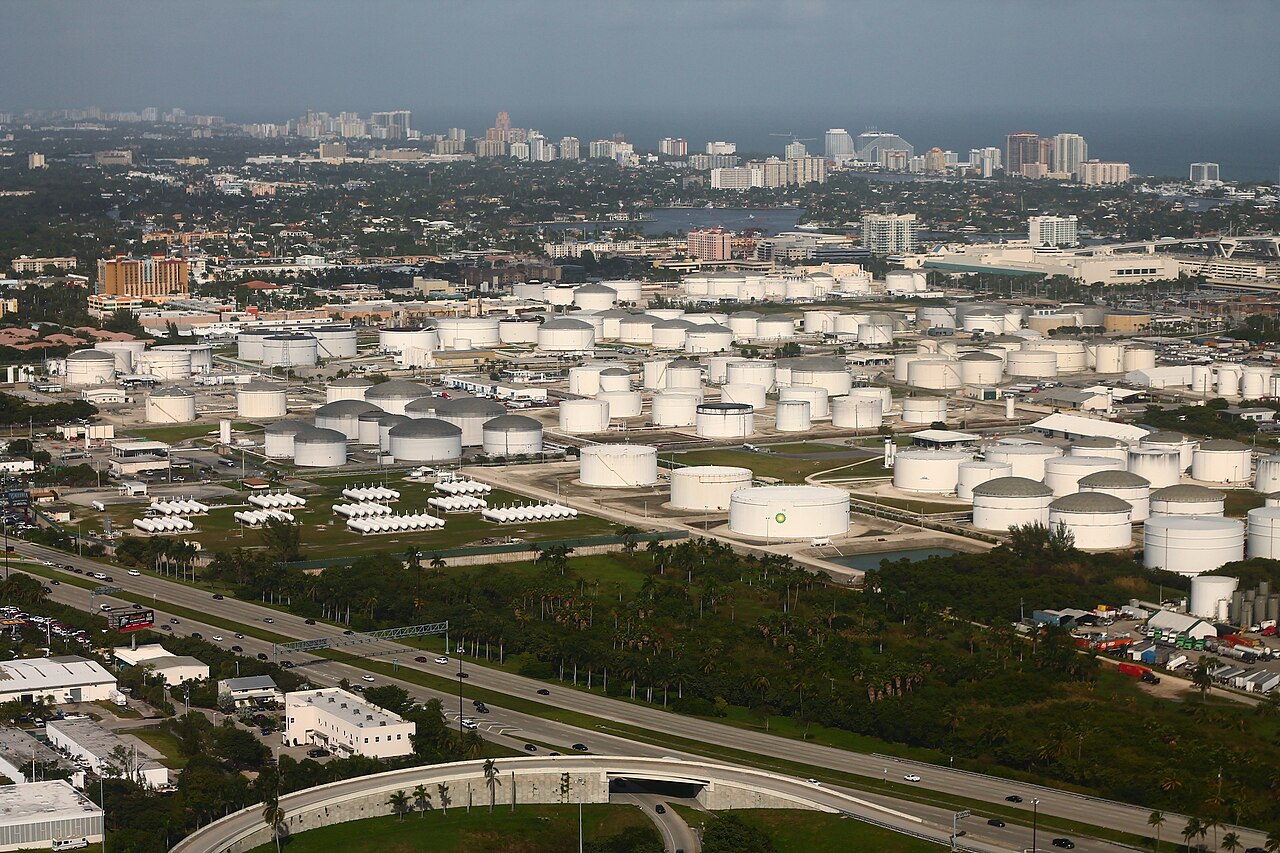
Washington says its measures target a repressive government, and its rules still allow Americans to send money to relatives in Cuba. Havana blames what it calls the US blockade, and our report on daily life in Cuba under the embargo shows how families cope.
The dispute returns to the UN General Assembly in late October, when it votes on its yearly resolution calling for an end to the embargo. Last year the resolution passed by 165 votes to 7 with 12 abstentions, and the United States voted against it.
Fewer Ways for Cubans to Reach the United States
Leaving Cuba for the United States has also become much harder. The parole programme that let Cubans with US sponsors fly in legally was ended in March 2025, and the separate Cuban family reunification parole programme was terminated in December 2025, with most of its paroles expiring on 14 January 2026.
Since June 2025 a presidential proclamation has restricted the entry of Cuban nationals, and a December 2025 proclamation kept those limits in place. The Cuban Adjustment Act of 1966, which lets Cubans who were admitted or paroled and have spent a year in the US apply for a green card, remains law.
What Prediction Markets Say
Traders on Polymarket priced a US strike on Cuban soil by 31 December at 9.5% on Wednesday 28 October at 7:51 a.m. ET, on US$5.5 million of bets. They gave a US invasion in 2026 a 6.5% chance, Cuban President Miguel Díaz-Canel leaving power by 31 December 7.5% and former leader Raúl Castro in US custody by the same date 4.3%.
The card below refreshes every 20 minutes and shows how much money stands behind each price. A market is a bet, not an expert forecast, and prices can swing within minutes of a single headline.
Prediction markets · Cuba and the United States
Implied chances from traders’ prices on Polymarket and Kalshi.
Will the US attack Cuba?
Polymarket: US$5.5 million, US$3.7 million and US$285,000 traded. A strike counts only if a US air, drone or missile attack hits Cuban soil.
Will Cuba’s government fall?
Polymarket: US$1.8 million and US$782,000 traded. The first bet pays out only if the Communist Party loses control of the government.
Raúl Castro and the US charges
Polymarket: US$34,000 and US$41,000 traded. Raúl Castro lives in Cuba, out of reach of US courts.
Will Washington and Havana make a deal?
Polymarket: US$35,000 traded.
Kalshi (regulated in the US by the CFTC): Trump announces a trade or economic deal with Cuba before 1 January 2027, 14% (69,389 contracts traded, each paying US$1 if right).
As of 28 October, 8:31 a.m. ET (12:31 Lisbon), updated every 20 minutes. Prices are bets, not polls, and can move fast.
Why we show this: prediction markets turn real-money bets into a live probability that moves within minutes of the news, which is why investors, campaigns and newsrooms in the United States now follow them closely. We show them next to polls and official results, never instead of them.
What It Means for You
For American travellers, tourism in Cuba remains illegal under US law, and since 30 September group “people-to-people” tours and trips for professional meetings are no longer covered by a general licence. Visitors travelling under categories such as family visits or “support for the Cuban people” face power cuts and a Level 2 State Department advisory, and our guide explains whether Americans can still travel to Cuba.
For investors, Executive Order 14404 means any company with Cuban partners in energy, mining or finance risks US sanctions, foreign banks included. For Cuban families in the United States, remittances remain legal, but the legal routes for relatives to join them have narrowed sharply.
What Is Not Known
It is not known whether Trump will order force, how far the talks have gone, or how long Cuba’s government can absorb the blackouts and shortages. The health of Raúl Castro, now 95, is another unknown that could change the picture quickly.
Nor is it clear how many countries will change their vote at the UN, or whether Mexico, Russia or others will risk US sanctions to ship oil to Cuba. The answers will decide whether 2027 brings a deal, a change of government or more of the same squeeze.
For the full picture, follow our dossier on Cuba-US tensions, our explainer on why Cuba’s power grid keeps failing and the Latin America Power Map. Our Cuba news page carries every new report.
Frequently Asked Questions
What is happening between Cuba and the United States?
The United States is pressing Cuba’s communist government with an oil squeeze, sanctions on its leaders and criminal charges against former leader Raúl Castro. The two governments have held talks, but no deal has been announced.
Will the US attack Cuba?
No attack has happened and no order has been reported. On 26 October Secretary of State Marco Rubio said Cuba needs a “very drastic change” without naming any measure, and Polymarket put a US air, drone or missile strike on Cuba by 31 December at 8.5% on 27 October.
Why was Raúl Castro charged?
A federal grand jury in Miami charged him over the 1996 downing of two Brothers to the Rescue planes, which killed four men, three of them US citizens. Florida added a state warrant on 19 October, and Castro is presumed innocent.
Is the US sending aid to Cuba?
Yes. A US aid flight landed in Matanzas on 22 October with 700 kits, part of a US$100 million offer Secretary of State Marco Rubio made in May. The Catholic Church’s charity Cáritas Cuba hands out the aid, not the Cuban state.
Can Americans travel to Cuba?
Yes, but not as tourists, because each trip must fit a category authorised by the US Treasury, such as family visits or support for the Cuban people. Group people-to-people tours stopped qualifying on 30 September 2026.
What sanctions has the US imposed on Cuba in 2026?
An executive order of 1 May allows sanctions on Cuba’s energy, mining, defence, financial and security sectors and on foreign banks. The Treasury has since targeted President Díaz-Canel, the military business group GAESA, the tourism ministry and several banks.
When does the UN vote on the US embargo?
The General Assembly debates the resolution on 27 and 28 October, and the result had not been published when we checked on 28 October. In 2025 it backed Cuba by 165 votes to 7 with 12 abstentions; the text is not binding on the United States.
Sources: 14ymedio, aid flight to Matanzas (22 October 2026); US Attorney’s Office, Southern District of Florida, judgment against Honduran national; US Supreme Court order (29 September 2026); US Justice Department, Raúl Castro indictment (20 May 2026); White House, Executive Order 14380 (29 January 2026); Federal Register, Executive Order 14389 (20 February 2026); White House, Executive Order 14404 (1 May 2026); OFAC, 7 May 2026; OFAC, 4 June 2026; OFAC, 13 July 2026; OFAC, 3 September 2026; OFAC, 15 October 2026; Federal Register, Cuban Assets Control Regulations (30 September 2026); State Department, Cuba travel advisory; Federal Register, end of parole programmes (25 March 2025); Federal Register, end of family reunification parole (15 December 2025); Proclamation 10998 (16 December 2025); USCIS, Cuban Adjustment Act; UN News (15 May 2026); UN News (8 June 2026); UN News, 2025 embargo vote; CBS News (25 September 2026); PBS NewsHour timeline (20 May 2026); NBC Miami (19 October 2026); CBS Miami (19 October 2026); Infobae/EFE (19 October 2026); WLRN (7 October 2026); NPR (28 January 2026); NPR (2 April 2026); PBS NewsHour, Trump rally in Florida (23 October 2026); Prensa Latina, summer time announcement (25 October 2026); Federal Register, Outbound Investment Security Program Regulations (26 October 2026); Polymarket market data (27 October 2026).
This article was drafted with automated assistance and reviewed before publication. How we use AI · Report an error · Editorial responsibility: Matthias Camenzind, Editor-in-Chief
Expat Guide to Cuba
What The Rio Times publishes for foreigners who live in or move to Cuba.
Start here
- Moving to Cuba 2026, Step by Step
- Panama Visa Appointment System Launches for Havana Applicants
- Spain and Portugal Close Their Golden Visa Doors, Forcing LATAM Investors to Reroute
Coming up in Cuba
Understand Cuba
Cuba and the United States
- Can Americans Still Travel to Cuba in 2026?
- Who Runs Cuba in 2026? Raúl Castro and the US Murder Charge